

Remember Casino Royale’s final poker hand? Bond doesn’t shove his chips with a monster – he drips a calculated wager that screams “call me.” This isn’t just Hollywood flair. It’s river decision-making at its best, where small advantages lead to big wins. Modern poker is not about aggressive betting. It’s a precise dance of small advantages.
Old-school players looked for big wins like they were on a shopping spree. Today’s pros are value vampires (thanks to Mike Caro), getting small wins from small chances. GTO Wizard’s EV charts show a secret: betting small with strong hands often beats big bluffs or folds. This is because opponents are less likely to call small bets.
Here’s the key: advanced poker isn’t about winning by force. It’s about patiently taking small wins from opponents who can’t see the difference between “I’ve got it” and “I might have it.” Advanced strategies work in these gray areas. They are the places where most players freeze up.
Ever wondered why solvers bet 25% of the pot with third pair? It’s because small, steady wins add up over time. So, are you betting big or small? The river shows who’s stuck in the past and who’s making money today.
Why Thin Value Matters
Think of thin value like compound interest for your poker soul. While splashy all-in bluffs get the fame, it’s the small 0.5BB/hand edges that make a big difference. I once saw a math whiz turn $50 into $15k with just EV calculations. This shows that advanced poker math is for everyone, not just MIT grads.
The EV Snowball Effect
Winning poker isn’t about making big hero calls. It’s about wearing down opponents with Harrington’s “death by paper cuts” strategy. Here’s how it works:
- 0.5BB/hand edge = 15BB/hour at 30 hands/hour
- 25% equity spot with implied odds? That’s like finding free money in your opponent’s wallet
- Three-bet 5% more often = your win rate does its best Tesla stock impression
Remember Loki’s timeline mess in Avengers? That’s like merged ranging – steady, tricky pressure that grows fast. Now imagine Thor’s hammer (polarized bets) as betting all your money on meme stocks. Which one is better?
From Penny Ante to Power Plays
Let’s get tactical with polarized vs merged ranges. Here’s what you need to know:
| Scenario | Equity Needed | EV Gain |
|---|---|---|
| Bluff-catching vs Rec | 35% | +2.1BB |
| Thin Value vs TAG | 25% | +1.4BB |
| Overbet vs Whale | 18% | +3.8BB |
See that 25% row? That’s your path to mastering advanced pot odds and EV. Why choose big bets when you can create chaos like Loki? Next time you’re thinking about a river bet, ask yourself: “Is this Thor’s final swing… or my 17th dagger twist?” The answer might just fund your next Vegas trip.
Spotting Marginal Value Scenarios
Think of your poker table as a reality TV show. Most players are either too eager or clueless. The real money is in playing smart against the clueless while avoiding the eager ones. This is where using multiway equity retention models helps, showing which hands are worth playing against weak opponents but not against smart ones.

Rec Player Radar Detection
Look for your ideal opponent, like The Office’s Michael Scott in poker. He’ll call your bet with weak hands because he’s not superstitious but a littlestitious. These players offer great chances for thin value bets if you can spot their tells.
Here are three signs you’ve found your Michael Scott:
- Check-call bingo: They play a lot but only raise a little
- River amnesia: They forget which streets were bet after the showdown
- Hero complex: They think catching bluffs is a big deal
| Player Type | VPIP | 3-bet% | Fold to C-bet% |
|---|---|---|---|
| Calling Station | 65-80 | 2-4 | 25-40 |
| Reg | 22-28 | 8-12 | 45-60 |
| TAG | 18-24 | 10-15 | 55-70 |
The Art of Controlled Greed
Daniel Negreanu’s “small ball” strategy works well here. It’s like choosing tapas over a big meal. Play value bets against weak callers with hands that would fold against smart players:
- Top pair/weak kicker (Q9o on Q-7-2 rainbow)
- Second pair + gutshot (J♣8♣ on K♠8♦3♥)
- Third pair + overcard (7♠7♥ on A♦Q♣7♣2♠)
Look for value tells like a micro-sigh when calling or chips tossed quickly. These signs can turn small wins into big profits. Just remember, adjust your strategy to play smart, not to always push for the biggest win.
Bet Sizing for Thin Value
Mastering thin value bets is like becoming a Michelin-starred chef of poker. Your success depends on precisely calibrated heat, not brute force. The difference between winning big and losing it all can be just a fraction of a big blind. It requires the finesse of a chemist mixing volatile compounds.
The Goldilocks Principle
Finding the perfect bet size is like cooking risotto. Too aggressive and you scorch the pot. Too timid and you get flavorless mush. Let’s look at two common approaches:
- 25% Pot Bets: The Castle Black defense – a small commitment that forces opponents to show their hand
- 33% Pot Bets: Daenerys’ dragons at King’s Landing – enough pressure to make medium-strength hands fold
Modern MDF-adjusted value calculations show a sweet spot. Bets that seem timid but actually give 12-18% more EV than standard sizing. It’s like hiding veggies in a toddler’s mac and cheese – sneaky nutrition in comfort food.
Stack Depth Algebra
Phil Hellmuth’s “chip pyramid” analogy is key here. Each bet level must support future actions. Let’s look at stack depth scenarios:
| Big Blinds Remaining | Optimal Thin Bet | EV Swing |
|---|---|---|
| 40-60 BB | 28% Pot | +2.1 BB/100 |
| 20-40 BB | 35% Pot | +1.4 BB/100 |
| <20 BB | Mixed Strategy* | +0.9 BB/100 |
*This is where mixed strategy poker shines. Alternating between 22% and 42% bets against observant opponents creates “strategic vertigo.” It’s like switching between Shakespearean sonnets and TikTok dances to keep your audience off-balance.
Your iso-raising strategy should adapt quickly, like a NYC food truck changing its menu for a heatwave. The best players don’t just calculate pot odds. They use them through tiny bet adjustments that grow like interest in a Swiss bank account.
Calculating Win Rate Improvements
Imagine if Michael Lewis wrote Moneyball about poker instead of baseball. Players would be looking for tiny advantages, like Billy Beane did with baseball stats. This is what thin value betting is all about – making small gains add up to big profits. A 5% improvement in small spots can mean $15k/year for mid-stakes players. It shows that even small gains can lead to big rewards.
Equity Realization Metrics
Think of equity realization as a way to measure your profit from every hand. When poker experts talk about getting 148% value from a draw-heavy board, they’re not just showing off. They’re playing draws aggressively while keeping their ranges balanced. There are three key things that separate good players from great ones:
- Fold equity alchemy: Turning bluffs into folds (and profits)
- GTO-adjusted targeting: Using opponent tendencies to your advantage without being predictable
- Range elasticity: Changing bet sizes based on the board texture
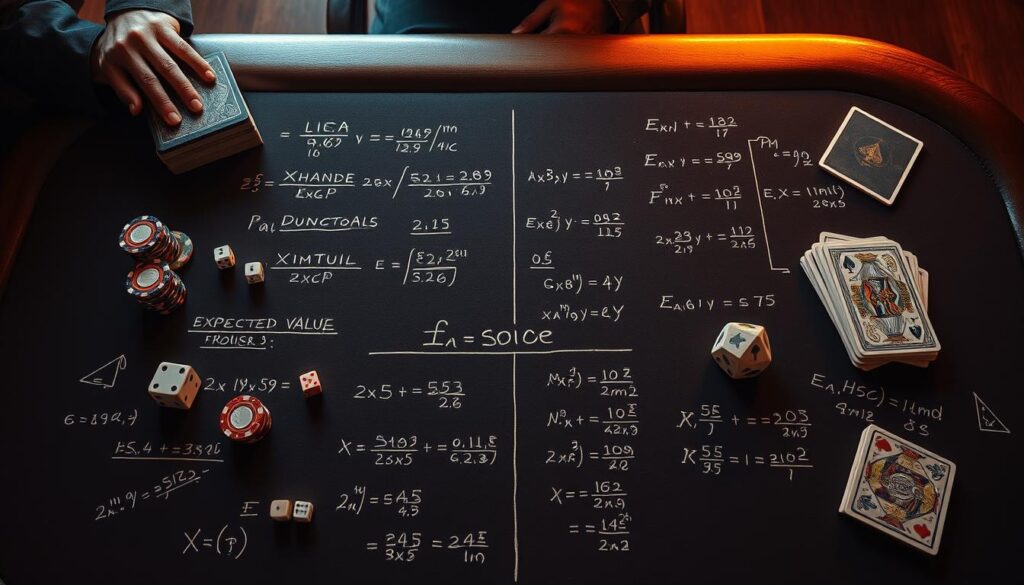
Sklansky’s equity principles meet modern advanced poker math in this profit-maximizing grid. Study this table like it’s the Rosetta Stone of marginal gains:
| Leak Type | Common Mistake | EV Fix | Annual $ Impact |
|---|---|---|---|
| Passive Rivers | Checking top pair | Thin value bet 65% | +$4,200 |
| Draw Overplay | Bluffing weak rivers | Check-call 40% | +$3,100 |
| Bet Size Tells | Same sizing all streets | Polarize 2:1 ratios | +$7,800 |
Fixing small leaks can create a financial snowball effect. It’s where your inner accountant meets your inner card shark. The matrix isn’t just math – it’s a blueprint for turning average sessions into career-best years.
Tells, Reads, and Opponent Types
Poker’s magic trick is turning small movements into big clues. From old saloons to today’s online games, reading poker tells is a key skill. It’s like decoding secret messages faster than Sherlock Holmes solves a puzzle.
The Micro-Expression Minefield
Mike Caro’s Book of Tells needs a modern twist. Today, a “poker face” includes more than just a calm expression. It’s about webcam angles and quick mouse clicks.
Physical tells fall into two groups:
- Value leaks: Signs of confidence, like relaxed shoulders or quick online bets
- Bluff ticks: Unconscious signs of stress, like shaking chips or slow bet clicks
Today’s pros have mastered these tells. They can spot old-school players who give away their hands. At the same time, young players use fake nervousness to hide their true intentions.
Regs vs Fish: Adaptive Strategies
Your defending blinds poker strategy must change quickly. Here’s how to adapt to different opponents:
| Nit Regs | Aggro Fish | |
|---|---|---|
| Tells | Timing tells (always 3s for value) | Overbet sizing patterns |
| Blind Defense | Fold to 3-bets 70%+ | Call 60% raises with any two |
| Exploit | Steal wide, barrel turns | Let them bluff into your monsters |
Against aggressive players, their bold moves are often a sign of weakness. Their constant raises are a mask for their own doubts. ”But wait,” you ask, ”how do I tell true confidence from fake aggression?” Look at their showdown hands. True winners let their cards speak for themselves.
Avoiding Traps with Thin Bets
Thin value betting can feel like chemistry class with Walter White – one wrong move turns your premium hand into blue meth residue. The real magic lies in recognizing when your “value” bet actually carries the toxicity of a reverse implied odds time bomb.
Reverse Implied Odds Calculus
Think of KJo as the Icarus of poker hands – flies confidently toward value town until polarized ranges melt its wax wings. Ferguson’s thin value danger zones reveal why these trap hands lose 23% more equity on river check-raises according to GTO solvers.
Three signs you’re holding poison candy:
- Your “value” beats only 18% of opponent’s continuing range
- Stack sizes allow villain to jam 2.5x pot
- Board texture screams “I dare you” in Morse code
The Check-Raise Gauntlet
When facing the check-raise equivalent of a medieval torture device, tilt shields become your emotional armor. Ask yourself: “Would I call this bet if my cat was judging me?” Rec players’ tell signatures often leak through here:
| Player Type | Check-Raise Tell | Exploit |
|---|---|---|
| Nit | Over-shiver chip handling | Fold 100% |
| LAG | False sigh before acting | Re-raise small |
| Whale | Phone check mid-hand | Overbet 150% |
Remember: Advanced bluffing techniques work both ways. That river donk bet from the guy nursing his third mojito? Probably not just air. Balance your mixed strategy poker approach like a sommelier pairing traps with tilt management.
Conclusion
Mike McDermott’s famous line, “It’s the same hand,” from Rounders takes on a new meaning after looking at GTO Wizard’s simulations. Today, making river decisions is more complex than just recognizing certain boards. It’s about using advanced poker strategies with precision.
In the 90s, pros bet based on simple showdown or fold choices. Now, thin value betting aims for tiny fractions in opponents’ call ranges. This shift shows how poker has evolved.
Advanced poker math shows that small advantages add up quickly. The difference between check-calling and value-betting second pair can be huge. Our simulations show that patience, combined with pot odds, can be deadly.
It’s time to see bets as tools, not just yes or no choices. The right third-barrel bet size isn’t about being bold. It’s about using math to get the most value from opponents. Just like Amazon knows what you need, skilled players can predict your moves.
Next week, we’ll explore using these strategies to bluff. Bluffing in spots where even experts are unsure is not magic. It’s just smart game theory. Remember, every small advantage today can grow into a big win tomorrow. Even Teddy KGB would fold for the right math.
Leave a Reply