

Welcome to poker’s thunderdome, where K-high crumbles and pocket aces get folded fast. This is where river decision-making makes the difference. It’s like chess, but with psychological traps: one wrong move, and your money is gone.
Doug Polk’s journey shows that making money from missed draws is all about math. He once bluffed with seven-high, not crazy, but smart. It’s about using your opponent’s fear to your advantage.
But there’s a secret Phil Ivey won’t share: merging value bets and bluffs works better. Most players fold when faced with balanced aggression. It’s about reading their moves and using their doubts against them.
Want to win at showdowns? Ask yourself: “Does this line make sense for their range, or did they just watch Rounders too many times?” Master the polarized vs. merged ranges dance, and you’ll make chips like the Federal Reserve.
Reviewing River Bet Sizing
That 136% pot overbet? It’s like dropping a mic in the middle of a concert. While casual players see it as a chance to win big, pros see it as a way to use stack-to-pot ratios (SPR) to their advantage. Doug Polk’s $36 river bet is a perfect example of this, turning a $28.50 pot into a lesson in advanced poker math that looks like chaos.
SPR isn’t just about numbers; it’s about using math to exploit human weaknesses. When your stack is 1.5x the pot, you’re not just betting chips. You’re using your opponent’s fear of looking foolish against them. Casual players fold quickly, like they’re canceling a bad Netflix show.
Here are some key exploiting rec players strategies:
- Overbets (120%+ pot) work best on scare cards that complete obvious draws
- Half-pot bets become folding Rorschach tests for uncertain opponents
- Min-clicks (minimum raises) scream polarized range to math-averse players
Polk’s $36 bet wasn’t random. It was a calculated exception to standard sizing, like using a flamethrower in a thumb war. Why? Because at certain SPR thresholds, the gap between what’s logical and what’s terrifying becomes your profit margin.
Pro tip: Your river sizing should make opponents choose between two bad decisions. It’s like picking a quarantine buddy between your ex and a karaoke-obsessed parrot. That’s how you turn advanced poker math into cold, hard profit.
Bluffing vs. Value Analysis
Ever wondered why Phil Ivey’s bluffs feel like a perfectly timed drum fill? It’s all in the mix of silence and noise. Advanced bluffing techniques aren’t about random aggression—they’re calculated dissonance in your opponent’s mental symphony. On the other hand, value betting advanced strategies require the structural rigor of a Bach fugue. Miss a note, and the whole composition collapses.
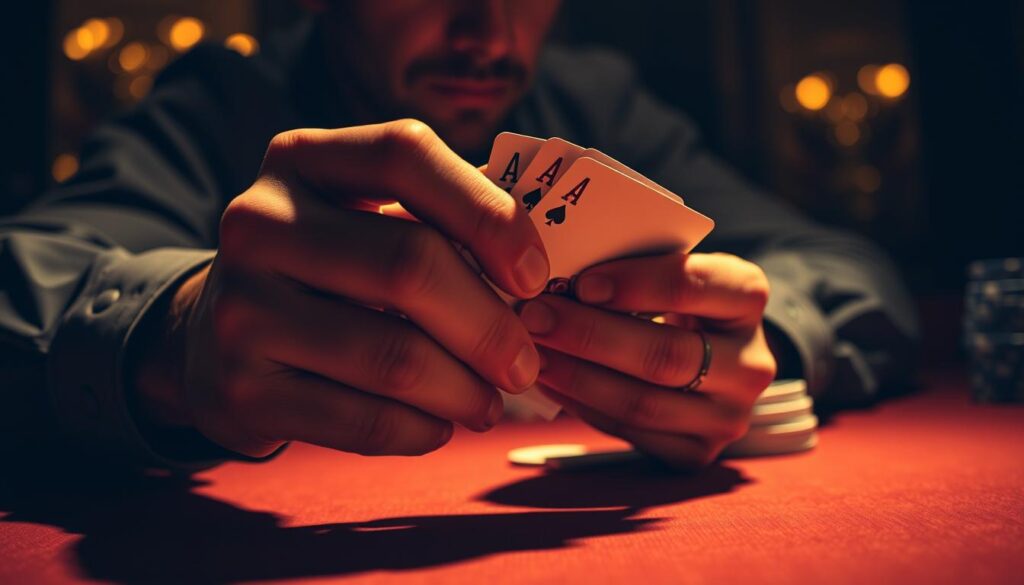
Doug Polk’s legendary 73s vs. KK hand is a great example. His bluff wasn’t just a Hail Mary—it was a mixed strategy poker masterpiece. He balanced his range like a chef pairing wasabi with dark chocolate: unexpected, but brutally effective. Your “balanced” range shouldn’t mirror some textbook 50/50 ratio. It should exploit your opponent’s specific tells.
Are they folding to river raises like Taylor Swift dodges bad press? Time to bluff heavier.
| Bluffing Tells | Value Bet Tells | Optimal Frequency |
|---|---|---|
| Overbet sizing | Pot-controlled bets | Context-dependent |
| Polarized ranges | Merged ranges | 35-40% bluffs |
| Timing tells | Instant calls | Opponent-specific |
Three rules for modern river warfare:
- Bluffs should tell a story even Picasso would admire—abstract but intentional
- Value bets need clearer narratives than a Netflix true crime doc
- Your mixed strategy should shift faster than TikTok trends
Remember: If your opponent isn’t occasionally folding better hands, you’re not bluffing enough. If they’re never hero-calling, you’re not value betting right. It’s not chess—it’s improv theater with math.
Blockers and Board Texture
Having the 2♠ might seem like getting a participation trophy. But it’s actually a key to winning at the river. It becomes very valuable when the board hints at a flush. You’re like Columbo, asking questions about who has the best hand.
Doug Polk’s play with KhKc is a great example. His blockers turned a weak river play into a big win. When third pair becomes a bluff-catcher, it’s not luck. It’s using card removal theory to limit opponents’ options.
Having the As on spade-heavy boards is not just about your hand. It’s about what your opponent can’t have.
Here are three ways to use board texture:
- The “CSI: Poker” Approach: Every river card changes the game. Does the 8♦ help straights or two-pair combos?
- Blocker Algebra: Your 7♣ is more than a card. It’s a variable in the equation “Opponent’s Bluff Frequency = (Your Fold Equity) ÷ (Their Gutshot Odds)”
- Blind Defense Calculus: When defending blinds, blockers protect you from position bullies
Your table image is like Schrödinger’s Cat. Are you a nit who never bluffs or a maniac who bluffs a lot? Your blockers decide what your opponent thinks you’re like before they decide at the river. This turns “probably folding” spots into money makers.
Remember, board texture tells stories, and blockers edit them. Your job is to be the ghostwriter of poker bestsellers. Now, make that 2♠ work as hard as a Starbucks barista during pumpkin spice season.
Reading Opponent Range Capping
When your opponent’s range is limited, you’re in a great spot. Range capping means they can’t play strong hands well. This turns poker into a game of mind games. Let’s explore how to use GTO strategies to outsmart them.
GTO Wizard’s equity charts show a harsh truth. Most players’ river strategies are full of holes. If their range peaks at middle pair, it’s time to bluff big. The goal is to use asymmetric warfare – be aggressive when they can’t play strong hands.
Three signs you’re facing a capped range:
- Check-calling sequences smoother than a TikTok influencer’s skincare routine
- Bet sizing that screams “I watched one Phil Ivey video in 2009”
- River raises as rare as a coherent Trump tweet
Multi-level thinking poker is easy here. Ask if their actual strong hands would take this action. If it smells off, start playing value hands. Bluff candidates should match your value hands’ blockers for consistency.
Remember: Adjusting strategy for opponents isn’t about outsmarting them. It’s about being more interesting. When their strategy is old, become the Nate Silver of hand ranges. Use equity distributions to your advantage and watch their chips dwindle.
Example Hand Analysis
Doug Polk’s 73s hand is like the Zapruder film of poker strategy. His button open-raise was not just aggressive – it was performance art. The sizing was so weak, it was like a college freshman at their first poetry slam. But why iso-raise with 7-high? It’s because fold equity trumps card equity against some opponents.
Let’s look at the preflop dynamics:
| Street | Action | Bet Size | Opponent Range |
|---|---|---|---|
| Preflop | Button Open | 2.5BB | Top 22% hands |
| Flop | Check-Raise | 3x | Weak draws |
| Turn | Barrel | 75% pot | Marginal pairs |
| River | All-In | 200% pot | Bluff-catchers |
The river shove wasn’t about having the best hand. It was about exploiting range capping. Polk’s sizing said: “Call this, and you’d better hope your hand cam’s recording.”
Three key lessons from this advanced postflop play:
- Against tight-aggressive players, your iso-raising strategy should mirror a shark’s feeding pattern – brief, violent bursts of pressure
- River overbets work best when your story makes less sense than a Christopher Nolan plot twist
- Limping here would be like bringing a whoopee cushion to nuclear negotiations – technically a play, but everyone loses
Notice how Polk’s line manufactured fold equity through precise sizing. The river bomb wasn’t just a bet – it was a psychological tax on doubt. When playing vs. aggressive regs, sometimes the best value comes from making them pay for their own skepticism.
Making Hero Calls/Folds
Hero folds are like walking away from a free buffet – it hurts at first but can save you. We’ll look at these tough decisions through math, because feelings don’t belong in poker calculations.
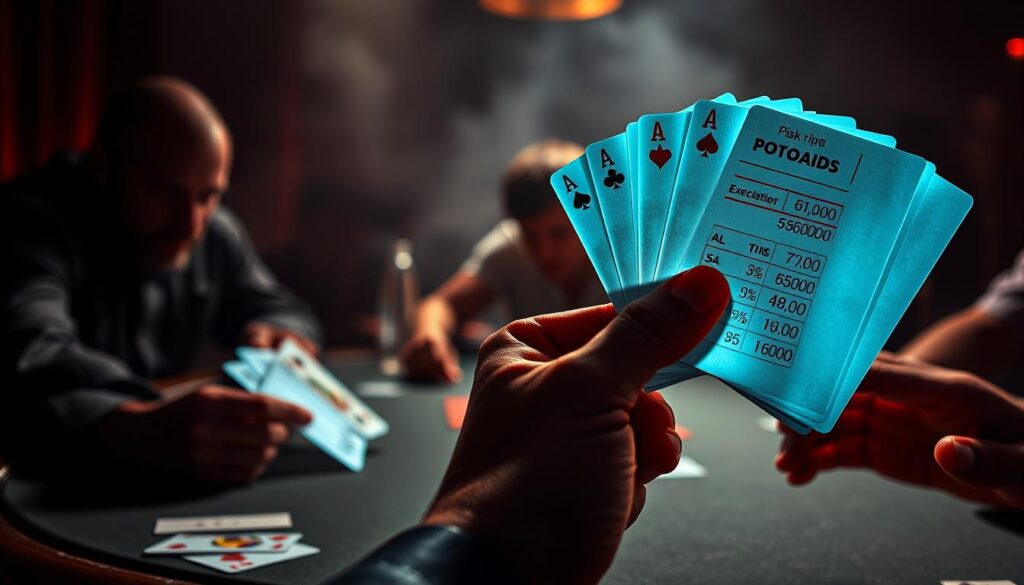
The river dilemma isn’t about reading minds – it’s about quick math. Think about this:
| Scenario | Pot Odds | Required Equity | EV Calculation |
|---|---|---|---|
| Facing 2/3 pot bet | 3:2 | 40% | +$12.50 |
| All-in river raise | 2:1 | 33% | -$12.80 |
| Thin value bet spot | 4:1 | 20% | +$24.00 |
Playing draws aggressively changes the game. When opponents bet big, their hands are either strong or weak. You need to figure out which.
Three key things to think about when making hero calls:
- Stack-to-pot ratios (SPR) – how much you can afford to lose
- Blockers – what your cards tell you about the opponent’s hand
- Bet sizing tells – what the bet size says about the opponent’s hand
Thin value betting can be tricky. A river check-raise might be a bluff or a strong hand. Folding is not giving up – it’s a smart move.
Understanding advanced pot odds and EV is key to winning. When facing a tough decision, ask yourself: “Would I make this call with my rent money?” If your gut says no but the math says yes, maybe play for matchsticks instead.
Conclusion
River play poker is where the strong survive. We’ve learned how to read bet sizes and bluffing strategies. These skills turn river play into a strategic game.
Your poker game now includes advanced tactics and intuition. Think of it like having Tony Stark’s tech in Sherlock’s mind. Phil Ivey once said, “Poker’s a day to learn, lifetime to master.” Knowing how to play preflop is important, but it’s the river play that pays off.
Look out for opponents who stick to their range too much. When they check on paired boards, it’s a sign of weakness. Use blockers to end the game quickly, like Jason Bourne.
This isn’t just about luck. It’s a battle of wits with better rewards. Every decision you make adds up, like compound interest. Are you ready to make your opponents fold fast? The final card is out. It’s your turn, champion.
Leave a Reply