
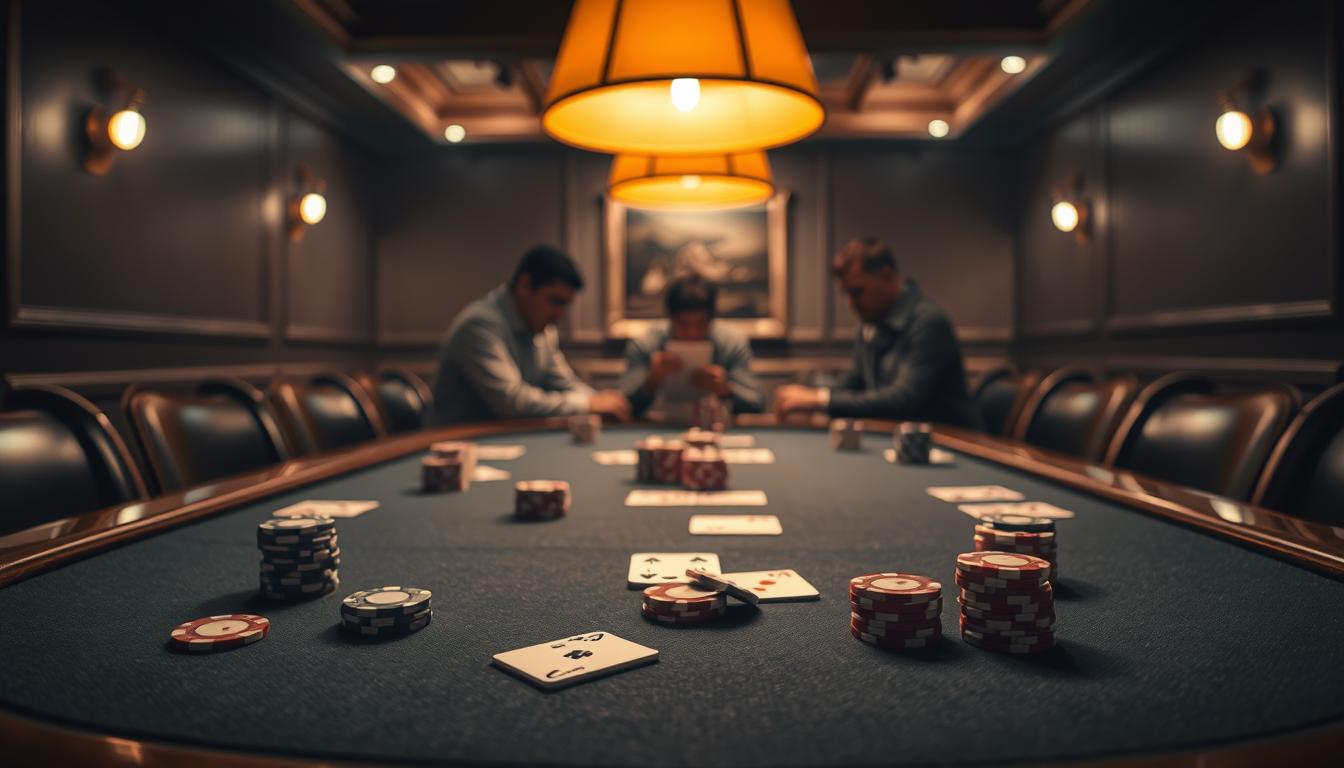
Imagine James Bond in a velvet chair, a sly smile on his face. He moves chips forward, showing skill over luck. Holdem poker is a mix of math and mind games.
Poker hand rankings are like chess openings. A master knows the basics, not just tricks. A royal flush is like a quick win. But a pair of twos is like a risky move.
Unlike chess, poker players use body language. It’s like hiding your queen until the end. Poker table position is key. Early seats are tough, but late seats give you power.
We’ll explore poker’s secrets, from hand rankings to table position. In Texas hold’em, winning is about outsmarting others, not just luck.
What is Texas Hold’em?
Think of Texas Hold’em as poker’s fast-paced version, like TikTok. It’s all about quick action and showing your hand. Unlike draw poker, Hold’em is all about shared information and strategy.
The magic is in the community cards. These are five face-up cards that change the game. Your two hidden cards start as a secret, but the community cards reveal everything.
The flop, turn, and river are like plot twists. They turn a “maybe I’ve got something” into “oh God, they definitely have something” fast. It’s like Ross yelling “PIVOT!” in Friends.
Hold’em’s DNA Breakdown
| Element | Hold’em | Traditional Draw |
|---|---|---|
| Information Flow | Public drama (community cards) | Private guessing game |
| Strategic Depth | Positional warfare | Solitaire-esque swaps |
| Key Skill | Reading opponents | Probability math |
Your seat at the table is key. Early position is like driving shotgun, acting first but seeing nothing. Late position is like the backseat driver, watching everyone else before you.
This makes every decision count, turning texas holdem hands into complex puzzles.
Betting rounds add to the tension, like a Tarantino movie. You’re not just playing cards; you’re playing with perceptions and odds. And sometimes, you bluff like a politician. The best part? You only need two cards and a strong nerve to win.
Game Setup and Positioning
Imagine the poker table as Westeros from Game of Thrones. Each chair is like a kingdom, with the dealer button being the Iron Throne. It gives the player who sits there a lot of power.
The blinds are like the Night’s Watch. They have to make bets to protect the table, just like they defend against the White Walkers.
| Position | Nickname | Power Level | Strategic Advantage |
|---|---|---|---|
| Button | The Godfather | ★★★★★ | Acts last on all post-flop streets |
| Small Blind | Red Wedding Host | ★☆☆☆☆ | Forced to act first post-flop |
| Under the Gun | Jon Snow | ★★☆☆☆ | Knows nothing (positionally speaking) |
Positional power is like Michael Corleone’s negotiation skills. Acting last means you can make offers that others can’t refuse. Early positions are like Fredo’s role – you have to act first without knowing what others will do.
3 key poker position strategy truths:
- Late positions steal 43% more pots (WSOP 2023 data)
- Button players see 72% more flops profitably
- Blind positions lose 2.1BB/100 hands on average
Position is like the dealer’s rules in blackjack. Late positions have a statistical advantage. When you act last, you can see how strong your opponents’ hands are.
- Check-call patterns
- Bet sizing tells
- Timing tells
Pro tip: Use the cutoff seat like Tyrion uses wine. It loosens up opponents before the real battle starts. A well-timed raise here makes the button defend wider ranges, creating chaos.
Step-by-Step Gameplay
Texas Hold’em is like a five-act tragedy where fortunes change fast. It’s a game of chips and chance. Here, poker betting structures turn quiet players into champions.
Dealing Hole Cards: The Prologue
Your two face-down cards are like a secret code. They hint at great wins or big losses. Remember, getting AA is as rare as a clear Trump speech.
The Blinds: Gladiator’s Gate
Texas Hold’em meets Gladiator here. The small blind is like a weak attempt at fairness. The big blind is like Maximus, ready to defend its territory. Missing your blind is like shouting to empty seats.
Pre-Flop Through River: Shakespearean Streets
The game goes through four stages:
- Pre-flop: Players fold quickly, like Superman on laundry day
- Flop: Three community cards change the game like a Tarantino twist
- Turn: The fourth card changes everything, like a Broadway surprise
- River: The final card decides your fate, like Walter White mixing chemicals
Betting Rounds: Phone Booths & Nukes
No limit holdem makes poker a strategic battle. Limit games are like a phone booth fight. No-limit is like using chips as atomic bombs. Common moves include:
- Check (like saying “I’m just browsing”)
- Raise (like Loki challenging Thor)
- All-in (like going Full Metal Jacket)
In poker betting structures, the line between genius and madness is thin. Choose your battles wisely, like Patton picking tank formations. But, do it quietly.
Showdown and Determining a Winner
Imagine the final bet’s called, and the river card looks like Clint Eastwood’s squint. It’s poker’s high-noon moment. Here, bluffs are exposed, and truth is revealed. It’s not just comparing cards; it’s the moment where poker pots explained turn into real money.
After the last betting round, players show their hands. Sometimes, a three-way Good, the Bad and the Ugly standoff happens. This is when split pots occur, like drawing straws but with bigger stakes.
Hand rankings work like baseball. A two-pair might seem great until a flush is shown. And kickers are like tiebreakers in the 9th inning. If both players have ace-high:
| Player 1 Hand | Player 2 Hand | Kicker Decider |
|---|---|---|
| A♠ K♦ | A♥ Q♣ | King beats Queen |
| 10♠ 10♥ | 10♦ 10♣ | Split pot (equal kickers) |
| 7♦ 2♣ | 7♥ 3♠ | 3 beats 2 |
Pro tip: Don’t slow-roll your reveals like a movie villain. That’s how you get drinks thrown at you. Instead, remember these showdown truths:
- Community cards are democracy in action – everyone uses them
- Suits don’t matter unless you’re in a flush duel (spades don’t beat hearts)
- Your kicker is either your best wingman or worst liability
Remember, poker pots get divided quickly when hands are equal. If poker pots explained are confusing, ask yourself: “What would Tuco do?” Then check the hand rankings.
Texas Hold’em vs Other Poker Variants
Imagine Nikola Tesla and Thomas Edison arm-wrestling over alternating current. That’s what Texas Hold’em and Omaha poker are like. Both use community cards, but Omaha’s four-hole-card madness makes Hold’em seem simple.
Hold’em players hold two hole cards like they’re precious. Omaha gives you four, but you must play only two. It’s like having a Swiss Army knife in a gunfight. This “four-card Monte” complexity turns Omaha into a game of math, where hand strengths change quickly.
Let’s look at the main differences through a cultural lens:
| Texas Hold’em | Omaha | |
|---|---|---|
| Philosophy | Minimalist jazz improvisation | Baroque symphony composition |
| Hole Cards | 2 (use 0-2) | 4 (must use 2) |
| Nut Hands | Usually obvious | Often counterintuitive |
Omaha’s forced two-card marriage leads to more hand combinations than a Vegas buffet has shrimp. While Hold’em players focus on position and tells, Omaha players need to think like they’re solving math problems.
This isn’t about which game is better. It’s like comparing apples to jet engines. Hold’em is simple yet deep. Omaha is chaotic and mathematically challenging. The real question is: Do you want to play poker, or solve quantum equations with cards?
Example Hands (with Illustrations)
Ever stared at your cards like they’re abstract art, wondering if you’re holding genius or garbage? Let’s explore Texas Hold’em hands through pop culture and strategy. This is your tour of poker’s greatest hits—no beret needed.
Van Gogh’s Pocket Rockets vs Picasso’s Suited Connectors: Holding pocket aces (AA) is like Starry Night’s brushstrokes. 7♣8♣ is like Guernica’s chaos. Aces dominate early, like Michael Scott demanding attention. 7♣8♣ is Dwight Schrute, quietly dangerous in late positions.
With K♥Q♦ facing a big raise, choose wisely. Swallow the red pill (fold) or call like Neo dodging bullets. Morpheus wouldn’t bluff here.
Let’s look at three key scenarios:
- The Bicep Flex (Early Position): You’ve got JJ under the gun. Play them strong but controlled, like Van Gogh. Overbetting is like tattooing “World’s Best Boss” too soon.
- The Chess Move (Late Position): 9♦10♦ on the button? Picasso time. Float and sting when the river completes your flush. This art can be cashed.
- The Schrödinger’s Hand (Blind vs Blind): A♦5♠ heads-up? It’s both trash and treasure until someone bets. Treat it like Jim’s prank on Dwight—sometimes the threat is better than the execution.
Position changes Texas Hold’em hands like lighting changes a gallery. That 7♠2♥ in early position? Basement material. But in late position, it’s like Banksy’s shredder stunt—annoyingly effective.
Pro tip: If your hand analysis feels confusing, you’re overcomplicating it. Great poker isn’t about charts—it’s about reading the room like an art critic at MoMA.
Common Mistakes New Players Make
Learning Texas Hold’em is like watching a horror movie marathon. You’ll scream “Don’t go in there!” at predictable disasters. Let’s look at three strategic blunders that turn hopeful players into poker’s version of final girl casualties.
The Overplayed Pair: Your Doomed Prom Date
That pocket pair feels like royalty – until the flop reveals three suited cards. Clinging to queens like they’re your homecoming crown? That’s the poker equivalent of ignoring the masked killer’s footsteps. Seasoned players call this “set mining” territory – fold faster than a horror victim drops their flashlight.
Tilt: Icarus at the Poker Table
We’ve all been there. Three bad beats later, you’re chasing losses like Walter White chasing empire. This isn’t Breaking Bad – your pride won’t cook up blue-chip magic. Recognize tilt’s warning signs: clenched jaw, racing pulse, irrational belief that this 7-2 offsuit deserves a raise.
- Emotional Bankroll Management: Set loss limits like you’d set a horror movie timer
- Reality Check: Even Phil Ivey loses 45% of hands – would he rage-shove here?
- The Walkaway: Sometimes surviving the night means leaving the cabin
The Overpair Trap: Pride Before the Fold
Holding pocket kings against four hearts on board? That’s not poker – that’s Greek tragedy. Like Icarus flying too close to the pot odds, you’ll melt your stack faster than wax wings in sunlight. Remember: Folding aces pre-flop once saved Daniel Negreanu $1.6 million. Your $20 buy-in deserves similar respect.
Texas Hold’em for beginners requires recognizing these patterns before they become habits. The real skill isn’t avoiding mistakes – it’s spotting them faster than a final girl finds the hidden knife. Keep your horror story subplots where they belong: on Netflix, not at your poker table.
Glossary of Important Terms
Think of this as Urban Dictionary meets Sun Tzu – your cheat sheet for translating poker’s tribal dialects. Let’s cut through the jargon fog with military-grade clarity.
Ante: The cover charge at Club Poker. Every player tosses this small forced bet into the pot pre-game, like paying admission to a speakeasy. Pro tip: Antes turn up the heat in tournament play – they’re the espresso shot that gets the action moving.
Blinds: The mob protection money of poker. These forced bets (small blind/big blind) rotate clockwise, ensuring there’s always something worth stealing. Unlike the official glossary, we’ll tell you the truth: blinds exist to create drama, not fairness.
- Check-Raise: The Trojan Horse of poker strategy. First you whisper “check” like a harmless civilian, then BAM – you storm the gates with a raise when opponents drop their guard. Caesar would approve.
- All-In: Going full Evel Knievel. You’re either jumping the Grand Canyon or crashing in flames – there’s no middle ground.
- Fish: The ATMs of the poker world. They’re why casinos can afford those $500 steaks.
Here’s the brutal math: blinds and antes are poker’s inflation mechanism. They escalate relentlessly, turning your carefully guarded stack into pocket change faster than a Weimar Republic banknote. Master their rhythm, and you’ll be composing sonnets while others panic.
Remember – in poker, as in life, the real power lies in redefining the terms. Now go make Shakespeare proud.
Practice Recommendations
Ever seen a piano virtuoso skip scales? Neither have successful poker players. Mastering Texas Hold’em for beginners needs the same dedication as learning music. It’s about building your poker skills through practice, not just playing.
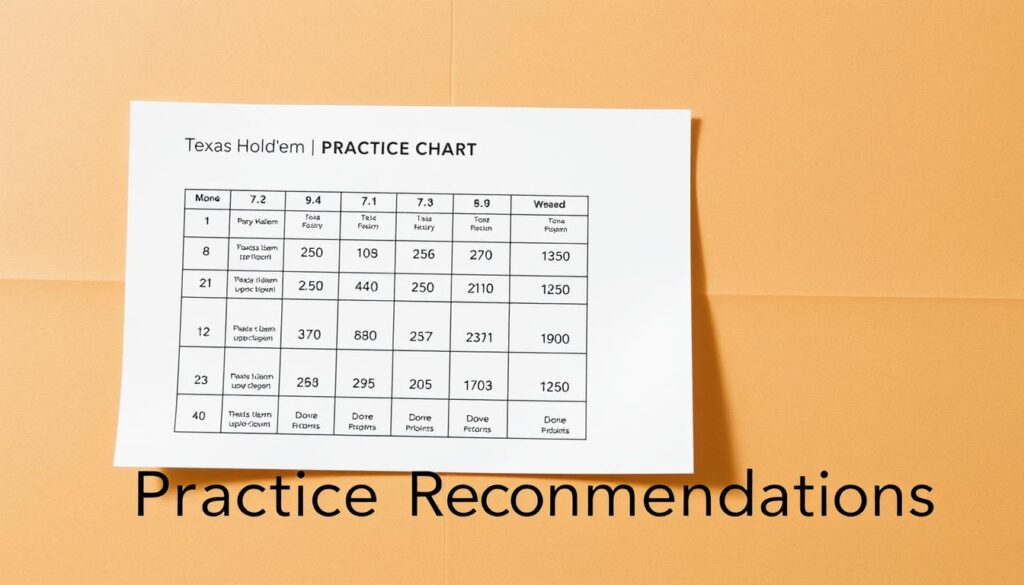
Begin by treating hand charts like multiplication tables. They’re not cheat sheets, but tools to build your skills. Learning which starting hands to play is a key step. This knowledge helps you make quick decisions at the table.
Here’s your training regimen:
- Drill baby drill: Use free platforms like PokerStars Play to play 100 hands daily. It’s like batting practice – you’ll learn to avoid bad hands.
- Embrace the suck: Lose 50 buy-ins before playing with real money. It’s like Rocky taking punches – you need to get used to losing.
- Review like Hitchcock: Analyze every major hand after the game. Ask yourself if your play would make the cut.
Pro tip: Have a “lab rat” account separate from your main money. It’s for trying new things without risking your real money. Use apps to track your progress and learn from your mistakes.
Remember: Even Phil Ivey started folding 7-2 offsuit somewhere. The path to Hold’em mastery is about making smart choices, not just winning big. Now go out there and beat those beginners until you’re the best.
Conclusion: Your Path to Hold’em Expertise
Learning Texas Hold’em poker rules turns you from a fan into a player. It’s like Odysseus avoiding sirens, not just taking pictures. The game’s popularity soared after Chris Moneymaker’s 2003 WSOP win and TV shows like Texas Hold’em.
Success in the game isn’t just about luck. It’s about using your brain like Sun Tzu planned battles. You need to think strategically, not just play by instinct.
Every hand is like a chess game, where you need to guess what others might do. Study Doyle Brunson’s “Super/System” to learn how to play well today. The number of WSOP players tripled from 2003 to 2004. This shows that staying updated is key to winning.
The river doesn’t care about your feelings. You should think about the odds like a business plan. Read your opponents like a stock analyst and fold when it’s smart. The 2006 WSOP main event had 8,773 players. They all knew the rules, but not all were winners.
Real skill comes from planning your moves, not just playing cards. As Yoda might say, “Forget what you know about luck.” Start your journey to becoming a master by seeing every hand as a challenge to solve.
Leave a Reply