

Ever feel like you’re playing checkers while everyone else is playing chess? Welcome to the digital felt, where your seat at the table isn’t just physical real estate – it’s your strategic command center.
I used to treat my online poker position like that extra garnish on a fancy plate: decorative but ultimately irrelevant. How tragically wrong I was. In the virtual arena, where physical tells vanish into algorithms and timing data, your seating becomes everything.
Think of it as seeing the Matrix code. That moment when Neo stops dodging bullets and starts bending reality? That’s what proper positional awareness feels like. You’re not just reacting to bets – you’re orchestrating them.
The difference between being the predator and the prey often boils down to one simple question: who sees the action first? In this game, information is currency, and position is the vault.
Stealing Blinds
Stealing blinds is like a strategic move in poker. It’s not cheating, just using the game’s structure to your advantage. When you act last, you have a big advantage. You know what everyone else has before they even show you.
Online poker makes blind stealing easier. Players often get distracted, making them easier targets. I’ve seen many blinds stolen, like in an action movie.
To steal blinds successfully, you need to understand the math. Here are some key points:
| Position | Success Rate | Recommended Hand Range | Blind Tendency |
|---|---|---|---|
| Button | 68-72% | Top 40% hands | Most vulnerable |
| Cutoff | 55-60% | Top 30% hands | Moderately defensive |
| Hijack | 45-50% | Top 20% hands | Often alert |
The numbers show how important your position is. The button is the best spot, like being the last to speak in a debate.
Look for signs of weak blinds. Do they fold often? Play fewer hands from the blinds? These players are easy targets. For more tips, check our guide on stealing blinds successfully against tough opponents.
Timing is key, not just your cards. I’ve won with weak hands when the situation called for boldness. If the blinds are quiet and passive, your position is your strongest asset. It’s about what they might fold, not what you have.
Stealing blinds isn’t about winning every hand. It’s about keeping pressure and winning small victories. These small wins add up to big profits over time. Stealing blinds consistently is like earning compound interest for your chips.
Ranges by Position
If poker were a symphony, early position would be the cautious opening notes. Late position would be the dramatic crescendo. The early vs late dynamic changes which cards you play.
Early position is like being the first speaker at a TED Talk. Every word matters, and mistakes echo. You need strong hands like pocket pairs and high cards that won’t fold.
Late position lets you be the closing keynote speaker. You’ve seen everyone else’s moves. This knowledge lets you play more speculative hands.
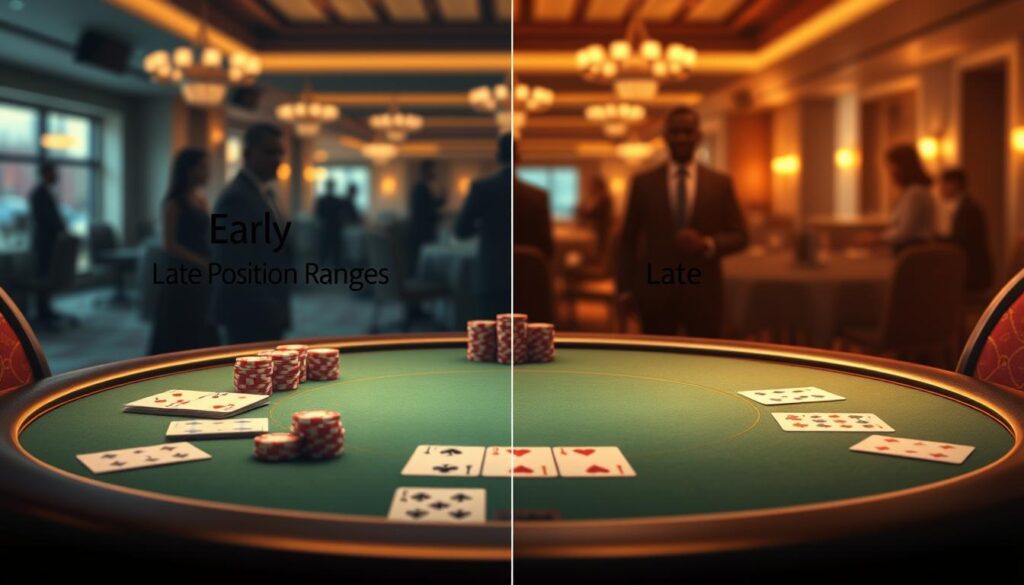
Online poker exposes mistakes quickly. The fast pace means errors add up fast. Players who treat all positions equally are at a disadvantage.
| Position | Premium Range | Speculative Range | Fold Percentage |
|---|---|---|---|
| Early Position | TT+, AK, AQ | Limited to strong suited connectors | 85-90% |
| Middle Position | 77+, AJ+, KQ | Suited connectors, small pairs | 75-80% |
| Late Position | 22+, AT+, any broadway | Most suited hands, gap connectors | 60-65% |
| Blinds | Varies by action | Defensive calling range | Situational |
The table shows the difference in hand choices. Late position allows more speculative play. This is a strategic advantage, not just luck.
Knowing poker positions makes your game better. The best players don’t have better cards. They have better positioning.
Your hand choices should change like your conversation style. Early position is formal. Late position is creative. Mastering early vs late play makes your game stronger.
Playing Against Aggression
Online poker is like a high-stakes chess game. Your seat at the table is key. Early position raises are like a formal invite to a party. Late position aggression is just a show, like a peacock’s display.
I created a “positional response matrix” after seeing many players fall to bluffs. It’s like a guide for handling aggression:
- Early position raises: Treat like a signed declaration of war
- Middle position moves: Approach like a cautious trade negotiation
- Late position attacks: Respond like you’re dealing with a street magician’s bluff
The digital world adds interesting twists to poker battles. Anonymity makes timid players bold, like internet trolls. Multi-tabling creates patterns that skilled players use to their advantage.
Hand history tracking is your secret tool. It’s like having CCTV footage of opponents’ moves. You’ll see who folds to aggression and who only plays big hands early.
Countering aggression needs precision. A late position attack should be like a master fencer’s parry. Early position challenges need respect, but sometimes folding is the best move.
Position isn’t just about attacking. It’s also about defending. Knowing when to stand firm, retreat, or strike back makes you a pro. It’s like being a grandmaster making a winning move.
Building a Positional Advantage
Think of positional advantage as poker’s version of compound interest. Small edges build up quietly until they become huge. The importance of position turns into a powerful tool when used across many hands against certain players.
Online poker makes this effect even bigger. You play more hands, face more opponents, and learn more about their positions. Digital tables make position your strategic advantage.
My framework finds players who are weak in position. They’re quite common. Adjust your strategy based on the table’s flow. The online world makes position even more valuable than in real-life rooms. It’s like building your own castle to see the battlefield.
Position isn’t just where you sit. It’s how you think. Master this, and you’re not just playing cards – you’re playing the players.
Leave a Reply