
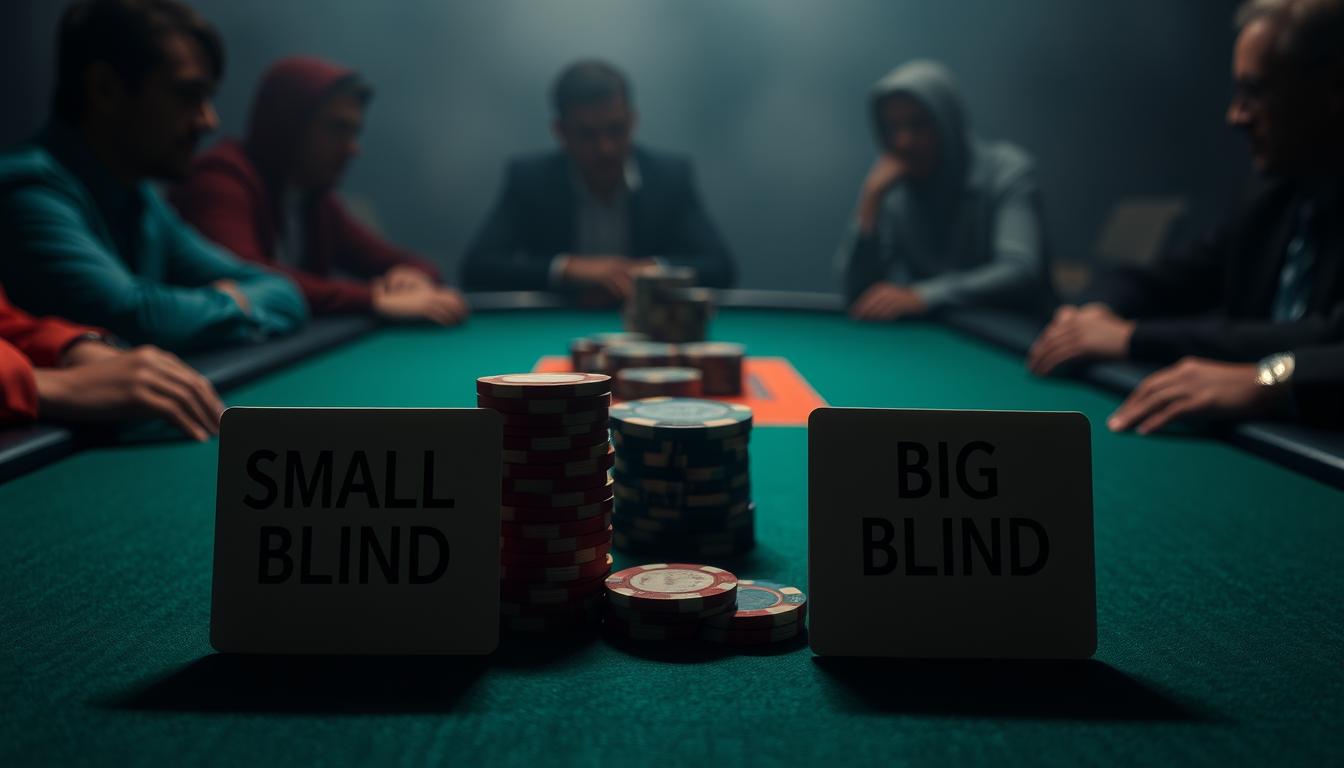
Imagine sitting at a table where folding doesn’t mean you’re off the hook. Welcome to poker’s financial inception point. Here, every round starts with bets that are mandatory. These forced investments are not just rules; they drive every bluff, raise, and fold.
Blinds and antes are like the cover charge for poker’s endless party. Without them, the game would fall apart quickly. They add urgency, making players act instead of just waiting.
Why should you care? Learning about these pressure points changes how you play poker. Every bet you make reduces your stack and tightens your decisions. It’s a game where you pay to play, or you get played.
In games like Texas Hold’em and Omaha, these betting structures shape the game more than luck. They’re like silent auctioneers, making sure every hand costs something before the first card is dealt. Forget about folding your way to safety – here, even survival comes with a price.
Introduction: The Purpose of Forced Bets
Imagine a poker table without blinds—it’s like a rock concert without speakers. Forced bets add drama, turning casual games into intense battles. Without them, games could become boring, with players waiting for rare hands.
Blinds and antes are like the entry fee for each hand’s story. They create immediate stakes, making players act instead of watch. In Texas Hold’em, the small and big blinds push the game forward, whether you’re ready or not. It’s not just about basic poker rules; it’s about survival.
Why does this matter? Let’s break it down:
| Scenario | Without Forced Bets | With Forced Bets |
|---|---|---|
| Player Engagement | Passive waiting game | Strategic urgency |
| Pot Size | Stagnant (like a dry well) | Dynamic growth |
| Game Pace | Snail’s marathon | Cheetah’s sprint |
This tension is why even tight players must ante up. Our complete guide to forced bets explains how they keep games exciting. They’re the invisible hand of Adam Smith at card tables, creating action through pressure.
Next time you post your blind, remember: you’re not just throwing chips away. You’re buying a ticket to the show.
The Mechanics of Blinds
Why does the poker table feel like Congress with better snacks? It’s because the blinds system works like a twisted bipartisan policy. Everyone pays, but not the same amount. The seat you’re in determines how much you pay.
Small Blind: The Bargain Basement Seat
The small blind is like a discounted subway fare in poker. You pay to play, but at half the price. This seat is right next to the dealer and requires the minimum forced bet.
But there’s a catch:
- You act first post-flop – like being forced to speak first in a debate
- Your stack bleeds slowly but consistently
- Survival requires the strategic subtlety of a chess grandmaster
Big Blind: The Iron Throne of Forced Bets
The big blind is where democracy goes to die – you pay full price for acting last pre-flop. This seat has:
- Double the small blind’s ante
- Positional power that would make Putin jealous
- Constant vigilance against late-position raiders
| Small Blind | Big Blind | |
|---|---|---|
| Cost | 50% of big blind | Full ante |
| Positional Power | Weakest post-flop | Strongest pre-flop |
| Survival Tactic | Tight-aggressive | Selective defense |
At the 2022 WSOP Main Event final table, Maria Ho made her big blind a fortress. She folded 83% of hands but never let opponents steal cheaply. Daniel Negreanu, on the other hand, treats the small blind like an improv stage. He constantly adapts through unpredictable raises.
When and Why Antes Are Used
Antes are like a group fee to play poker. Everyone pays upfront to play. Unlike blinds, antes make the pot grow faster, like a quick fix.
In tournament late stages, antes are common. They help get the game going when it’s slow. This is like a kickstart for the game.
Tournaments use antes to speed up the game. When players have less money, antes make pots bigger by 20-30%. It’s like a boost for the game.
Cash games rarely use antes. But when they do, it’s in special games or high-stakes situations. It’s like a rare sighting.
Let’s look at the math. In a $1/$2 game with $0.25 antes, pots grow by 12.5% before cards are dealt. It’s like doubling your bet in blackjack. But in poker, you’re the house, and it’s tough.
This makes players play tighter and more aggressive. It changes how they play the game. It’s like a new strategy.
- Tight players become accidental philanthropists
- Aggressive stacks gain tax-collector privileges
- Fold equity drops like a meme stock
Modern tournaments often have ante-only phases late in the game. It’s because watching players fold for hours is boring. Antes make the game exciting, but tough for players.
| Format | Ante Frequency | Strategic Impact |
|---|---|---|
| Tournaments | Every hand (late stages) | Forces aggression, shortens play |
| Cash Games | Rare (special formats) | Increases variance, loosens ranges |
Next time you play, remember: antes are more than chips. They’re like a crowd-funded drama. The game becomes an economy where folding costs more than your pride. Play smart, or you’ll be printing money for everyone else.
How Blinds and Antes Shape the Action
Blinds are like poker’s clock, pushing players to act before time runs out. They turn cautious players into bold ones, creating a rhythm of risk. This difference separates hobbyists from pros. Want to see how? Let’s look at the numbers like Brad Pitt in Moneyball.
When antes start, pre-flop raises jump by 37%. That tight player you’ve been watching? They’re now like Tony Soprano, collecting “protection” to stay in the game. The table below shows how blinds change player behavior:
| Player Type | Pre-Ante VPIP | Post-Ante VPIP | Aggression Shift |
|---|---|---|---|
| Tight-Aggressive | 18% | 42% | +133% |
| Loose-Passive | 55% | 68% | +24% |
| Nit | 9% | 27% | +200% |
Even nits triple their play with blinds. It’s like casino caffeine. Folding costs more than playing weak hands. Why do players risk it all with 7-2 offsuit? The pot’s already big before cards are dealt.
This pressure changes poker position strategy a lot. Late positions are gold mines as blinds grow. Early positions are like rush-hour commuters, forced to act fast.
The psychological effect is like a mob racket: pay blinds or leave. This creates a paradox. The bets that keep the game going also make players want to slow-roll their exits. Next time someone looks upset posting their big blind, remember: they’re not just losing chips. They’re paying homage to the poker gods.
Adjusting Your Strategy for Blinds and Antes
When blinds start eating your stack, it’s time to change your game. I’ve seen many players struggle at this point. Let’s explore how to make it through.
The 5% Rule: When blinds reach 5% of your stack, you’re in a tight spot. Every decision must be precise. Forget about fancy bluffs and focus on solid moves.
- Precision shoving ranges tighter than airport security
- Blind-stealing tactics sharper than a stand-up comic’s roast
- Fold equity calculations that would make NASA engineers nod approvingly
Omaha players face a unique challenge. The pot-limit structure changes how hands are valued. Suddenly, certain hands become much more valuable.
| Stack Size | Strategy Focus | Omaha Adjustment | Action Threshold |
|---|---|---|---|
| 5-15 BB | All-in or fold calculus | Prioritize nut draws | 3x BB steal attempts |
| 16-30 BB | 3-bet polarization | Limit multi-way pots | 5% stack risk cap |
| 30+ BB | Post-flop manipulation | Leverage blocker effects | 2% pot commitment |
Deep-stack players, this is your chance to shine. You’re not just playing cards; you’re building fold equity. Why play weak hands when you can make opponents fold?
Omaha-specific hacks:
- Treat A2xx like it’s radioactive – unless double-suited
- Multiply your outs calculation by 0.75 (reality check included)
- Attack limpers like they’re buffet lines at a Vegas casino
Remember, blinds are more than just bets. They control the game’s pace. Adjust your strategy wisely, and your chances of winning will improve.
Blinds and Antes in Tournaments vs. Cash Games
Imagine your mortgage doubling every 15 minutes. That’s what happens in tournament poker. It’s like a Hunger Games where you must constantly adapt to survive. Cash games, on the other hand, have fixed blinds, allowing players to play steadily like Jordan Belfort.
Let’s explore the Texas Holdem rules in these two worlds:
- Tournament Escalation: WSOP Main Event blinds grow fast, like Elon Musk’s Twitter debt. They start at 100/200 and can reach 50k/100k quickly. This makes players fold more and play aggressively, like Katniss Everdeen.
- Cash Game Consistency: Vegas $1/$2 tables keep their blinds steady, like Switzerland’s inflation. Players can fold weak hands for hours, saving their bankrolls longer than Martin Scorsese’s films.
Now, let’s look at the strategies:
| Factor | Tournaments | Cash Games |
|---|---|---|
| Blind Behavior | Exponential growth | Flatlined consistency |
| Risk Tolerance | All-in or bust calculus | Precision betting art |
| Stack Psychology | Survival mentality | Infinite rebuy calm |
In late tournaments, antes become financial risks. That extra 5k ante is like a tribute to the poker gods. In cash games, antes are rare and gentle.
Smart players adjust like political operatives:
- Tournament players get aggressive when blinds are 10% of their stack
- Cash game players bet with Spock-like precision
- Hybrid players switch strategies fast, like a Tesla Plaid
The key is to master both formats without losing your mind. Folding 40 hands straight at Bellagio and then going all-in at the WSOP requires Meryl Streep’s range.
Common Pitfalls and How to Avoid Them
Even Vegas legends sometimes make big mistakes with blinds. They treat blinds like a toddler with scissors, with too much excitement and regret. Let’s look at poker’s seven deadly sins of forced bets through the eyes of history’s greatest strategic blunders.
The Blind Defense Fallacy makes players act like they’re saving the world. Why do smart players protect their big blind so much? It’s simple math that shows this is a bad idea:
| Pitfall | Why It Burns You | Antidote |
|---|---|---|
| Overdefending Blinds | Loses 3x more chips than it saves | Fold 60% of hands pre-flop |
| Ignoring Ante Impact | Blinds eat 15% of stack/hour | Adjust opening ranges by 25% |
| Tilt Chasing | 47% of players go on monkey tilt | 3-bet or fold – no limping |
| Position Blindness | EP mistakes cost 2.8x more | Use HUD stats religiously |
I once saw a Wall Street quant lose his Rolex defending the small blind with 7-2 offsuit. He thought, “The implied odds!” But some lies we tell others, and some we tell ourselves.
Blindsteal addiction is like a bad habit in tournaments. That feeling of getting “free” chips? It’s not as free as it seems. Smart players keep track of their steal frequency like they count carbs:
- Ideal steal range: 22-25% of hands
- Adjust for table dynamics (not ego)
- Abandon ship after two fails
Remember, every chip you save from forced bets is a chip for later. Treat blinds and antes like a congressional budget debate. Be ruthless and strategic with your spending.
Mastering Blind Play
Blinds are more than just bets. They’re a strategic game where your poker table position matters a lot. Sitting in the button position is like having a throne. Each round is a chance to change the game’s balance of power.
Playing in early position is like surviving in the wild. When you act first after the flop:
- Play 30% fewer hands than late positions
- Think of suited connectors as dangerous traps
- Be like a fortress – either build big or fold quietly
But in late position, you become a master strategist. Use our blinds structure analysis to make smart moves:
| Position | Leverage Tactic | Expected ROI |
|---|---|---|
| Cutoff | Steal 3x more than you defend | +12bb/100 |
| Button | Isolate weak limpers 70% of time | +18bb/100 |
| Small Blind | 3-bet or fold (no middle ground) | -5bb/100* |
*Yes, the SB sucks. Even Sun Tzu would retreat here sometimes.
True poker position strategy mastery means thinking ahead:
- Guess what hands they think I have.
- Guess what hands they think I think they have.
- Use their confusion to my advantage.
Every blind steal is like a political campaign. It’s not just about chips. It’s about changing the game’s story. The player at the button controls the game’s story.
Conclusion: Using Forced Bets to Your Advantage
Forced bets in poker are more than just entry fees. They’re the fuel that keeps the game going. Think of poker blinds and antes like Wall Street’s options premiums. You pay to play, but with the right strategy, you can win more than you lose.
The house always wins because it knows mandatory investments create action. Why shouldn’t you?
Learning the basics of poker around forced bets can turn you from a survivor to a winner. When you’re in the big blind, you’re not just defending chips. You’re controlling the pot odds like a stock volatility expert.
Antes shrink stacks like inflation erodes savings, pushing players to make moves they’d prefer to avoid. Become the economic force others react to.
This isn’t about memorizing charts. It’s about seeing the table as a marketplace. Position and pressure dictate value here. Tighten ranges when antes balloon. Attack limpers like activist investors target underperforming stocks.
Turn mandatory contributions into leverage points – the poker equivalent of using margin without the interest.
The greatest players treat blinds and antes as chess grandmasters view tempo. Not as costs, but as tools to dictate the game’s rhythm. Your next move? Stop resenting forced bets. Start weaponizing them. After all, in a game built on forced investments, the smartest player becomes the bank.
Leave a Reply