
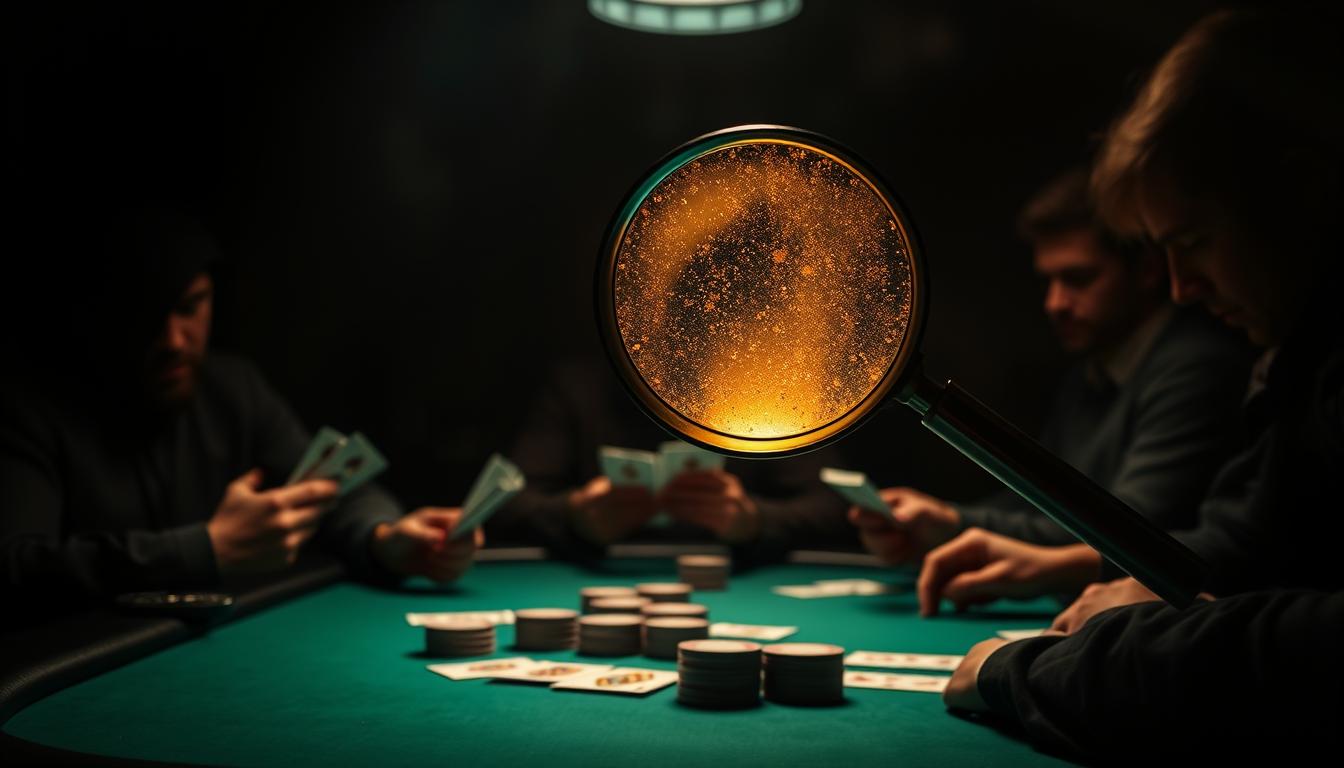
Chess grandmasters don’t just move pieces—they orchestrate psychological warfare. Replace rooks with river cards, and you’ve got high-stakes poker. While amateurs focus on hole cards, pros play people. I once saw a World Series regular fold AA pre-flop because of his opponent’s pinky twitch. That twitch screamed “nut flush.” That’s the power of reading poker tells.
But here’s the twist: modern players aren’t sweating bullets at smoky tables. Online, tells mutate into timing patterns and bet-sizing tells. Jamie Gold’s legendary 2006 run wasn’t about spotting nervous ticks—it was table image manipulation so precise, opponents wanted to hand him chips. He turned his own reputation into a weapon, like a magician “accidentally” revealing a card.
Remember Rounders’ infamous Oreo tell? Cute Hollywood fiction. Real psychological camouflage involves curating perceptions across hours—leaking false patterns like a spy planting decrypted codes. Your “tight” image becomes bait for bluffs; your “loose” rep sets traps for overfolds. It’s less about cookies, more about constructing a hall of mirrors where opponents’ assumptions bankrupt them.
The digital age demands we evolve beyond physical tells. Today’s meta-game blends behavioral science with data analytics—a cocktail Hemingway might’ve sipped while analyzing bullfight odds. Whether live or online, the question remains: Are you reacting to the game… or engineering it?
Introduction to Tells and Table Image
Poker isn’t just about cards; it’s about eyebrows. Beginners focus on cards, but pros see the real game in tiny facial expressions and body language. Trying to remain completely calm at the table is as useless as facing a drone with a knife.
The Poker Face Paradox
Newton’s third law applies to poker: every action has a reaction. Mike Caro’s study shows even top players give away clues. A twitchy finger can reveal more than words.
Online poker has changed the game. Live tells are now digital signals, but analyzing behavior is key. A 3-second pause before raising is now a tell.
Why Your Grandma’s Tells Are Just as Relevant
Physical tells are timeless because we haven’t changed much. Your grandma’s throat-clearing before bluffing is just as telling today. Modern players make two big mistakes:
- Trying too hard to look calm (you become a blinking metronome)
- Missing “tilt tells” hidden in positivity (Ted Lasso’s optimism can hide anger)
| Type | Live Tells | Online Tells |
|---|---|---|
| Timing | Hesitation before betting | Instant all-in after long pause |
| Physical | Pupil dilation | Mouse hover patterns |
| Verbal | Over-explaining bets | Chatbox emoji storms |
Live tells are raw, while digital ones need keen observation. Both can be profitable with behavior analysis. Remember, even AI chatbots have tells, hidden in their code.
Most Common Physical (Live) Tells
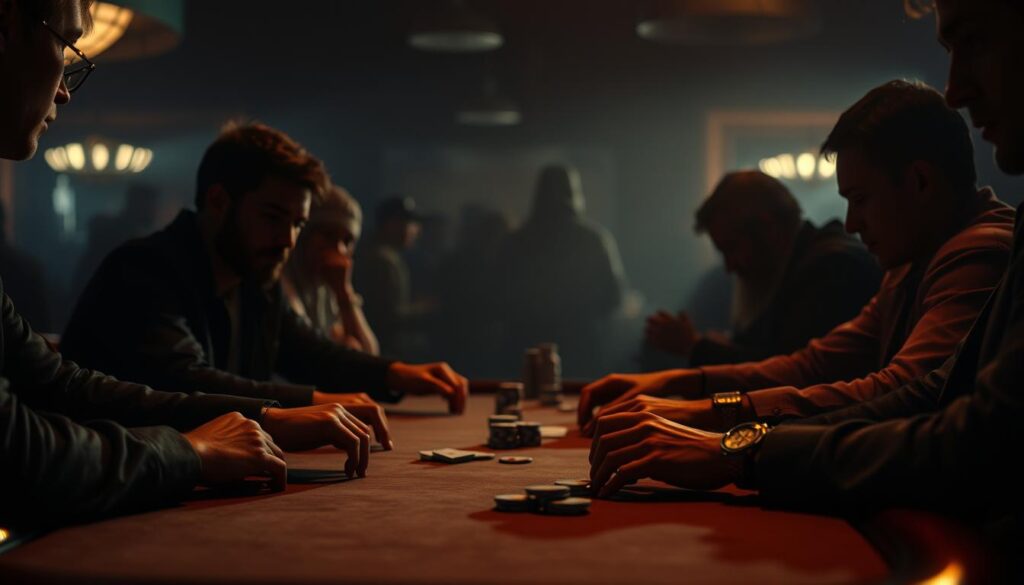
If poker were a reality show, live tells would be its unscripted drama. These moments show players’ secrets through body language. Knowing these tells can turn opponents into open books.
The 7 Deadly Sins of Body Language
Mike Caro’s research gives us a list of tells that reveal players’ hands:
- The Micro-Tremor Shuffle (4.9/5 reliability)
Shaky hands are not just nerves. They’re big announcements of strong hands. Watch if the shake matches the chip count. - Posturegate (4.8/5)
A sudden change in posture can mean a strong hand. But, a slouch might be bluffing. - Reverse Owl Syndrome (3.9/5)
Too long eye contact? It’s not confidence. It’s a sign of a bluff.
| Action | Reliability | Pro Insight |
|---|---|---|
| Chip Glances | 3.2/5 | Multiple stack checks often precede big bluffs |
| Betting Speed | 4.1/5 | Instant all-ins usually mean weaker hands than Hollywood-paused moves |
Ever seen someone rebuild their stack like Jenga? That’s a tell of someone buying time. On the other hand, players who splash chips like Scrooge McDuck? They’re either very strong or very bad at acting.
Online-Only Tells: Timing, Bet Patterns
In the world of online poker, your tells aren’t just in your eyes. They’re in your bet patterns and timing. While live players worry about micro-expressions, online players analyze bet patterns and timing. This makes your game seem like an open book.
Digital Tells: Your Mouse Is Snitching
That quick cursor movement between “call” and “fold”? It’s like a virtual nervous habit. Here are some digital tells to watch out for:
- Hover hesitation: If a player hovers over the call button for more than 2.3 seconds, they fold 68% of the time. It’s like they’re unsure if they should read your text.
- Instant folds: Quick folds show players who’d prefer to fold laundry than think about their game.
- Bet sizing OCD: Betting the same amount every time? It’s like wearing a sign that says “I studied GTO for dummies.”
HUDs: The Poker equivalent of X-Ray Specs
Modern tracking software profiles players like characters in Succession:
| Player Type | HUD Signature | Real-World Counterpart |
|---|---|---|
| Logan Roy Regs | 19% 3-bet, 72% continuation | Aggressive sharks who’d bluff their own grandchildren |
| Cousin Greg Stations | 43% VPIP, 2% aggression | Calling stations who’d check-raise a ham sandwich |
See a player with 85% flop check-throughs? It’s not a strategy, it’s a cry for help. These patterns turn player profiling into a science. It lets you exploit their weaknesses like a showrunner milking a franchise.
Creating and Using Table Image to Manipulate Opponents
Table image is more than just how you play. It’s about changing what your opponents think they see. Like Beth Harmon in The Queen’s Gambit, your presence should make them doubt what’s real. Let’s explore how to use perception to your advantage.
The Method Actor’s Guide to Table Presence
Jamie Gold’s 2006 WSOP win was as much about showmanship as skill. He mixed being talkative with being completely silent, showing off his mastery in table image manipulation. Your task is to create different personas:
- Clark Kent Mode: Start by playing tight and folding often. This makes you seem cautious.
- Strategic Chaos: Then, suddenly bet big with weak hands. This messes up their strategies.
Image Jiu-Jitsu: Using Their Perceptions Against Them
Remember that WSOP hand where Daniel Negreanu folded aces to a “tight” player’s bet? It wasn’t about the cards. It was about using their wrong assumptions against them. Here’s how to turn their expectations against them:
| Image Type | Tells to Amplify | Strategic Use | Counter-Play |
|---|---|---|---|
| Tight-Aggressive (Clark Kent) | Over-fold marginal hands, sigh before raises | Bluff river bets when board gets scary | Call light in late position |
| Loose-Wild (Chaos Agent) | Chat during big bets, stack chips haphazardly | Value bet thin when action checks | Check-raise bluff frequencies |
| Unpredictable (Beth Harmon) | Vary timing tells, mix limp/shove ranges | Induce folds from polarized ranges | Stick to GTO fundamentals |
Want to make opponents doubt their reads? Be the unreliable narrator of their poker story. As Gold showed, sometimes the best hand is the one your opponents think you have.
Practice Scenarios
Ever wonder how James Bond would play 3-bet pots? Let’s ditch theory for tradecraft. This isn’t about memorizing charts. It’s about building your poker behavior analysis toolkit through cinematic drills. These drills make player profiling feel like cracking casino vaults.
Live Tell Drills: Casino Royale Edition
Your mission: Steal blinds from a nit tighter than Scrooge McDuck’s vault. Here’s your playbook:
- The Soprano Scan: Watch for micro-expressions when villain glances at hole cards. Does their nostril flare like Tony spotting a rat?
- Breaking Bad Math: Calculate pot odds while maintaining Walter White-level eye contact. Can you spot the exact moment they check their watch?
- Ocean’s Eleven Exit: Practice stacking chips with Clooney-esque nonchalance after successful steals. Bonus points if you make security cameras irrelevant.
Online Simulation: Turing Test for Bluffers
Your avatar needs to pass as human while exploiting digital tells. Try these semi-bluffing exercises:
- Vary bet timing between 2.3s (standard) and 5.8s (suspicious) when c-betting dry flops
- Use identical bet sizes with premium hands and air in 3-bet pots
- Snap-call river raises only when holding middle pair
| Live Tell | Digital Equivalent | Exploitation |
|---|---|---|
| Hand tremors | Mouse cursor shimmers | Overbet polarized range |
| Eye twitch | Checkbox hesitation | Delayed min-raise |
Pro tip: The best player profiling happens when you’re projecting false tells. It’s like method acting. Your Oscar comes in tournament winnings.
When Tells Can Mislead
Ever watched an Agatha Christie mystery where the butler’s nervous twitch wasn’t the smoking gun? Welcome to poker’s version of “The Mousetrap”. Here, physical quirks and digital ticks might be just decoys. While tells can reveal truths, they can also sell lies. Let’s explore how even experienced players can get tricked.
The Red Herring Rodeo
Phil Ivey once won $11 million at baccarat by reverse-engineering tells. He’d fumble chips when he had strong hands, making opponents think he was weak. This was more like a show than poker. Like Christie’s twists, these reverse tells play on our desire for patterns. Is that shaking hand a bluff… or just acting?
Advanced Misdirection: Magic Tricks for Poker
Online poker turns into a game of psychological 3D chess. A player who quickly calls might be distracted or setting a trap. Crypto traders face similar challenges: Is that sudden Bitcoin drop market manipulation or just Elon Musk tweeting? Here’s how to find the real signal:
| Tactic | Live Tell | Online Tell | Reliability |
|---|---|---|---|
| Timing Tells | Deliberate hesitation | Pre-set delay buttons | Low (easily faked) |
| Bet Sizing | Overbetting “weak” hands | Algorithmic patterns | Medium (context-dependent) |
| Physical Tics | Fake eye rubs | N/A | High (in live games) |
Online tells are like crypto charts, both built on manufactured volatility. A quick check-raise could show confidence… or a player juggling while their kid wreaks havoc. The key takeaway? Treat tells like TikTok trends—mostly hype, a bit useful.
Conclusion
Mastering poker tells and table image is like a game of chess. It’s about using strategy and understanding your opponents. It’s not just about spotting tells, but also knowing when to show them.
Daniel Negreanu and Phil Ivey show how great players use perception. They make their moves before betting, using body language and words. It’s all about creating the right image.
But, be careful not to fall into the trap of overthinking. That shaky hand might be fear or a trick. Remember, “The Queen’s Gambit” taught us that sometimes, it’s not the move that matters, but the story behind it.
So, next time you see a tell, think if it’s real or a trick. Is it a weakness or a trap? Knowing this can make you the winner at the table. Now, let’s play the real game, where you control the rules.
Leave a Reply