
Ever tried navigating Manhattan without GPS? That’s what playing cards blind feels like. You’re just guessing while others are calculating.
Modern card games demand more than intuition. They require mathematical profiling of your opponents. Those mysterious screen names become open books through proper data analysis.
We’re talking about transforming behaviors into actionable percentages. That player who keeps re-raising? You’ll know if they’re a strategic genius or just lucky.
Essential stats become your navigation system. VPIP shows who plays every hand like it’s the World Series. PFR reveals genuine courage. AF measures aggression that would make a Wall Street trader blush.
This isn’t just number-crunching – it’s psychological warfare with mathematical precision. As explored in how players use tech tools, the right setup turns chaos into calculated advantage.
Your journey to mastering these analytical tools starts here. Let’s decode what separates the amateurs from the analysts.
Setting Up the Optimal HUD
Setting up your poker HUD is like conducting a symphony. Each stat must blend perfectly to create harmony at the tables. I’ve spent countless hours fine-tuning these settings, and here’s what works.
In 6max games, aim for a VPIP of 20. This means playing more hands with fewer players to avoid being ignored. PFR should be around 17, showing enough aggression to pressure opponents but not too much.
Full ring games require tighter play. VPIP should be 15, and PFR around 12. With nine players, playing tight is key. Bet and raise twice as often as you call to avoid being seen as a perpetual caller.
Your 3Bet percentage is also important. Aim for 7% in 6max and 6% in full ring games. This creates the “TAG illusion,” making you seem like a tight-aggressive player while secretly gathering advanced poker stats.
Don’t rely on stats from just a few hands. You need at least 100 hands for basic reads and 500+ for reliable patterns. Less data is like reading tea leaves blindfolded.
Choosing the right software is also key. PokerTracker and Hold’em Manager are top choices. They turn raw data into actionable insights, helping you predict opponent moves.
A well-configured HUD turns the poker table into a chessboard. With your advanced poker stats set up right, you’re not just playing cards. You’re playing the players.
Reading Opponent Stats Live
Think of your HUD as a poker polygraph test – everyone’s lying until the numbers say so. That VPIP/PFR gap you see? It’s like a neon sign showing their personality.
The Calling Station (VPIP 35+/PFR : This player calls more often than a telemarketer during dinner. They chase gutshot straights like lottery tickets. Your strategy? Value bet them a lot. They’ll pay you off with third pair like it’s their duty.
The Aggro Monkey (3-bet >10%): This player raises a lot, even their breakfast order. When you see this number, tighten up and trap. Their aggression is your weapon.
The Nit Factory (VPIP : These players fold more than origami artists. They wait for premium hands like they’re waiting for Godot. Steal their blinds a lot – they’re basically donating.
Here’s a cheat sheet for exploiting common player types:
| Player Type | Key Stats | Exploitation Strategy | Risk Level |
|---|---|---|---|
| Loose Passive | VPIP >30, PFR | Thin value bet, avoid bluffs | Low |
| Tight Aggressive | VPIP 15 | 3-bet light, steal position | Medium |
| Maniac | VPIP >40, PFR >30 | Call down lighter, set mine | High |
| Rock | VPIP | Blind stealing, position plays | Very Low |
The real magic is when you mix stats. That player with high VPIP but low steal defense? They’re inviting you to steal their blinds. The aggressive player with high fold to 3-bet? They’re all bark and no bite.
But remember, sample size matters. That player folding 80% to steal might have only faced three steal attempts. Don’t go all Oceans Eleven on their blinds based on limited data. The art of using HUD properly involves knowing when the numbers are true versus just variance.
Your HUD should be your co-pilot, not your autopilot. The stats give you tendencies, but your brain adds context. That tight player suddenly opening up? Maybe they’re tilting. That aggressive player gone quiet? Maybe they looked at their bankroll.
Remember: stats describe what happened, not what will happen. The best players use the data as starting points, not gospel. Your HUD tells you who they were – your job is to figure out who they’re about to become.
Color Coding
If poker stats are your analytical dictionary, then color coding is the neon highlighter that makes the key points stand out. It’s like organizing your opponents into a visual hierarchy that would impress any data scientist.
My system works like a supercharged traffic light. Red means danger – players who raise too often. Yellow is caution, for opponents who might have a strategy. Green is profit, for players who give away chips easily.
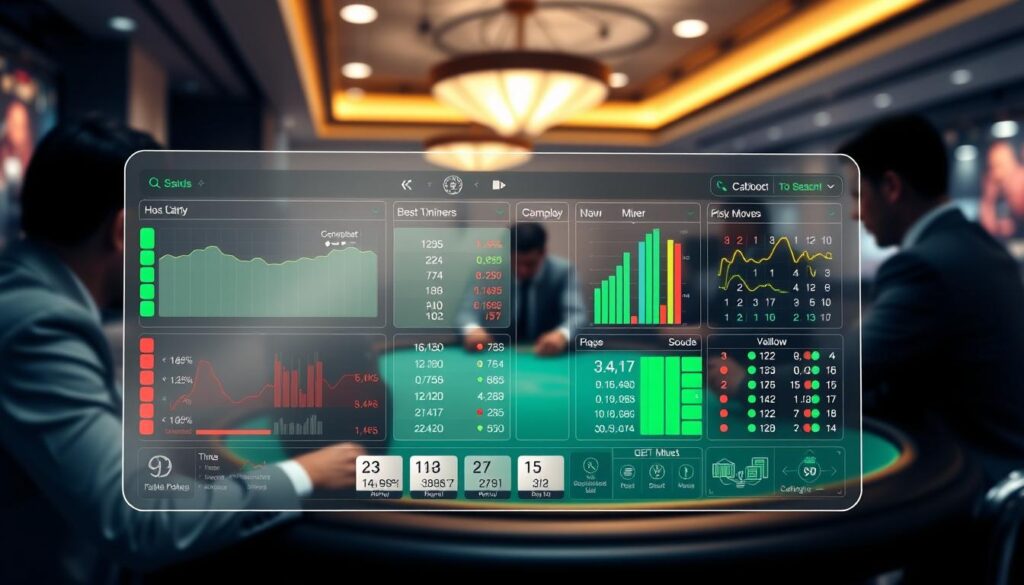
The beauty of color coding is how quickly you can spot important info. A red VPIP stat means someone’s playing too many hands. A blue PFR indicates a disciplined player who knows position well.
Color coding isn’t just for looks. It helps you make quick, smart decisions. Seeing green means bet your middle pair like it’s the best hand. Red means set traps and wait for the opponent to make a mistake.
Setting up the best HUD settings for color coding means knowing what each color means:
- Aggression Spectrum: Red for aggressive, orange for moderate, blue for passive
- Experience Indicators: Green for newbies, purple for experienced players
- Profitability Markers: Gold for big winners, gray for break-even, black for losers
Combining color coding with stats is magic. An orange VPIP with red aggression means a skilled but aggressive player. A green passive player with black profitability is a goldmine.
Customizing your colors is one of the best HUD settings tweaks. It turns names into a hierarchy of who to exploit. Decisions become quicker, more accurate, and profitable.
Consistency is key. Stick to your color scheme in every session. Your brain will quickly spot patterns without thinking. This is the power of color coding in your best HUD settings.
The table is your canvas, and colors tell the story of each opponent. It’s not just data; it’s using information to win. This separates winners from players who just play for fun.
When to Trust Data vs Instinct
Here’s the poker truth bomb: sometimes those beautiful advanced poker stats lie. I saw a “tight nit” with a 3% 3-bet stat suddenly bluff me with seven-high. The numbers told one story, but the player was telling another.
Using HUD properly means stats are just snapshots, not the whole story. That 15% VPIP might be from 30 hands with bad cards. Maybe they’re tilting or just need a break. It’s about reading between the lines.
The best players balance math and instinct. They know when to trust the numbers and when to follow their gut. This skill makes them more than just poker robots.
Leave a Reply