
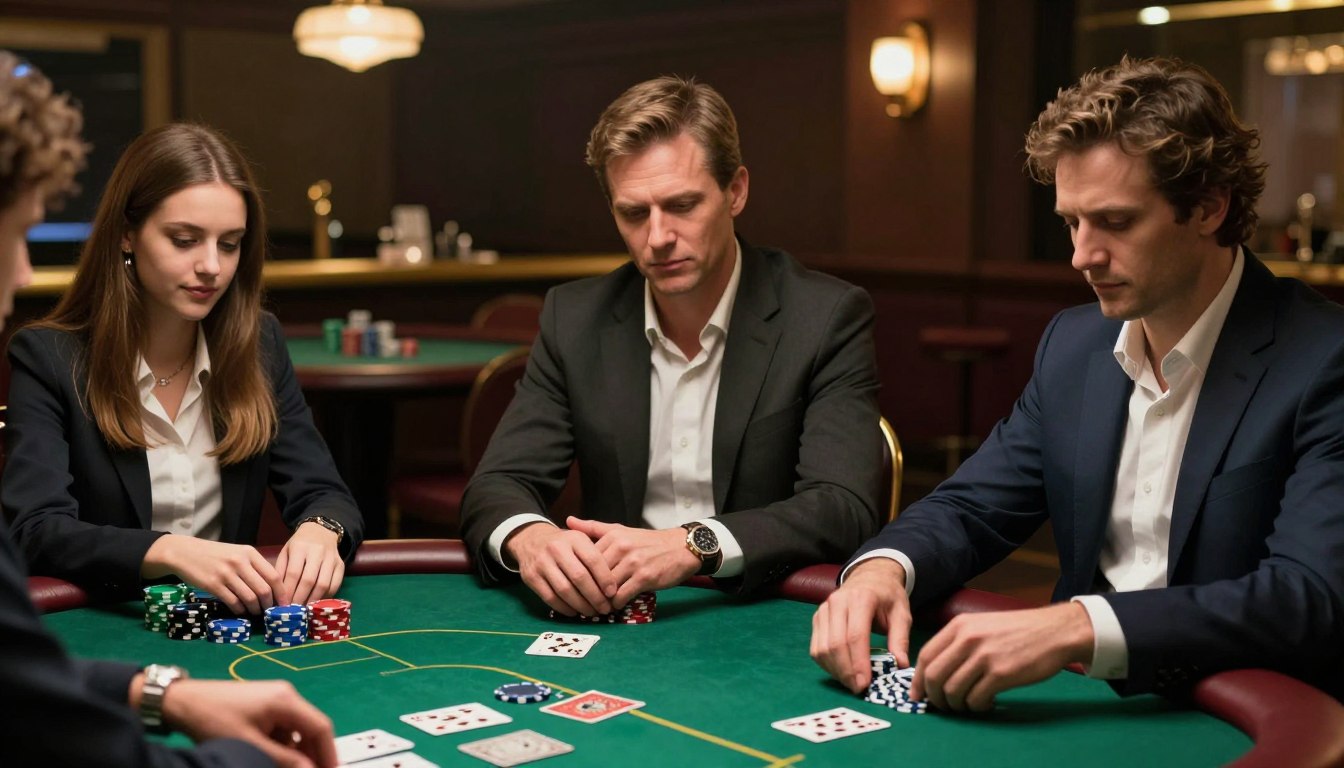
Knowing the odds and having a solid strategy will only get you so far. To truly crush the tables, you must master the mental game.
In the world of competitive card games, few match the depth and intrigue of poker. While math and tactics are crucial, understanding human behavior provides a massive edge.
Every session is a psychological war zone. Your mindset and emotional control often dictate the outcome more than the cards you are dealt.
This guide serves as your ultimate resource. We synthesize expert insights to offer actionable frameworks, not abstract theory. You’ll learn to conquer tilt, build unshakeable confidence, and optimize every decision.
Investing in this critical part of your play is the highest-return decision you can make for your poker career. Let’s begin.
Introduction: More Than Just Cards and Chips
Every chip bet and every second of hesitation tells a story far richer than the cards on the table. This game has captivated minds for centuries because it mirrors the complex dance of human interaction.
The felt surface is a stage. Your posture, your breathing, and even the way you stack your chips broadcast your emotional state. Opponents are constantly watching, searching for clues in your behavior.
Each hand is a conduit for psychological warfare. The size of a bet conveys confidence or fear. The timing of a decision reveals strength or uncertainty. Physical tells, though often subtle, leak invaluable information.
Your success hinges on a dual challenge. You must manage your own internal emotions to stay clear-headed. Simultaneously, you must decode the intentions and weaknesses of every other player at the table.
This mental interplay has direct, real-world consequences. Superior emotional control and sharp perceptiveness don’t just feel good. They directly translate to chips won and chips lost. Mastering this aspect separates casual players from consistent winners.
In the competitive world of this card game, psychology is the true currency. Understanding it is the first step toward claiming your share.
What Are Poker Psychology Basics? The Foundation of Success
While calculations form the skeleton of strategy, the flesh and blood of victory come from understanding people. This mental game is the study of applying mental, emotional, and behavioral principles for a decisive edge.
It moves past abstract theory into actionable frameworks for the table. Mastering these fundamentals affects every single decision you make.
Beyond Math: The Human Element of the Game
Odds and statistics provide a crucial framework. Yet, human psychology dictates how those numbers are used in real time.
Every player brings biases, quick mental shortcuts, and emotional reactions to the felt. These factors often override pure logic during a hand.
Your ability to spot these patterns in others—and in yourself—is priceless information. It turns the game from a math problem into a dynamic social puzzle.
The real world of competition is messy. A technically sound bet can fail if your state of mind is clouded by frustration or fear.
Why Your Mindset is Your Most Powerful Tool
Your internal mindset directly fuels sustained high performance. Concepts from positive psychology, like flourishing, show how wellbeing supports growth.
This isn’t just about feeling good. It’s about building the resilience to perform under pressure, session after session.
The core basics include several key skills:
- Emotional Regulation: Managing your emotions to stay clear-headed.
- Tilt Control: Preventing frustration from hijacking your choices.
- Confidence Building: Creating a cycle of self-trust through solid process.
- Metacognition: Thinking about your own thinking to optimize decisions.
Investing attention in these areas builds unshakeable confidence. This transforms your approach to challenges, both at the table and in life.
Your success isn’t just in the cards you hold. It’s in how you manage your internal state and interpret the behavior of others.
These things form the non-negotiable foundation for any serious player aiming for long-term wins.
The Anatomy of a Winning Poker Mindset
Long-term success in this competitive arena hinges on a specific, trainable set of mental habits. It’s the internal architecture that separates champions from the rest.
This mindset isn’t about innate talent. It’s a constructed identity built through deliberate practice and self-awareness.
Mastering the mental game means developing a resilient, focused approach. You learn to navigate variance and pressure with clarity.
Process-Oriented vs. Result-Oriented Thinking
Your focus dictates your trajectory. Result-oriented thinking fixates on short-term wins and losses. This leads to emotional rollercoasters and poor decisions.
Process-oriented thinking commits to sound decisions every hand. It trusts that correct actions yield profit over time, regardless of immediate outcomes.
This shift is fundamental. It builds discipline and protects your state of mind from variance.
| Process-Oriented Focus | Result-Oriented Focus |
|---|---|
| Evaluates decision quality | Judges based on win/loss |
| Maintains emotional stability | Prone to tilt and frustration |
| Builds long-term confidence | Creates fragile self-worth |
| Adapts strategy based on logic | Makes reactive, emotional changes |
| Ensures sustainable growth | Leads to burnout and inconsistency |
Adopting a process focus is your shield. It allows you to learn from every session without being wrecked by bad beats.
Cultivating Emotional Neutrality and Flexible Aggression
Top competitors separate feelings from actions. Emotional neutrality means not letting emotions dictate your plays.
You observe your internal reactions without being controlled by them. This creates space for clear, strategic thought.
Flexible aggression is applying pressure based on logic, not mood. It’s a calculated behavior, not an emotional leak.
This combination is powerful. You become unpredictable and tough to read. Your performance becomes consistent and reliable.
It turns your mind into a calm command center. Every move is intentional, not a reaction to fear or excitement.
The Concept of “Flourishing” at the Table
Positive psychology expert Martin Seligman coined the term “flourishing.” It describes a state of optimal human functioning.
Applied to the game, flourishing means thriving at the table. You experience positive engagement and purposeful play.
It requires three core elements: Positive Emotions, Engagement, and Meaning.
- Positive Emotions: Enjoying the challenge, not just the win. This builds resilience.
- Engagement: Full immersion in the task. Your attention is completely absorbed in the moment.
- Meaning: Connecting your play to a larger purpose. This could be mastery, growth, or community.
Flourishing players don’t just grind. They find balance and sustainable success. Their confidence comes from within.
This approach transforms your experience. It links your life at the felt to overall well-being. You play better because you feel engaged and meaningful.
Craft this mindset with daily habits. Review sessions based on decision quality, not results. Practice mindfulness to maintain neutrality.
Your winning identity is built one thought at a time.
Conquering Tilt: The Science of Emotional Hijack
The most expensive mistake a competitor can make isn’t a mathematical error, but a complete loss of emotional control. This phenomenon, known as tilt, is the ultimate adversary for any serious player. It turns skilled individuals into reactive, losing participants in a matter of moments.
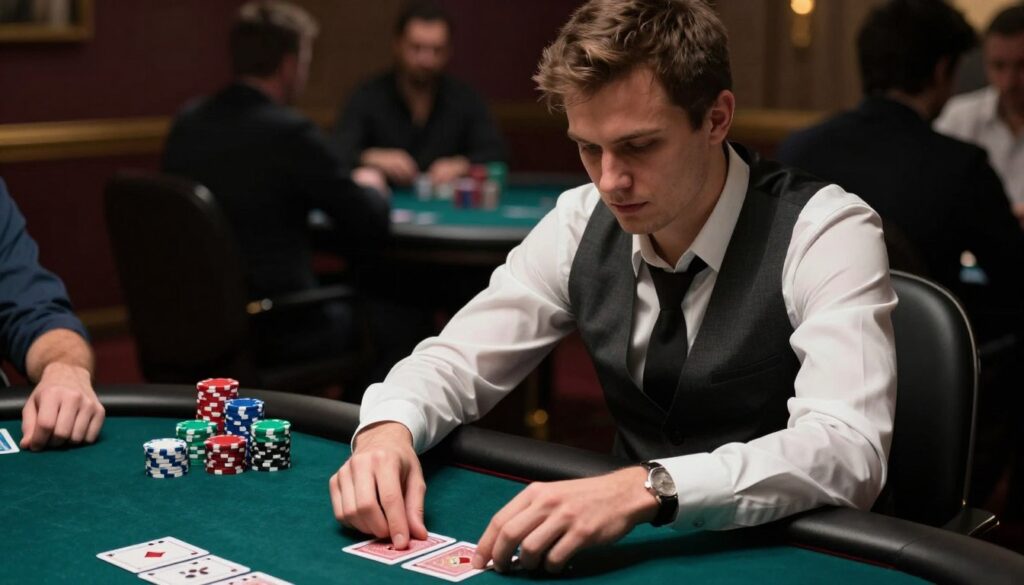
Mastering this aspect of the mental game is non-negotiable. It’s not about never feeling frustration. It’s about building a system so your emotions never dictate your actions.
Understanding Tilt as a Cognitive Hijack, Not Just Anger
Tilt is a full-scale neurological event. It’s not simple anger. Your rational prefrontal cortex shuts down. Your amygdala, the brain’s threat center, takes full command.
This is a biological fight-or-flight response happening at the table. Your body prepares for a physical threat, not a strategic decision. Logical thought becomes impossible.
This hijack manifests in distinct forms. Recognizing your personal flavor is the first step to control.
| Tilt Type | Primary Emotion | Common Behavioral Leak |
|---|---|---|
| Steam Tilt | Blind Rage | Over-betting to “punish” the table; reckless all-in moves. |
| Frustration Tilt | Helplessness | Playing too many marginal hands; giving up on pots prematurely. |
| Revenge Tilt | Vindictiveness | Focusing on one opponent to the detriment of overall strategy. |
Your body sends clear warning signals. Look for an increased heart rate, shallow breathing, or feelings of irritability. Impatience is a major red flag.
Your decision-making patterns will change. You might call bets you know you should fold. You may bluff into obvious strength. This loss of clarity is the real cost.
Identifying Your Personal Tilt Triggers
Control begins with self-awareness. You must audit your own reactions to find your specific catalysts. A trigger is any event that spikes your emotional state.
Common categories include:
- Bad Beats: Losing a huge pot as a massive favorite.
- Perceived Injustice: Feeling an opponent’s play is “unfair” or “stupid.”
- Entitlement: Believing you “deserve” to win after a long grind.
- Fatigue: Mental exhaustion lowering your emotional threshold.
The key is to move from general frustration to precise identification. For example, is it specifically a river suck-out that triggers you? Or is it a certain player talking after winning a hand?
Maintaining a simple journal is powerful. Note the situation, your physical reaction, and the subsequent poor choices. Over time, your unique pattern emerges.
Practical Systems for Tilt Prevention and Recovery
Managing this challenge is a learnable skill, not a test of willpower. You need a two-part system: prevention and in-the-moment recovery.
Prevention Tactics:
- Set Hard Stop-Loss Limits: Decide on a loss limit before you sit down. When you hit it, you stand up. This removes emotional choice in the heat of the moment.
- Establish a Pre-Session Routine: A short ritual signals to your brain that it’s time for focused, calm play. This could be three minutes of deep breathing.
- Practice Strict Bankroll Management: Knowing your buy-in is a tiny fraction of your total funds reduces the fear behind each decision.
In-the-Moment Recovery Techniques:
- The Five-Breath Reset: Feel the hijack starting? Immediately look away from the screen or table. Take five slow, deep breaths. This physically calms the nervous system.
- Physical Disengagement: Stand up. Walk away for two minutes. Get a glass of water. Break the physiological cycle of anger.
- Post-Session Review: After cooling down, analyze the trigger hand dispassionately. Focus on the decision, not the cards. This builds resilience for next time.
In the end, tilt control is about regaining agency. It puts you back in charge of your behavior. Your emotions are data, not directives.
Implementing these things creates a sustainable framework. It ensures a single bad beat doesn’t wreck your entire session. You stop the hijack before it steals your chips.
Building Emotional Stability and Confidence
Genuine confidence at the table isn’t a feeling you wait for; it’s a skill you build through consistent action. This section provides a holistic emotional fitness regimen. You’ll learn to construct unshakeable self-trust and manage your internal state in real time.
Emotional stability and true confidence are deeply connected. One reinforces the other, creating a foundation for peak performance. Mastering this dynamic is your key to sustainable success.
The Confidence Cycle: Building Self-Trust Through Process
Real self-trust isn’t about feeling good when you win. It’s about trusting your process when you are losing. This creates the powerful Confidence Cycle.
The cycle is a feedback loop. You commit to a sound decision-making process every hand. Following this process, regardless of short-term results, builds evidence of your own discipline.
This evidence fuels genuine self-trust. That trust, in turn, makes it easier to stick to your process next time. The cycle becomes self-reinforcing.
Your confidence becomes independent of the cards. It is rooted in your behavior. This is the core of emotional stability for any serious player.
Practical Routines for Real-Time Emotional Regulation
Stability requires tools you can use in the heat of the moment. This three-step system is grounded in cognitive research.
1. The Pre-Session Anchor: Before you play, take two minutes for deep, slow breathing. This signals to your brain that it’s time for focused calm. It sets your initial state.
2. The In-Session Body Scan: Every 20 minutes, pause for 30 seconds. Scan your body for tension in your shoulders, jaw, or hands. Consciously release it. This prevents emotions from building up physically.
3. Cognitive Reappraisal: After a tough loss, reframe the event. Instead of “I got unlucky,” ask, “Was my decision correct with the information I had?” This technique separates decision quality from outcome.
These routines create a structure. They give you control over your internal experience during the game.
Using Savoring and Strengths to Foster Resilience
Positive psychology offers powerful tools for building general resilience. These skills protect your mindset over the long term.
Savoring is the practice of intensifying and prolonging positive experiences. It’s a life skill that counteracts our natural negativity bias.
The rules for effective savoring are simple:
- Make time for it each day.
- Give the positive moment your full focus.
- Recognize it’s an everyday thing, not a rare event.
At the table, savor a well-timed bluff or a perfectly read hand. Soak in the feeling of executing your plan. This builds positive emotional capital.
Using your character strengths gives you energy and allows for optimal performance. To identify yours, try the “three evening questions” exercise:
- What did I truly enjoy today?
- When did I feel most alive and engaged?
- Which personal strength was I using in those moments?
Maybe your strength is curiosity for studying opponents. Or perhaps it’s perseverance for grinding through variance. Applying these strengths at the table makes play feel engaging, not draining.
Integrating these things creates a comprehensive approach. You build confidence from the inside out. You regulate emotions with practical routines.
You foster resilience by savoring wins and using your innate strengths. This is how you build a successful life at the felt, one stable day at a time.
The Psychology of High-Quality Decision Making
Profit over the long run is built not on lucky cards, but on a relentless commitment to superior decisions. This part of the mental game transforms your approach from reactive to strategic.
Every action you take is a choice. The quality of those choices determines your ultimate success. Mastering this process is what separates consistent winners from the rest.
Your mind is your most important tool at the table. Learn to use it with clarity and purpose. This section provides the framework.
Separating Decision Quality from Short-Term Results
The human brain is wired to judge by outcomes. This is a major trap called outcome bias. A good decision can lose, and a bad one can win.
You must learn to decouple your self-assessment from randomness. Focus on the process, not the immediate result of the hand.
Hindsight bias is another cognitive trap. It makes past events seem more predictable than they were. This distorts your learning.
Evaluate your choices based on the information you had in the moment. Was your reasoning sound? Did your behavior align with your strategy?
This shift protects your emotions and sharpens your long-term performance. It turns every session into a learning opportunity.
Building Bulletproof Thinking Routines
Elite decision-making is a systematic discipline. It requires a repeatable process you can apply under pressure. A thinking routine conserves mental energy.
It prevents autopilot and ensures you consider all key factors. Use this five-step checklist before any significant bet or call.
| Step | Key Question | Purpose |
|---|---|---|
| 1. Assess Ranges | What hands could my opponent realistically have here? | Grounds your decision in logic, not guesswork. |
| 2. Calculate Pot Odds | What is the price of this call versus the potential reward? | Ensures mathematical soundness for value. |
| 3. Review Player Tendencies | How does this specific player usually act in this spot? | Incorporates psychological information. |
| 4. Check Emotional State | Am I feeling tired, tilted, or overconfident right now? | Prevents emotional leaks from corrupting logic. |
| 5. Clarify Your Goal | Is my objective to extract maximum value, bluff, or fold? | Brings final clarity and commits to action. |
Running through this checklist takes seconds. It standardizes your analysis and dramatically improves decision quality.
This routine is your shield against impulsive play. It turns complex situations into clear, actionable steps.
Overcoming Fatigue and Autopilot Play
Long sessions drain your focus. Mental fatigue leads to autopilot, where you stop thinking and just react. This is where costly mistakes happen.
Protect your attention with deliberate strategies. Your performance depends on a fresh, engaged mind.
First, manage your environment. Ensure good lighting and a comfortable chair. Reduce background distractions.
Second, implement a strict break schedule. Stand up and move every 50-60 minutes. This resets your cognitive focus.
Hydration is also critical. Dehydration impairs concentration and decision speed. Keep water nearby and sip regularly.
Finally, know when to stop. Set a session time limit or a clear mental fatigue signal. Walking away is a winning choice.
By the end of a grind, your routine should feel like a habit. This systematic approach eliminates guesswork.
It allows you to maintain high-level play for longer periods. You conserve energy for the most important hands.
Remember, the best players aren’t just skilled. They are disciplined thinkers who master their own mental processes.
Overcoming Fear: From Thin Value to Big Bluffs
Your biggest opponent isn’t across the table; it’s the anxiety that stops you from pulling the trigger on profitable plays. This internal barrier silently drains your win rate. Mastering this final frontier transforms timid checks into confident bets.
Fear is the invisible hand guiding your mouse away from aggression. It prevents you from extracting thin value and stops you from executing necessary bluffs. Conquering it is a pure profit play.
Why Fear Paralyzes Profit: The Cost of Inaction
Inaction has a clear, quantifiable cost. Every missed value bet and every avoided bluff silently leaks chips. Over a session, this can be the difference between a winning and losing record.
The roots of this fear are psychological. They often tie directly to common cognitive biases:
- Loss Aversion: The pain of losing a pot feels stronger than the joy of winning one. This makes you overly cautious.
- Fear of Embarrassment: Getting caught in a bluff can feel like public failure. This social fear overrides logical risk/reward analysis.
- Fragile Ego: Your self-worth gets tied to winning the hand. This makes you risk-averse to protect your self-image.
These emotions cause you to make passive choices. You check when you should bet. You fold when you should raise. The money left on the table is the real price of fear.
Thinking in Ranges, Not Feelings
To bypass emotion, you need a cognitive tool. The most powerful one is thinking in hand ranges. This means considering all the cards your opponent could have, not worrying about one specific monster.
Gut feelings are unreliable. A probabilistic range is logical. You assign your opponent a spectrum of possible holdings based on their behavior.
You then make your decision based on how your action performs against that entire range. For example, if you bet and he folds 60% of his range, it’s a profitable bet long-term.
This method removes the scary “what if he has the nuts?” thought. You replace it with “what is the most +EV play against his range?” This shift is fundamental for success.
Frameworks for Executing Profitable Bluffs
Successful bluffing is not about courage. It’s about a methodological approach. It transforms a scary gamble into a calculated, repeatable strategy.
You need a framework for spot selection, bet sizing, and story construction. A great bluff tells a believable tale through your actions.
| Framework Element | Key Principle | Practical Application |
|---|---|---|
| Spot Selection | Choose the right opponent and moment. | Target tight, predictable players who fold to aggression. Use scare cards on the turn or river that complete obvious draws. |
| Bet Sizing for Credibility | Your bet must tell the right story. | Size your bluff similarly to a value bet. A tiny bet looks weak; a huge overbet often looks like a bluff. Match the size a strong hand would use. |
| Story Construction | Your actions must represent a logical hand. | Your betting pattern on earlier streets should be consistent with the strong hand you’re representing. If you check-called the flop, can you credibly have a flush on the river? |
| Board Texture Analysis | The community cards dictate bluff opportunity. | Dynamic boards with many draws are better for bluffing. Static, paired boards offer fewer credible scare cards for your story. |
| Fold Equity Assessment | Estimate how often your opponent will fold. | Consider the player’s tendencies. If they call down lightly, your bluff has low fold equity. Against a nit, it’s high. |
Following this system removes guesswork. You select spots where the board and opponent profile create high fold equity.
You size your bluffs to look like a genuine threat. You ensure your line tells a coherent story from start to finish.
These things matter because they build a process. When you have a process, fear loses its power. You act based on a checklist, not a feeling.
This is how you turn fear from a controller into a data point. You acknowledge it, then let your framework guide your final choices at the poker table.
Bankroll Psychology and Sustainable Grinding
The size of your bankroll isn’t just a financial metric; it’s a psychological anchor that shapes every single move you make at the table. Viewing it merely as chips obscures its true power. Your relationship with this number dictates your emotional freedom and strategic clarity.
“Risk of Ruin” is as much a mental concept as a mathematical one. The fear of losing it all can paralyze you. Conversely, disrespecting it leads to reckless disaster. Mastering this relationship is the final pillar of a champion’s mindset.
How Your Money Mindset Shapes Your A-Game
Two toxic mindsets silently destroy win rates: scared money and entitled money. Each warps your decision-making in a unique, costly way.
Scared money makes you passive. You check strong hands for fear of losing the pot. You fold to aggression when you should call. Every decision is filtered through loss aversion.
Entitled money breeds arrogance. You overvalue your cards because you “deserve” to win. You chase losses, believing variance owes you. This mindset ignores the math of the game.
A solid financial foundation is the prerequisite for fearless play. Following proven rules, like having 25 buy-ins for cash games, creates safety. This safety allows your A-Game to shine through.
You make the correct bet for maximum value. You fold when the odds are wrong. Your discipline with funds translates directly to discipline in each hand. This is what separates serious poker players from hobbyists. For a deeper dive into foundational rules, explore this guide on solid bankroll discipline.
Balancing Volume, Variance, and Mental Health
Grinding presents a paradox. Playing more hands mathematically reduces variance over time. Yet, it can skyrocket your emotional variance, leading to severe burnout.
Emotional variance is the swing in your mental state. A downswing feels heavier after a 10-hour session. Fatigue lowers your tolerance for bad beats. This is the grinding trap.
The psychological toll of extended downswings is real. It can create a “Tilt Volcano,” where frustration erupts and destroys sessions. Protecting your mind is as important as protecting your chips.
Optimize your approach with these strategies:
- Set Session Caps: Decide on a maximum time limit before you start. Stick to it, even if you’re winning.
- Schedule Mandatory Breaks: Stand up and move every hour. This resets focus and prevents autopilot.
- Listen to Your Body: Headaches, irritability, and lack of focus are clear signals to stop for the day.
Balance is not a luxury. It’s the engine of long-term resilience. Managing volume wisely keeps your mind sharp for the long haul.
Creating a Sustainable Poker Lifestyle
Lasting success in the world of cards requires a life beyond the felt. A sustainable lifestyle integrates key elements that fuel performance and prevent disillusionment.
This holistic approach ensures you don’t just survive the grind. You thrive within it. Your end goal is a career, not just a streak.
| Lifestyle Component | Core Activity | In-Game Benefit |
|---|---|---|
| Physical Health | Regular exercise, proper nutrition, and quality sleep. | Increases focus stamina, improves decision speed, and manages stress hormones. |
| Social Connections | Maintaining friendships and family ties unrelated to cards. | Provides emotional support during downswings and keeps perspective. |
| Purpose & Goals | Setting clear, non-monetary objectives for learning and growth. | Fights burnout by making play about mastery, not just money. |
| Continuous Learning | Dedicated study time away from the tables for strategy review. | Turns experience into actionable information, closing leaks. |
Design your routine around these pillars. A healthy poker player is a dangerous poker player. They bring energy, clarity, and balance to every session.
This structure protects your passion. It turns a high-pressure game into a sustainable, rewarding part of your life. Your psychology is supported by a foundation built to last.
Conclusion: Integrating the Mental Game into Your Poker Life
Elevating your performance requires moving beyond sporadic effort to building a professional identity rooted in systematic habits. This guide has covered the essential pillars: a process-oriented mindset, mastering tilt, quality decisions, acting through fear, and sustainable bankroll management.
Your integration starts now. Choose one area, like emotional regulation or decision journaling. Build a simple daily routine. Consistency in these behaviors forges your winning identity over time.
True professionalism consists of boring, repetitive actions that accumulate into a massive edge. What separates the amateur is identity. View yourself as a pro—this mindset shift is critical. Rely on systems, not fleeting motivation.
With deliberate practice of these mental skills, any player can significantly elevate their game. You will enjoy a more fulfilling and successful experience at the table.
Leave a Reply