
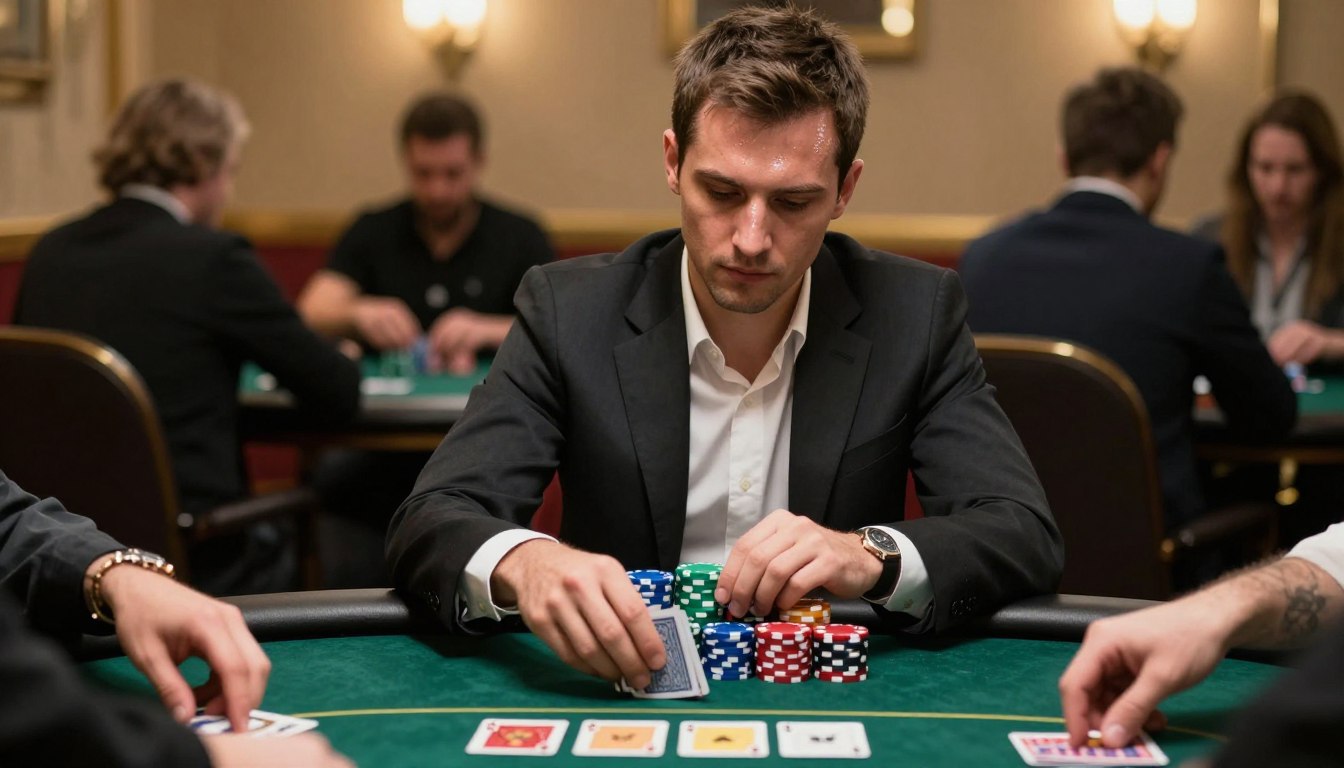
Marathon poker sessions separate the casual participant from the serious competitor. Your ability to maintain sharp concentration directly impacts your bottom line at the tables.
Many believe top performers are born with unbreakable attention. The truth is far more empowering. Mental stamina is a trainable skill, much like any strategic part of the game.
Would a surgeon check their phone mid-operation? Of course not. Yet, multitasking at the virtual or live felt is a common, costly habit. This guide treats your play with the same professional respect.
We will break down the blueprint for building poker endurance. You will learn how physical preparation, mental routines, and your environment all contribute to sustained focus.
This is a comprehensive strategy for players aiming for consistent profitability. By the end, you’ll have actionable steps to turn your attention into a lasting competitive edge.
Why Laser Focus is Your Most Profitable Poker Skill
Consider this: the single greatest leak in many players‘ games isn’t strategic—it’s attentional. Developing sustained concentration is arguably the highest-value skill you can master. It translates directly to increased profit.
Every glance at your phone or wandering thought has a cost. You miss vital information. This data is freely available at the table.
Missed opportunities to exploit opponents add up fast. You might not see a betting pattern or a timing tell. These clues inform better decisions.
Distracted players leak chips constantly. They fail to observe opponent tendencies. This chronic inattention creates a massive edge for the observant.
Giving the game your full attention can boost your win-rate more than complex strategy alone. It separates good competitors from great ones.
In the economy of the poker table, chips lost by the distracted are won by the engaged. By committing to full engagement, you claim this available cash.
Building a Foundation: Physical and Mental Pre-Session Prep
A strong foundation of physical and mental readiness is the unsung hero of poker endurance. Your decisions in the hours before you log on or take your seat are investments. They build a reservoir of resilience for the long game ahead.
Top players approach this like athletes preparing for competition. They don’t leave performance to chance. Consistent, deliberate preparation separates profitable sessions from frustrating ones.
Fueling Your Brain and Body
Your mind is a high-performance engine. It needs the right fuel to run optimally for hours. Neglecting this is a strategic error.
Sleep is non-negotiable. Aim for 7-8 hours of quality rest before a long session. This directly improves memory, reaction time, and decision-making clarity. A tired brain makes costly mistakes.
Nutrition provides sustained energy. Choose foods rich in complex carbohydrates, lean proteins, and healthy fats.
Oatmeal, grilled chicken, nuts, and vegetables are excellent choices. They release energy slowly, preventing mid-session crashes.
Avoid sugary snacks and caffeine overload. They cause sharp energy spikes followed by debilitating lows. This rollercoaster destroys stable concentration.
Hydration is a silent performance booster. Even mild dehydration impairs cognitive function. Keep water nearby and sip consistently throughout the day.
Establishing a Pre-Game Routine
A consistent ritual signals to your brain that it’s time to enter a focused state. This psychological trigger is powerful for practice and real sessions.
Your routine should be personal and repeatable. It might include five minutes of meditation to calm the mind. Visualization of successful play can build confidence.
Reviewing strategic notes or hand histories primes your analytical thinking. Light physical activity, like a short walk, increases blood flow and alertness.
This process transforms preparation from an afterthought into a core discipline. You are not just playing a session. You are executing a prepared plan.
| Optimal Pre-Session Choices | Common Pitfalls to Avoid |
|---|---|
| 7-8 hours of quality sleep the night before | Starting a session after poor or insufficient sleep |
| Meal with complex carbs, lean protein, healthy fats | Relying on sugar, fast food, or excessive caffeine |
| Consistent water intake throughout the day | Drinking only coffee or soda, leading to dehydration |
| 10-15 minute pre-game routine (e.g., meditation, review) | Jumping straight into play without mental transition |
| Light stretching or a brief walk to boost circulation | Remaining sedentary right up until the first hand |
Investing in this foundation is a direct investment in your results. You create a buffer against fatigue and tilt before the first card is dealt. This preparation turns endurance from a struggle into a sustainable poker advantage.
The Core Discipline of Staying Focused in Poker
The core challenge of poker focus lies in converting chaotic table stimuli into a structured stream of actionable intelligence. Consistently paying attention is harder than it looks.
With so many things to observe, the task can overwhelm all but the most seasoned pros. Bet sizes, timing tells, opponent positions, and hand histories create a relentless data flow.
Observation dies without a plan. The first step is accepting that observation is a skill. It is a skill you must train, not a passive state you simply hope to achieve.
Our brains are wired for distraction, especially in a stimulus-rich world. The poker table exploits this tendency perfectly. A vague intention to “pay attention” is doomed to fail.
Successful concentration requires a concrete plan and structured practice. This is the essence of mental discipline for players.
Experts call this “deliberate practice.” You engage in targeted, effortful training of your attention muscles. It’s the difference between casually hitting golf balls and working with a coach on your swing.
Applied to poker, it means building your focus incrementally. You must move from an undisciplined, scattered approach to a methodical one.
| The Undisciplined Approach | The Disciplined, Trainable Skill |
|---|---|
| Trying to watch everything at once, leading to mental overload | Choosing one specific element of the game to observe per session |
| Reacting to every distraction (notifications, table chat) | Having a pre-set protocol for ignoring irrelevant stimuli |
| Assuming focus is a natural talent you either have or lack | Treating attention as a muscle to be strengthened through daily drills |
| Frustration and tilt when information is missed | Calmly noting lapses and returning to the planned observation task |
| Inconsistent results based on fluctuating willpower | Steady improvement rooted in a repeatable training strategy |
The disciplined method is a manageable, step-by-step progression. You start small to avoid being overwhelmed. This builds the neural pathways for sustained focus.
Mastering this core discipline is the gateway to automatic processing. An experienced driver doesn’t consciously think about every mirror check or turn signal.
Similarly, a disciplined poker mind learns to filter crucial data from the noise. This mental training is closely linked to mastering patience, another pillar of emotional control and long-term success.
You build the resilience to navigate long sessions without cracking. The next step is applying this discipline to specific observation training.
Train Your Observation: Start Small and Scale Up
Effective observation in poker isn’t about seeing everything at once. It’s about systematic training. This method builds your attention skill without overwhelm.
You start with a single, manageable target. Then you gradually add more layers of awareness. This turns raw data into a constant strategic edge.
The goal is to make sophisticated analysis an effortless part of your game. Follow this step-by-step progression to build lasting mental muscle.
Choosing Your One Thing to Observe
Select one specific element of play for your entire session. This focused goal makes the task achievable. It also increases your chance of discovering profitable patterns.
High-value targets offer the best return on your attention. Consider these actionable options:
- Big Blind Defense: Watch how opponents play from this difficult position. Note who folds too often or calls with weak hands.
- C-Bet Responses: Track how the table reacts to continuation bets. Identify who folds instantly or who loves to float.
- Three-Bet Frequencies: Mark which players re-raise frequently. This reveals their aggression and opening ranges.
- Loose Opening Ranges: This is a goldmine. Spot players who open too many hands from early position.
For example, a player opening J7s from an early seat has a very wide range. This information directs profitable action.
You can three-bet them more aggressively to isolate. Your post-flop decisions also become clearer against their predictable play.
Choosing one thing creates a clear mission. You move from passive viewing to active, targeted hunting.
From One Thing to Automatic Processing
Once your first observation skill feels automatic, add another. This is the scaling-up process. It’s like learning to drive in a parking lot before tackling city traffic.
Your brain builds neural pathways for each new piece of data. Soon, noting a player’s three-bet frequency requires no conscious effort.
You then layer on recognizing their c-bet tendencies. This gradual stacking builds comprehensive awareness.
Elite players like Daniel Negreanu or Phil Hellmuth operate here. They absorb piles of poker data subconsciously.
Their minds filter crucial patterns from the noise automatically. This frees them to focus on high-level strategy.
Your ultimate goal is to reach this state of flow. Raw information becomes a stream of advantages.
Every hand and every action feeds your decision-making engine. You stop working to pay attention. You simply see what matters.
Eliminating the #1 Focus Killer: Your Phone
Coaches like Joe Ingram compare checking your phone at the table to lighting cash on fire. This isn’t an exaggeration. It’s a financial reality for distracted players.
Your device is the primary challenge to modern concentration. Each notification delivers a addictive dopamine hit. This chemical reward hijacks attention meant for the game.
Tournament data reveals a telling pattern. Deep in events, most competitors put their phones away. They instinctively know intense focus has value for survival.
The paradox is costly. In early stages, the same people succumb to distraction. This robs them of chip-building opportunities needed for a deep run.
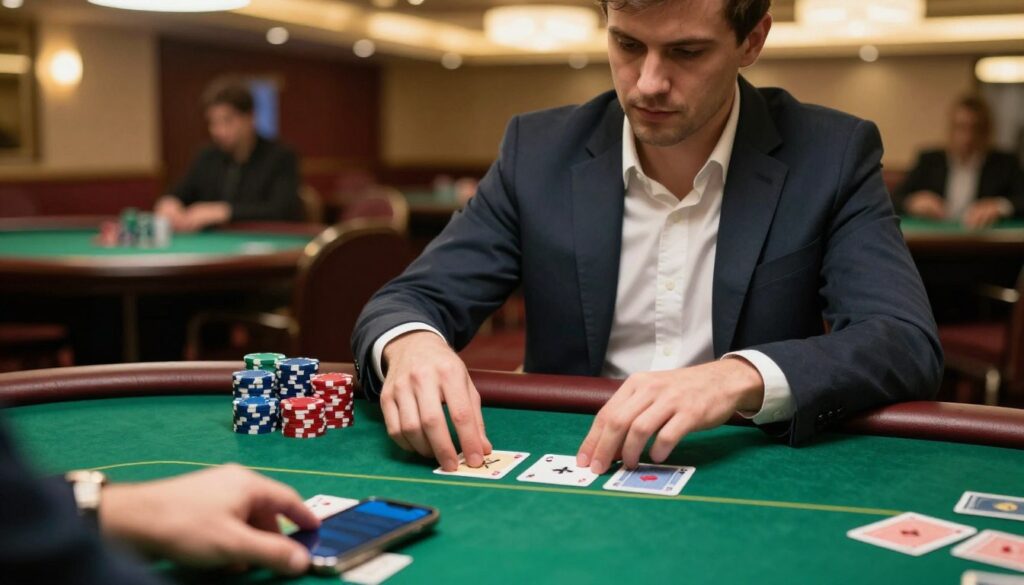
Every glance at a screen has a price. You miss a betting tell or a timing clue. That lost information could have won a pot.
| Distracted Phone Behavior | Focused, Profitable Alternative |
|---|---|
| Phone on table, notifications active | Device in another room or in a bag |
| Quickly checking messages between hands | Using that time to range opponents |
| Believing you can multitask effectively | Accepting that divided attention leaks money |
| Starting sessions with no phone rules | Committing to a pre-set period of abstinence |
Implement Uncompromising Removal Strategies
A vague intention to use your phone less will fail. You need a concrete system. Adopt these actionable steps before your next session.
- Turn on Airplane Mode. This is the simplest, most effective barrier.
- Physically place the device in another room. Out of sight, out of mind.
- Begin with a defined phone-free period, like your first two hours of play.
- Use app blockers if self-control is a recurring issue.
This creates a void of time. Fill it with productive table analysis. When not in a hand, actively range your opponents.
Study every showdown for strategic clues. This turns idle moments into data collection. Your brain stays engaged in the flow of the match.
For serious competitors, a zero-tolerance policy is non-negotiable. Treat phone use at the table as a strategic error. Your bankroll will thank you for this discipline.
Using Your Environment and Tools to Your Advantage
Elite players know that winning isn’t just about cards—it’s about controlling your environment. Your physical and auditory setup acts as a silent partner in every decision. It can either drain your mental energy or amplify your clarity.
Purposeful design turns your space into a force multiplier for discipline. This applies to both online and live poker settings. Small adjustments create a significant cumulative effect on your endurance.
Curating Your Focus Zone
Your physical comfort directly impacts cognitive performance. Discomfort is a stealthy distraction that chips away at concentration. Ergonomic principles are a foundational strategy for long sessions.
Invest in a supportive, adjustable chair. Proper lumbar support prevents back strain during hours of play. Set your monitor at eye level to avoid neck fatigue.
Maintain good posture to ensure steady blood flow. Slouching can reduce oxygen to the brain, dulling your edge. These tweaks minimize physical strain before it becomes a mental burden.
Environmental factors are subtle but critical. Harsh overhead lighting causes eye strain and headaches. Use softer, indirect light to create a calm visual field.
Keep your room at a comfortable, cool temperature. Overheating is a common source of mid-session lethargy. A small fan or thermostat control can make a major difference.
For live players, seat selection matters. Choose a spot with minimal foot traffic and visual distractions. Use physical cues, like a specific drink coaster, to anchor your focused mindset at the table.
| Optimal Focus Zone Setup | Suboptimal Environment |
|---|---|
| Ergonomic chair with lumbar support | Hard kitchen chair or couch |
| Monitor at eye level, arm’s length away | Looking down at a laptop, straining the neck |
| Soft, ambient lighting without glare | Harsh fluorescent or direct light causing squinting |
| Room temperature between 68-72°F (20-22°C) | Overly warm or stuffy room leading to drowsiness |
| Dedicated, clutter-free playing space | Playing in a high-traffic area with constant interruptions |
| Live: Seat facing away from aisles and TVs | Live: Seat in the middle of casino action and noise |
The Strategic Use of Music
Music is a powerful tool for shaping your mental state. It occupies the brain’s background processing power. This reduces the urge to seek other stimulation, like your phone.
The right soundtrack keeps you “in the zone” for longer periods. It can help break the habit of reaching for a device between hands. Your attention stays anchored to the game.
Curated playlists regulate mood and maintain a positive, engaged state. For example, the “Have a Great Day” playlist on Spotify offers upbeat, instrumental tracks. This type of music promotes steady concentration without cognitive interference.
A key caution: for many players, lyrics can compete with strategic thought. Words in songs can hijack your inner dialogue. Instrumental or ambient music is often the safer choice for deep focus.
Use music as a consistent part of your pre-session ritual. Putting on your designated playlist signals to your brain that it’s time to work. This auditory cue strengthens your mental transition into the table.
Engineering your environment is a proactive skill. It builds a fortress around your attention, making sustained effort easier. Control your space, and you control a major piece of the performance puzzle.
Managing Energy and Pacing for Marathon Sessions
To win the long game, you must master the art of pacing your effort and aggression. Endurance is a meta-skill that governs your performance across hours or even days.
This discipline requires different strategy for different sessions. A multi-day tournament demands a different approach than a single-night cash session.
Your goal is to preserve peak cognitive function for when it matters most. Effective energy management ensures your strategic edge doesn’t fade with fatigue.
Strategic Aggression and Energy Conservation
Playing a high-energy, aggressive style in every hand is a recipe for burnout. It drains your mental capital long before the final table.
Instead, adopt a philosophy of selective aggression. Conserve your intense focus for high-leverage moments. This balanced approach sustains your decision-making power.
In the early stages of a multi-day event, a conscious trade-off exists. Some professionals advocate playing a solid “B-game” to save energy.
This means operating on a slightly more automatic, fundamental level. The potential loss of immediate expected value is weighed against long-term endurance.
For shorter tournaments or cash sessions, the imperative shifts. You must bring your “A-game” from the very first deal.
Utilize all your focus techniques from the outset. Every decision counts when the time frame is compressed.
Adjust your play style to match the clock. In long hours of play, patience becomes a form of strategic energy conservation.
The Power of the Power Nap
When mental exhaustion sets in, a short nap can be a secret weapon. Science supports the cognitive refresh from a 20-minute power nap.
This brief rest can alleviate fatigue without causing sleep inertia. You wake up feeling alert, with improved memory and processing speed.
Incorporate this tool during long online poker sessions or tournament breaks. Plan it for a natural lull, like after a dinner break.
Find a quiet, dark space and set a reliable alarm. The goal is light sleep, not deep slumber.
This practice resets your attention and combats the cumulative drain of constant decision-making. It’s a proactive strategy to maintain acuity.
Effective pacing, through both play style and rest, keeps your mind sharp. When blinds escalate and pressure mounts, your conserved energy becomes a decisive advantage.
Mastering Breaks and Building Mental Resilience
The final pillar of poker endurance isn’t played at the table. It’s built in the moments you step away. True mental toughness combines strategic recovery with emotional armor.
This skill set turns inevitable downtime into a performance enhancer. It also shields your decision-making from the game’s emotional shocks.
Making Breaks Work for You
Effective breaks are active, not passive. They are strategic tools for cognitive and physical reset. A well-executed pause can restore clarity and energy.
Contrast this with simply scrolling on your phone while seated. The right activities increase blood flow and oxygen to the brain.
| Strategic Break Activities | Ineffective “Breaks” |
|---|---|
| Standing up and walking for 2-3 minutes | Remaining seated, switching to another screen |
| Gentle stretching for neck, shoulders, and back | Scrolling social media or news feeds |
| Deep breathing exercises (like the 4-7-8 method) | Engaging in stressful non-game conversations |
| Getting fresh air or looking at a distant object | Replaying a bad beat in your mind |
Schedule these pauses intentionally. Set a timer for every 60-90 minutes of play. This prevents fatigue from accumulating unnoticed.
Here is a simple, powerful protocol for a five-minute break:
- Minute 1: Stand, walk away from your screen.
- Minutes 2-3: Perform three different stretches.
- Minute 4: Practice deep, controlled breathing.
- Minute 5: Hydrate and mentally reset for the next session.
This is also the sanctioned time to check your phone. If you’ve removed it during play, use this window to satisfy the craving.
Containing device use to scheduled breaks prevents it from spilling into active play. It protects your most valuable asset: uninterrupted attention.
Tilt Control and Positive Self-Talk
Mental resilience is your defense against tilt. Mindfulness and meditation are proven techniques for building this fortitude.
For live players dealing with casino chaos, these practices are essential. Apps like Fedor Holz’s Primed Mind or 10% Happier offer guided sessions.
Even a few minutes of daily practice improves emotional regulation. You learn to observe frustration without being controlled by it.
A powerful in-game hack is the 4-7-8 breathing pattern. Sync it to the card progression during a tense hand.
Inhale for 4 seconds on the flop. Hold for 7 through the turn. Exhale for 8 as the river lands.
This physiologically calms the nervous system. It also creates a rhythmic focus anchor, distancing you from the outcome.
Positive self-talk reinforces this detachment. After a bad beat, avoid judgmental language like “I’m so unlucky.”
Instead, use process-oriented statements. “I made the correct decision based on the information” is a healthy reframe.
This mindset reinforces that losses are part of the games. It directly supports building confidence at the poker table by valuing good process over random results.
Build detachment with simple phrases. “There is no bad beat, only variance” is a professional mantra.
This mental shift protects your focus. It prevents emotional swings from derailing your strategy for the next hour.
These practices transform breaks and mental drills from interruptions into core components of your stamina regimen. They build the resilience that defines consistent winners.
Tracking Performance and Recognizing Fatigue
Fatigue doesn’t announce itself with a siren; it creeps in silently, eroding your edge. The most costly mistakes in poker happen when you’re no longer sharp but don’t realize it.
Turning guesswork into strategy requires objective self-monitoring. Your notepad is a powerful tool for this. It helps you spot the exact point of diminishing returns in a session.
Watch for clear signs your mind is tiring. These signals are more reliable than just feeling tired.
| Signs of Mental Fatigue | Indicators of Optimal Focus |
|---|---|
| Increased irritability at standard bets or bad beats | Maintaining emotional calm regardless of outcomes |
| Impatience and a desire to play more hands | Sticking to a disciplined, selective starting range |
| Missing obvious opponent tells or betting patterns | Actively gathering and processing table information |
| Taking strategic shortcuts instead of full analysis | Working through each decision with clear logic |
| Feeling a strong urge to “gamble” or force action | Exercising patience and waiting for clear spots |
Log key data points during your session. Note specific hands where your read was wrong. Jot down strategic errors and your overall mental state every hour.
This creates a performance journal. It moves you from vague feelings to hard data.
Review your notes after several sessions. Look for patterns. Does your decision quality drop after four hours? Do emotional leaks increase late at night?
These insights let you plan better. You can schedule a strategic break before your typical slump. This protects your bankroll from predictable decline.
It’s vital to separate bad luck from bad play. A lost pot is variance. Consistently poor decisions are a fatigue issue.
Your notes provide the evidence. They show if results are down due to cards or cognition.
Use this simple self-assessment framework. Ask yourself: “Can I still execute my planned observation routine?”
If the answer is no, it’s a strong signal. Your mental fuel is running low.
Recognizing these signs empowers you to act. Take an extended break or end the game intentionally. This discipline saves money and supports long-term development.
This objective feedback loop is crucial. Top players don’t rely on feel alone. They use data to define their optimal session length and intensity.
Conclusion: Sharpening Your Edge for the Long Haul
Your path to consistent profits in poker is paved by the quality of your attention, not just the cards you’re dealt. This guide outlined a multi-faceted discipline built on preparation, mental training, and environmental control.
True stamina blends mental resilience with strategic energy management. Through dedicated practice and self-awareness, you build the endurance needed for marathon games with a clear mind.
By starting small, eliminating distractions, and pacing your energy, you forge an unshakable focus. This sharpened edge lets you maintain peak decision-making longer than opponents.
View this discipline as your most reliable route to increased profits and deeper tournament runs. Commit to the process. Every session adds to your strategic foundation, much like building a bankroll with solid Texas Hold’em tips for beginners.
Leave a Reply