

For serious card players, moving beyond gut feeling is the key to real improvement. Modern applications that record and analyze your sessions are now essential.
This guide provides a comprehensive roundup of the top performance programs available. Our goal is to help you make an informed choice for your needs.
These powerful systems transform how you approach the tables. They shift your strategy from intuition-based guesses to data-driven decision-making.
We will break down the key features and benefits of leading options. This includes in-depth looks at popular applications like PokerTracker 4 and Hold’em Manager.
Whether you’re a casual competitor or a high-stakes grinder, using these analytics is a critical step. It paves the way for long-term success and better results.
Our article will cover everything from basic definitions to advanced metrics. We will also provide clear pricing comparisons to aid your selection.
Written in American English, this information reflects current market offerings for players in the United States. The tone is professional and focused on practical advice.
The commercial intent here is straightforward: to guide you toward selecting the best poker tools for your individual journey.
Ready to upgrade your approach? Engage with the detailed sections that follow to find your perfect match.
Introduction: Transforming Poker with Data-Driven Insights
Gone are the days when success was solely measured by the strength of a player’s intuition and ability to read physical tells. The landscape of competitive card games has undergone a radical transformation. Today, quantitative analysis and statistical insights dominate the approach of winning competitors.
The advent of online play was the catalyst. It generated an unprecedented volume of hand history records. This created a new challenge: making sense of millions of data points.
Specialized applications emerged to meet this need. They parse and interpret the vast information generated at the tables. This turns raw numbers into actionable intelligence.
These analysis tools act as a force multiplier. They allow you to scrutinize your own decisions with surgical precision. You can also identify patterns in your opponents’ strategies that would be impossible to spot manually.
Data-driven insights expose profitable trends and strategic leaks with objective clarity. This leads directly to improved win rates across cash games and tournaments. Leveraging this technology is now a fundamental component of a modern, professional approach.
The best part? This transformation is accessible to everyone. From beginners at micro-stakes to seasoned high-stakes professionals, the tools provide a significant edge.
Core benefits you can expect include superior bankroll management and enhanced decision-making. Your learning curve will accelerate dramatically. In the current competitive scene, leveraging this technology is not an optional shortcut—it’s essential.
With many options available, choosing the right platform can be overwhelming. This guide will provide a clear comparison to simplify your choice.
| Era | Primary Tools | Key Advantage | Limitation |
|---|---|---|---|
| Traditional / Live Play | Physical reads, memory, gut feeling | Human nuance, psychological pressure | Subjective, prone to bias, small sample size |
| Modern / Data-Driven Play | Statistical software, HUDs, hand history databases | Objective, quantifiable insights over large samples | Requires interpretation; can’t capture every live dynamic |
Understanding this evolution is the first step. The next step is getting a concrete definition of the tools that make it all possible. For a deeper look at how these applications function, explore this resource on online poker tracking software.
What is Poker Tracking Software?
Imagine having a personal assistant that meticulously records every bet, raise, and fold you make online. Specialized applications are designed to do exactly that. They automatically import, store, and analyze the hand history files generated by internet card rooms.
The primary function of these programs is conversion. They turn raw, text-based game logs into actionable statistics and visual reports. This process informs your strategic decisions with hard evidence.
Every robust platform consists of three core components. First, a secure database archives all your hand histories. Second, a Heads-Up Display (HUD) overlays real-time opponent stats directly on your game table.
The third component is a suite of reporting tools for deep post-session analysis. Together, they create a complete feedback loop for your development.
These systems track far more than just wins and losses. They calculate the frequency of specific actions for you and your opponents. Key metrics include pre-flop raise percentage and continuation bet frequency.
Modern analysis tools extend their functionality beyond simple hand review. Many now offer comprehensive bankroll management features. They also provide detailed session logging and even mental game tracking modules.
A key distinction exists between desktop-based programs and mobile-centric apps. Desktop versions, like PokerTracker 4, offer deep, powerful analysis for serious study. Mobile applications often focus on convenience and core stat tracking on the go.
Support for multiple game types is a standard expectation for leading utilities. This includes Texas Hold’em, Omaha, and both cash game and tournament formats. You can use one platform to manage your entire online career.
How does it all work? The applications connect to folders on your computer where card rooms save hand history text files. The software parses these files, extracting every detail about each hand played.
Privacy is a paramount concern for reputable developers. High-quality systems process your information locally on your own machine. Others use cloud services with strong encryption and clear data security guarantees.
In essence, these platforms act as the central nervous system for a data-informed card game strategy. They provide the foundational insights upon which all advanced improvement is built.
The Essential Benefits of Poker Tracking Tools
Investing in a robust analysis suite pays dividends through three core areas: sharper in-game decisions, smarter money management, and pinpointing weaknesses. These platforms move you from reactive play to proactive control.
The advantages extend beyond simple record-keeping. They create a feedback loop that accelerates learning and solidifies profitable habits. Let’s explore how these tools deliver tangible value.
Improving Decision-Making and Strategy
A real-time Heads-Up Display (HUD) transforms your table view. It overlays key statistics on every opponent, like their Voluntarily Put Money In Pot (VPIP) and Pre-Flop Raise (PFR) percentages.
This instant profile allows for dynamic adjustments during play. You can identify loose players or spot predictable tendencies immediately. Your moves shift from guesswork to informed, strategic bets.
After your session, deep hand history review unlocks further growth. You can replay crucial moments, explore alternative lines, and solidify strategic concepts. This turns every game into a learning opportunity.
Bankroll Management and Risk Assessment
Integrated financial tools automatically track wins and losses across all your sessions and games. This provides an accurate, real-time picture of your profitability in cash games and tournaments.
Leading platforms, like Poker Analytics, deliver comprehensive oversight. You can precisely log all expenses, bonuses, and tips. Defining separate bankrolls in specific currencies is also supported.
A critical feature is the risk of ruin calculation. It uses your win rate and variance data to advise on sustainable stake levels. This scientific approach helps you avoid going broke during normal swings.
Identifying Leaks and Performance Trends
These applications aggregate data over thousands of hands to reveal statistical weaknesses. Are you folding too often to three-bets? Is your play overly passive from the blinds?
Powerful filters and custom reports let you isolate performance. You can analyze by stake, time of day, opponent type, or tournament format. This uncovers hidden trends invisible to the naked eye.
Recognizing these leaks is the essential first step toward systematic improvement. It transforms vague feelings of loss into specific, correctable mistakes. This turns you into your own most effective manager.
Ultimately, leveraging these benefits is what separates casual players from consistent winners. Choosing the right set of tools is a direct investment in your long-term success, helping you build one of the best poker strategies possible.
Key Features to Look for in Poker Tracking Software
Selecting the right analytical toolkit requires a clear understanding of the core functionalities that separate basic record-keepers from powerful strategic engines. Not all platforms are created equal. Focusing on these essential capabilities will ensure your investment directly translates to improved performance at the tables.
Leading applications offer a suite of integrated tools. Each component serves a distinct purpose in your development cycle. Let’s examine the four pillars of a top-tier analysis platform.
Real-Time HUD (Heads-Up Display)
The Heads-Up Display is your tactical lens during active play. This overlay appears directly on your game table, presenting crucial statistics for every opponent.
Essential HUD metrics provide an instant profile. They help you classify opponents and adjust your strategy on the fly.
- VPIP (Voluntarily Put $ in Pot): Shows how often a player enters a hand. A high number indicates looseness.
- PFR (Pre-Flop Raise): Reveals how frequently they initiate raising before the flop. This signals aggression.
- Aggression Frequency: Measures how often they bet or raise versus calling post-flop.
A customizable HUD is vital. You should choose which stats are displayed and where. For example, Poker Copilot offers over 100 professional statistics for its real-time display. This lets you tailor the information to your specific needs.
Hand History Import and Analysis
Robust platforms automatically import hand history files from supported card rooms. This creates a permanent, searchable database of every session you play.
The true value lies in the analysis tools. A built-in hand replayer lets you review past actions step-by-step. You can explore different strategic lines and learn from mistakes.
Advanced systems now include AI-powered hand analysis. This provides deeper insights into decision quality. Comprehensive support for various formats is also key.
Top-tier options, like PokerTracker 4, support No-Limit, Limit, and Pot-Limit games. This includes Cash Ring Games, Sit N’ Go’s, and Multi-Table Tournaments for both Texas Hold’em and Omaha.
Custom Reports and Statistics
Built-in reports are helpful, but custom reporting unlocks true strategic depth. This feature lets you answer specific questions about your game.
You can create a report to analyze your performance in 3-bet pots from the blinds. Another might examine your success rate in late-stage tournaments.
The availability of a wide range of statistics is crucial. Look for platforms that offer everything from basic win rates to advanced tournament metrics like ICM (Independent Chip Model).
Applications like Poker Analytics excel here. They provide automatic reports and support for creating custom fields. This allows for incredibly personalized data exploration.
Cross-Platform Compatibility
Modern players use multiple devices. Your analysis tools should work seamlessly across your ecosystem. Compatibility spans operating systems and device types.
There are two primary approaches in the market. Your choice should match where you play and study most often.
| Approach | Primary Use Case | Typical Features | Example Platforms |
|---|---|---|---|
| Desktop-Centric Suites | Deep post-session analysis, multi-tabling, advanced HUDs | Full reporting suites, powerful databases, extensive customization | PokerTracker 4 (Windows), Poker Copilot (Mac & Windows) |
| Mobile-First Apps | On-the-go tracking, session logging, bankroll management | Cloud sync, streamlined interfaces, core stat tracking | Poker Analytics (iPhone, iPad, Mac, Apple Watch) |
Evaluate your primary playing device. Then, choose a solution that offers a native experience for that platform. This ensures you will consistently use the powerful features available.
In-Depth Review: Poker Analytics
For competitors who prioritize privacy and mobile access, one application stands out by consolidating financial and strategic oversight. Poker Analytics redefines the mobile experience for Apple device users. It delivers a powerful, all-in-one suite that goes beyond standard card game analysis.
This platform is built exclusively for iPad, iPhone, and Mac. It takes a holistic approach to managing your entire competitive journey. You get deep insights alongside robust bankroll tools in a single, intuitive interface.
Comprehensive Tracking and Bankroll Management
Poker Analytics functions as a complete personal manager for your activities. It tracks standard metrics like profit, hourly rate, and BB/100. The system also generates automatic reports to save you time.
Its scope is uniquely broad. You can log traditional poker sessions, casino visits, individual bets, and even investments. This makes it a central hub for all your risk-based endeavors.
Several innovative features provide tangible advantages. The cash game stop notification acts as a fatigue alert. It helps you quit at optimal times to protect your bankroll.
Integrated staking management simplifies backing arrangements. The built-in hand recording feature captures key moments for later review. You can also manage opponents with notes and pictures in the player manager.
Bankroll oversight is exceptionally detailed. It tracks expenses, bonuses, and tips across multiple currencies. The risk of ruin calculation uses your win rate data to advise on safe stake levels.
All your information stays private with local iCloud backup. No data is stored on external servers. This commitment to security is a major benefit for cautious players.
Subscription Models and Pricing Tiers
This app operates on a freemium model. The free tier allows users to create one record per month. A “record” is any logged session, bet, or investment entry.
Paid subscriptions unlock greater frequency and functionality. The tiered structure is designed to scale with your needs.
| Plan | Record Limit | Best For |
|---|---|---|
| Free Tier | 1 record per month | Casual users testing the app |
| Weekly Subscription | 1 record per week | Regular players with moderate volume |
| Unlimited Subscription | Unlimited records | Serious grinders and high-volume users |
The value proposition is clear for mobile-centric individuals. Subscription costs differ from one-time purchase desktop software. This model offers continuous updates and direct developer support.
It represents a compelling choice for those deeply invested in the Apple ecosystem. You pay for ongoing access rather than a permanent license.
User Experience and Support Feedback
User reviews consistently praise the app’s clean design and intuitive workflow. The interface presents complex stats in a digestible format. This lowers the barrier to entry for newcomers.
Features like easy hand sharing are frequently highlighted. They facilitate collaboration and feedback from peers.
Developer responsiveness is a standout strength. The creator, Laurent, provides direct email support. He addresses bug reports and feature requests with notable speed.
Some past reviews mentioned occasional data display issues. The development cycle shows a strong commitment to fixes. For example, version 6.2.30 resolved specific problems promptly.
Recent updates have added significant functionality. New features include enhanced staking options, player groups, and stack tracking. Support for the Mississippi straddle option keeps the app current with modern play.
This combination of thoughtful design and active support creates a premium user experience. Poker Analytics is an excellent choice for mobile-focused competitors who value privacy. It delivers comprehensive tracking without tying you to a desktop computer.
In-Depth Review: PokerTracker 4
The gold standard in desktop tracking is a program that has evolved alongside online play itself. PokerTracker 4 represents the veteran choice for deep strategic analysis.
It has been the industry-leading option since 2001. This longevity speaks to its powerful capabilities and consistent updates.
As a piece of poker tracking software, it supports a wide range of formats. These include No-Limit, Limit, and Pot-Limit structures.
You can use it for Cash Ring Games, Sit N’ Go’s, or Multi-Table Tournaments. It works for both Texas Hold’em and Omaha variants.
Industry-Leading Analysis and HUD Capabilities
This platform is known for its incredible depth. It offers one of the most comprehensive analytical engines available.
The Heads-Up Display (HUD) is exceptionally powerful. It provides extensive customization for your real-time table view.
You have access to a vast library of over 200 statistics. This allows for precise opponent profiling during play.
Key HUD metrics include:
- VPIP and PFR percentages for pre-flop tendencies.
- Post-flop aggression frequency and fold-to-c-bet stats.
- Custom stats you can build to answer specific questions.
The reporting and filtering capabilities are advanced. They are suitable for high-volume grinders and serious students.
You can filter your hand histories by countless variables. This isolates performance trends across different situations.
The software imports and processes data with renowned accuracy. Its reputation for reliability was built over many years.
It is considered one of the best poker tools for desktop users. The depth of insight is unmatched for dedicated players.
Free Trial and Licensing Options
A full-featured 14-day free trial is available. This allows you to test all features thoroughly before committing.
You can import your hand histories and use the HUD in real games. This trial period is generous and fully functional.
The typical licensing model is a one-time purchase. You buy the software license outright.
An optional annual subscription is available for continued major updates and support. This is not required for the core program to function.
Pricing varies based on the supported game types. You choose between a Hold’em-only license or a Hold’em & Omaha combo.
| License Type | Best For | Key Advantage |
|---|---|---|
| Hold’em Only | Players who exclusively play Texas Hold’em | Lower upfront cost |
| Hold’em & Omaha | Mixed-game players or those exploring Omaha | Full flexibility for future game expansion |
It is wise to check the official website for current pricing. Costs can change over time.
For dedicated desktop players, the one-time cost represents good long-term value. You own the tools outright.
This model differs from subscription-based apps. It is a classic investment for serious competitors.
Taking advantage of the free trial is a smart first step. It lets you verify the software‘s fit for your game.
This platform remains a cornerstone for building winning strategies. It represents good value for the best poker minds.
In-Depth Review: Poker Copilot 8
Combining advanced artificial intelligence with a cost-effective pricing model, Poker Copilot 8 presents a unique value proposition. This robust platform serves as a powerful analytical suite for both Mac and Windows users.
It delivers a comprehensive set of features designed to elevate your strategic approach. The focus is on providing deep insights without locking you into a recurring subscription.
AI Hand Analysis and SharkScope Integration
A standout feature is its AI-powered hand analysis. This tool provides expert-level critiques on your played games by leveraging SharkScope’s vast database.
You receive objective feedback on your decisions, pinpointing strategic leaks. This accelerates the learning process far beyond manual review.
The deep integration with SharkScope, the leading tournament results database, adds another layer of intelligence. Your real-time HUD can display opponent stats like In-The-Money percentage (ITM%) and Return on Investment (ROI).
This gives you a significant informational edge at the tables, especially in multi-table events. Knowing a competitor’s historical performance directly influences your in-game choices.
The software includes over 100 professional statistics for your HUD and reports. You can analyze a wide range of situations to improve.
Value-Focused Pricing and Cross-Platform Support
The licensing model is straightforward and stake-based. You pay a one-time fee with no annual subscriptions required for updates to this version.
This creates a clear total cost of ownership advantage over several years. A comparison shows it often costs less than competitors over a three-year period.
Three license types are available to match your stake level:
| License Tier | Stake Limit | One-Time Price |
|---|---|---|
| Micro Stakes | Up to $10 tournaments / $0.10 BB | $29 |
| Small Stakes | Up to $30 tournaments / $1.00 BB | $49 |
| All-Stakes | Any stakes | $99 |
All licenses include lifetime updates for version 8. They also come with a free one-month SharkScope Silver subscription, an $18 value.
Genuine cross-platform support is a key benefit. The software works natively on both macOS and Windows, a rarity among analytical tools.
This makes it an excellent option for players who use different machines. A full-featured 14-day free trial lets you test all capabilities risk-free.
For recreational to semi-professional players, it represents one of the best-value poker tools available. You get powerful data analysis and a customizable HUD without ongoing fees.
It’s a smart investment for those seeking to upgrade their stats and strategic note-taking.
Feature Comparison: Poker Analytics vs. PokerTracker 4 vs. Poker Copilot
Directly comparing the leading analytical platforms reveals distinct strengths tailored to different player needs. Each application excels in specific areas, from raw statistical power to mobile convenience and intelligent feedback.
Understanding these differences is crucial. It ensures you select the best poker toolkit that aligns with your primary goals and playing style.
Core Tracking and HUD Features
All three platforms provide reliable hand history import and a configurable real-time HUD. This is the foundation of any serious analytical suite.
Their approaches, however, diverge significantly. The depth and focus of these core features set them apart.
PokerTracker 4 offers the most extensive stat library, with over 200 metrics available. Its HUD is highly customizable, allowing for dense, information-rich table overlays. This makes it a powerhouse for multi-tabling grinders.
Poker Copilot provides a clean interface with over 100 professional statistics. A key differentiator is its direct SharkScope integration. This adds opponent tournament history data directly to your HUD.
Poker Analytics takes a mobile-first approach. Its HUD is part of a holistic ecosystem. Unique alerts, like cash game stop notifications, help manage session length and fatigue.
Advanced Tools like AI and Custom Reports
Beyond basic tracking, each platform offers unique advanced capabilities. These tools cater to different aspects of player development and analysis.
Poker Copilot’s standout feature is its AI-powered hand analysis. Leveraging a vast database, it provides objective critiques on your decisions. This accelerates the learning process by pinpointing strategic leaks.
Poker Analytics excels in deep customization and holistic tracking. Users can create custom fields to log mental state or track non-card activities like sports bets. Its visualizations and staking management are also robust.
PokerTracker 4 leads in raw analytical power for data mining. Its system for creating complex custom reports and filtering population tendencies is unmatched. This is ideal for players who want to dissect game theory at a granular level.
| Feature Category | Poker Analytics | PokerTracker 4 | Poker Copilot |
|---|---|---|---|
| Primary Platform | Mobile (iOS, macOS) | Desktop (Windows) | Desktop (Mac & Windows) |
| HUD Stat Depth | Core stats + unique alerts | 200+ highly customizable stats | 100+ stats + SharkScope data |
| Unique Advanced Tool | Custom fields, holistic life tracking | Advanced filters & population reports | AI hand analysis |
| Best For | Mobile users valuing privacy & session management | High-volume players needing deep data mining | Players seeking AI feedback & cross-platform value |
Matching these advanced features to your goal is key. Choose AI for accelerated learning, custom fields for holistic tracking, or complex reports for deep data exploration.
Your choice will define how you interact with your game data and ultimately shape your improvement path.
Pricing and Plans: Evaluating Cost vs. Value
The market for performance analysis platforms presents two primary pricing philosophies. Each model has distinct long-term implications for your budget.
Understanding these options is crucial. It ensures you select a plan that delivers maximum value for your investment.
Your choice affects both your upfront costs and your access to future updates. We will break down the key models to help you decide.
One-Time Purchases vs. Subscription Models
The one-time purchase model offers lifetime access to a specific version of the software. Platforms like Poker Copilot and PokerTracker 4 use this approach.
You pay a single, predictable fee. This appeals to players who prefer a clear, upfront cost with no recurring bills.
Long-term, this can be very cost-effective. You own the tools outright, though major version upgrades may require a new purchase.
Subscription models, like those used by Poker Analytics, operate differently. You pay a weekly or yearly fee for continuous access.
This lowers the initial barrier to entry. It also typically includes all updates and cloud services during your subscription period.
The financial implication is an ongoing operational expense. For active users who value constant development, this can be worthwhile.
Consider your commitment level and budget timeframe. A one-time fee suits those seeking permanence. A subscription fits those wanting lower startup costs and ongoing innovation.
Stake-Based Licensing and In-App Purchases
Stake-based licensing ties the price or features of a software license to the stakes you play. Poker Copilot’s model is a prime example.
It offers three tiers: Micro Stakes ($29), Small Stakes ($49), and All-Stakes ($99). Each tier has a maximum buy-in or blind limit.
This provides significant savings for low-stakes players. You aren’t forced to pay for high-stake features you won’t use.
In-app purchases are common in mobile applications. Poker Analytics uses this method through its subscription tiers.
The free tier allows one record per month. Weekly and unlimited plans unlock more frequent usage and advanced features.
This type of model lets you start small and scale up. It’s flexible but requires managing your account and payments.
When choosing any plan, think about your current and future stake levels. A wise choice now can prevent a costly upgrade later.
Always read the terms to understand what you’re buying. Know what happens to your data and information if you cancel a subscription.
Your game and session volume should guide this decision. The right price model supports your growth without straining your bankroll.
User Interface and Ease of Use
User interface design directly impacts how effectively you can leverage statistical information. A cluttered or confusing layout can obscure valuable insights. The best analytical platforms balance powerful capabilities with intuitive accessibility.
This balance is critical for consistent use. You are more likely to engage with a tool that feels natural and efficient. Let’s examine how the leading options handle design and onboarding.
Design and Navigation Across Platforms
Visual design and workflow differ significantly between mobile and desktop environments. Each platform optimizes for its primary method of interaction.
Poker Analytics receives high praise for its modern, intuitive mobile interface. Reviewers note it is “light years ahead” in terms of design and functionality. The app offers a cleaner look and feel tailored for touchscreens.
Session entry is guided and straightforward. This makes logging your activity quick and hassle-free. The focus is on presenting complex data in a digestible, visual way.
Poker Copilot provides a clean, Mac-native experience that also runs well on Windows. Its layout is straightforward, avoiding unnecessary complexity. The design philosophy emphasizes clarity over density.
This approach helps users find key features without extensive searching. Navigation feels logical whether you use a mouse or trackpad. It respects standard desktop conventions.
PokerTracker 4 is renowned for its comprehensive analytical engine. Its interface is powerful but can appear dense to newcomers. The sheer volume of options and reports requires more initial exploration.
This complexity is a trade-off for its unmatched depth. Experienced players appreciate having every tool within reach. The navigation is built for a multi-monitor, keyboard-driven workflow.
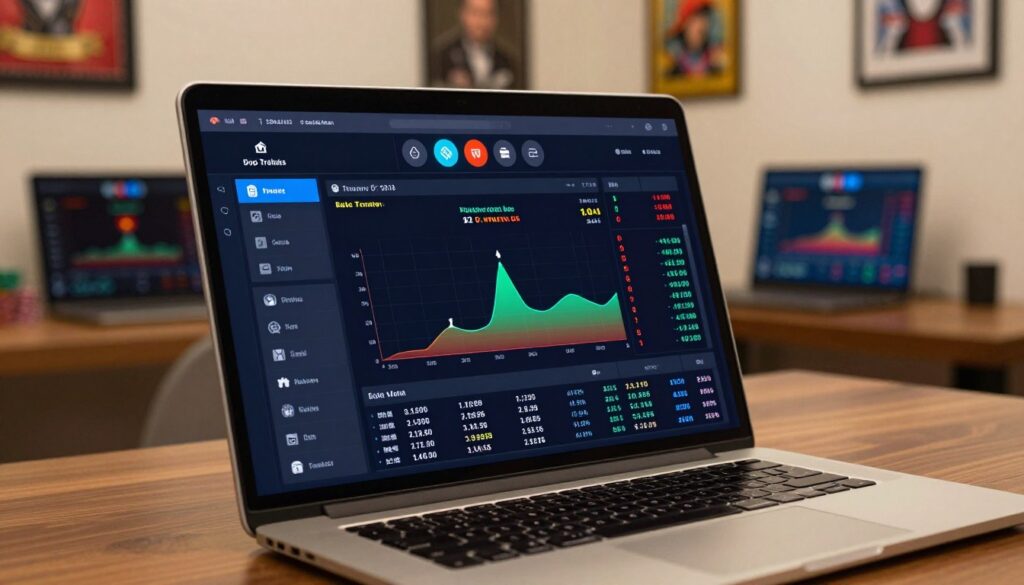
Mobile touchscreen navigation prioritizes large buttons and swipes. Desktop interfaces rely on menus, right-clicks, and keyboard shortcuts. Your preferred device should guide your choice of platform.
Learning Curve for Beginners
How quickly can a new user start benefiting from these tools? The answer varies by application and your commitment to learning.
Poker Analytics likely has the gentlest initial curve. Its guided session entry and clear visual reports provide immediate value. You can track core stats and manage your bankroll with minimal setup time.
This makes it an excellent starting point for casual players. The mobile-first approach feels familiar to most people.
Poker Copilot is also quite approachable. Its focused feature set and clear, stake-based licensing simplify the decision. The interface doesn’t overwhelm with endless options.
Newcomers can configure a basic HUD and start reviewing hands quickly. The software helps you focus on fundamental improvements first.
PokerTracker 4 presents a steeper initial learning curve. Its vast capabilities require more time to master. This is the trade-off for gaining access to the industry’s most detailed analysis.
The platform mitigates this with extensive video tutorials and a knowledgeable community. Dedicating a few hours to these resources pays long-term dividends.
For complete beginners, starting with a simpler tool is often wise. It allows you to build foundational habits without frustration. You can always graduate to more advanced software later.
Alternatively, view mastering a complex platform as part of your poker education. The level of insight you gain can fundamentally change your approach to the game.
Your comfort with technology and available study time are key factors. Choose a system that matches your current user level and ambition.
Advanced Analytics: HUDs, Stats, and Real-Time Data
To exploit weaknesses and maximize profit, you need to understand the story told by pre-flop, post-flop, and tournament-specific data points. The numbers on your Heads-Up Display are not just digits. They are a condensed biography of every opponent at your table.
These metrics form the backbone of all modern analysis. They power your real-time decisions and fuel your post-session reviews. Mastering their meaning is the key to unlocking the full potential of your analytical platform.
Critical statistics are generally grouped into three categories. Each category reveals different layers of strategic behavior.
Pre-Flop and Post-Flop Statistics
Pre-flop metrics give you the first and often most reliable read on an opponent. They describe how a player acts before any community cards are dealt.
VPIP (Voluntarily Put $ In Pot) shows how often someone enters a hand. A high VPIP indicates a loose, involved player. PFR (Pre-Flop Raise) reveals how frequently they initiate aggression.
The interaction between VPIP and PFR is telling. A large gap suggests a passive caller. A small gap points to an aggressive raiser.
Further pre-flop insights come from 3-Bet and 4-Bet percentages. These measure re-raising aggression. The Fold to 3-Bet stat is crucial for exploitation. A high percentage here means you can profitably re-raise them often.
Once the flop arrives, a new set of metrics becomes vital. The C-Bet (Continuation Bet) frequency shows how often a pre-flop raiser follows through on the flop.
Fold to C-Bet indicates how often a player folds to that initial flop bet. These two stats create immediate post-flop strategy guides.
Aggression factors for the flop, turn, and river measure betting and raising versus checking or calling. WTSD (Went to Showdown) shows how often a player sees the final card. W$SD (Won at Showdown) reveals their success rate in those situations.
| Statistic | What It Measures | Strategic Insight |
|---|---|---|
| VPIP | Frequency of entering a pot pre-flop | Identifies loose or tight players |
| PFR | Frequency of raising pre-flop | Highlights pre-flop aggression |
| Fold to 3-Bet | How often a player folds to a 3-bet | Target for aggressive re-stealing |
| C-Bet % | Frequency of betting after raising pre-flop | Shows post-flop continuation aggression |
| Flop Aggression | Bet/Raise vs. Call/Check on the flop | Indicates assertive or passive flop play |
| W$SD | Win rate when reaching showdown | Reveals hand strength at the end |
Tournament-Specific Metrics
Tournament success requires a different analytical lens than cash games. The changing value of chips and payout structures demand specialized metrics.
Key performance indicators include ITM% (In-The-Money) and ROI (Return on Investment). ITM% shows consistency in reaching payouts. ROI measures overall profitability across events.
Average Finish and Final Table % gauge deep-run ability. The M-Ratio helps manage stack preservation relative to blinds.
The most advanced concept is the Independent Chip Model (ICM). ICM calculates the real-money value of your tournament chips based on the payout structure. Some platforms can highlight ICM mistakes in your hand history.
This is critical near the bubble or at a final table. Bubble Factor quantifies the extra risk of elimination when a payout is close.
Modern tournament formats add complexity. Leading analytical tools must handle bounty events and progressive knockouts. Your chosen platform needs to track these unique structures accurately.
Using these metrics transforms your approach. You move from simply playing hands to managing a dynamic equity journey. This depth of analysis is a hallmark of the best poker strategies for competitive events.
Bankroll and Session Management Tools
True financial mastery in competitive card games extends far beyond simply tallying wins and losses from the felt. Dedicated analytical platforms provide integrated modules that handle the complete monetary picture. These tools turn vague financial feelings into precise, actionable information.
This oversight is critical for long-term sustainability. It protects your capital from the natural swings of the game. Effective management separates professionals from perpetual amateurs.
Tracking Expenses, Bonuses, and Tips
Your net profit is not just buy-ins minus cash-outs. A true financial assessment includes every transaction related to your activity. Leading platforms allow you to log a wide variety of financial entries.
This creates an accurate picture of your career’s profitability. You can track positive inflows like rakeback deals and deposit bonuses. It’s equally important to record outflows such as coaching fees, site subscriptions, and even travel costs for live events.
Comprehensive systems let you create custom transaction types. This fits any player‘s specific situation. You become the manager of your entire financial ecosystem.
| Transaction Type | Examples | Impact on Net Profit |
|---|---|---|
| Income / Credits | Rakeback, bonus clears, staking profits | Increases your overall bankroll |
| Expenses / Debits | Coaching, software subscriptions, travel | Decreases your overall bankroll |
| Game Transactions | Buy-ins, cash-outs, tips at the table | Core win/loss calculation |
This detailed record-keeping is invaluable for tax preparation. It provides clear documentation of all gambling-related income and expenses. You gain confidence and control over your financial account.
Risk of Ruin Calculations and Alerts
Variance is an inescapable part of the card game landscape. The Risk of Ruin (RoR) is a vital metric that quantifies your danger. It calculates the probability of losing your entire bankroll based on your win rate and expected swings.
Modern analytical tools use your historical performance data to compute this number. A high RoR is a stark warning that your stakes are too aggressive. This objective data helps you make rational adjustments to your bankroll strategy.
Beyond this calculation, smart platforms include proactive protective features. Stop-loss alerts can notify you after a predetermined losing session. This helps you avoid playing while tired or on tilt, which protects your capital.
Some applications feature “optimal duration” graphs for cash sessions. These reports analyze your performance over time to suggest when to quit. It’s a powerful note for disciplined players.
Using these features transforms bankroll management from guesswork into a science. You move from hoping you have enough funds to knowing your risk level precisely. This is the foundation of a serious, sustainable approach.
Hand History Review and Learning Enhancements
Unlocking deeper levels of skill requires a methodical approach to dissecting your past actions at the table. The most powerful applications provide dedicated features to turn every session into a structured learning opportunity.
These enhancements move beyond simple stat collection. They focus on active review and collaborative feedback. This process is where genuine strategic growth happens.
Hand Replayer and Recording Features
A hand replayer is a core tool for post-mortem analysis. It recreates the action of a past hand card-by-card and street-by-street. You can pause at any decision point to question your choices.
This allows you to consider alternative lines you might have taken. It also helps you understand opponent tendencies more clearly. Reviewing play in this detailed format is invaluable.
Advanced features take this further. You can often take notes directly on the replayer interface. Equity calculation shows the exact odds at each stage of the hand.
Some platforms even let you replay hands from the opponent’s perspective. This builds empathy and reveals their possible thought process.
Applications like Poker Analytics include a “super fast hand recorder.” It captures key moments instantly for later review. Poker Copilot integrates its replayer with AI analysis for expert critiques.
Using these tools transforms vague memories into precise, actionable information. You stop wondering what happened and start understanding why.
Sharing Hand Histories for Feedback
Collaborative learning accelerates improvement dramatically. Easily exporting and sharing your hand histories opens the door to external perspectives.
You can share specific games with a coach for professional advice. Study groups can dissect complex tournament situations together. Online forums, like Reddit’s r/poker, offer crowdsourced analysis.
Different applications provide various sharing methods. Poker Analytics has built-in sharing options for quick distribution. The universal Hand History Text format works with almost any platform or forum.
This use of shared history is crucial. It breaks down the isolation of solo study. You gain access to the collective knowledge of the community.
When you share a hand, you’re not just showing your cards. You’re inviting discussion on strategy, bet sizing, and table dynamics. This feedback loop is a powerful catalyst for growth.
Your recorded histories become a living library of learning material. Each shared hand provides a new lesson. This turns every session into a step toward mastery.
Customization and Reporting Capabilities
The true power of modern analytical tools lies not just in the data they collect, but in your ability to shape and interrogate that information. Leading platforms offer deep customization, turning you from a passive observer into an active researcher of your own game.
This transforms standard reports into personalized dashboards. You can uncover insights tailored specifically to your weaknesses and strengths.
Creating Custom Fields and Visualizations
Standard metrics tell part of the story. To get the full picture, you need to add your own context. The best software lets you create custom fields for any session.
For example, you could add a “mental state” or “energy level” field. You log this each time you play. Over time, the platform correlates this mindset with your results.
You might discover you win more when you feel focused. Or you lose more when tired. This turns the application into a personalized lab for your game.
Other useful custom terms could include:
- Table dynamics (Tough, Soft, Average)
- Physical location (Home, Cafe, Office)
- Time of day (Morning, Afternoon, Night)
Once you have this data, the software generates visualizations. You get graphs and charts based on your custom parameters. This reveals non-obvious correlations that aggregate stats hide.
It’s a powerful way to become your own best game manager. You move beyond what happened to understanding why it happened.
Filtering Data for Specific Insights
Robust filtering is key for targeted analysis. It lets you isolate specific scenarios from thousands of hands. This is how you find very precise leaks or confirm strengths.
You can filter for all hands where you 3-bet from the small blind. Another filter could show all tournaments with buy-ins over $50. You could even isolate all sessions against one particular opponent.
This level of detail is crucial. Aggregate numbers might show you’re a winning player. But a filter could reveal you lose money in specific spots, like blind-versus-blind battles.
The depth of filtering varies by platform. Desktop powerhouses offer an immense range of options. Mobile apps provide more focused but still useful tools.
| Filter Type | Desktop Powerhouse Software | Mobile-Focused Applications |
|---|---|---|
| Hand Scenario Filters | Extreme detail (e.g., “3-bet pots as caller from BB on a paired flop”) | Broader categories (e.g., “All 3-bet pots”) |
| Session & Financial Filters | Filter by stake, date range, specific currency, profit/loss bands | Filter by session date, basic win/loss result, game type |
| Opponent-Based Filters | Filter for hands against players with specific VPIP/PFR profiles | Filter for sessions against a specific player name you’ve noted |
| Best Use Case | Identifying complex, population-wide leaks; deep data mining | Quick review of recent trends; on-the-go session analysis |
Using these features, a user can create incredibly specific reports. You might generate a report on your performance in river bluffing spots against tight players.
This targeted analysis is how top players refine their edge. They don’t just review sessions; they dissect them. Always note the situations where you feel uncertain, then filter to see the data.
Support, Updates, and Community
The long-term value of your analytical toolkit hinges not just on its features, but on the team and resources that stand behind it. A strong ecosystem ensures your investment remains effective and grows with you.
This includes direct developer support, regular updates, and access to collective knowledge. Evaluating these factors is a smart way to protect your decision.

Developer Responsiveness and Bug Fixes
Active maintenance is critical in a fast-changing online environment. Card room updates and new game formats can break compatibility. You need a developer that acts quickly.
Poker Analytics sets a high standard for direct support. User reviews frequently praise developer Laurent for his fast replies. He addresses bug reports and implements suggestions promptly.
This level of care builds tremendous user trust. You know issues will be resolved in a reasonable time.
All leading platforms require regular updates. These patches fix bugs, add new features, and ensure compatibility with the latest operating systems. A history of consistent updates signals a healthy product.
Consider a developer’s track record over the years. Do they engage with feedback? Are update logs filled with meaningful improvements? This information is often found in community forums or app store reviews.
Resource Availability and Forums
Comprehensive learning materials drastically shorten the learning curve. They help you unlock advanced features you might otherwise overlook.
Look for official documentation, video tutorials, and knowledge bases. These resources explain complex terms and workflows in simple ways.
Active community forums are invaluable assets. The PokerTracker forums, for example, are a hub for troubleshooting. Players share custom HUD configurations and discuss strategy using real data.
These communities provide peer-to-peer support and collective wisdom. They turn a solo tool into a shared learning experience.
| Platform | Developer Support Style | Update Frequency | Key Learning Resources |
|---|---|---|---|
| Poker Analytics | Direct, personal email support from the developer | Frequent; focused on stability & new features | In-app guidance, direct developer communication |
| PokerTracker 4 | Ticketed support system backed by extensive knowledge base | Regular; major version updates every few years | Official videos, detailed wiki, active user forums |
| Poker Copilot | Email support with detailed documentation | Consistent; maintains cross-platform compatibility | Online manual, tutorial articles, community tips |
The right resources empower you to use your software to its full potential. They transform it from a simple recording tool into a powerful educational platform.
Strong support and rich resources future-proof your purchase. They ensure the tools you choose today will continue to serve you well as your game evolves.
How to Choose the Right Poker Tracking Software for You
Selecting an analytical partner requires honest self-assessment and practical consideration of your resources. The best poker tools for someone else may not fit your specific situation.
Your choice should align with your current game, future goals, and the environment where you play. This guide will help you navigate the two most critical decision factors.
Assessing Your Skill Level and Stakes
Your experience and the stakes you play dictate the features you need most. A beginner requires simplicity, while a pro demands depth.
Beginners and Micro-Stakes Players should prioritize ease of use and low cost. Your goal is to build fundamental habits without complexity.
The Poker Copilot Micro edition offers a great start at a low one-time price. The free tier of Poker Analytics is also a solid option for light tracking.
Intermediate and Small-Stakes Players need a balance of features and value. You likely review hand histories and use a HUD regularly.
Poker Copilot Small Stakes provides excellent value. A Poker Analytics subscription unlocks more detailed reports and session logging.
Advanced, High-Stakes, or High-Volume Players must have maximum analytical depth. Customization and population data are non-negotiable.
PokerTracker 4 is the industry standard for this level. Poker Copilot All-Stakes is a powerful cross-platform alternative.
| Player Profile | Primary Needs | Recommended Options | Key Advantage |
|---|---|---|---|
| Beginner / Micro-Stakes | Low cost, ease of use, core stat tracking | Poker Copilot Micro, Poker Analytics Free Tier | Minimal investment, gentle learning curve |
| Intermediate / Small-Stakes | Balance of HUD features, value, post-session analysis | Poker Copilot Small Stakes, Poker Analytics Subscription | Good feature set for the price, supports growth |
| Advanced / High-Stakes | Maximum data depth, custom reports, advanced HUD stats | PokerTracker 4, Poker Copilot All-Stakes | Unmatched analytical power for fine-tuning elite strategy |
Considering Platform and Budget Constraints
Practical limitations often make the final decision for you. Your device and finances are key considerations.
Platform compatibility is the first filter. If you use a Mac or need mobile tracking, your options shift.
Poker Copilot and Poker Analytics are primary choices for Apple ecosystems. PokerTracker 4 remains the strong default for dedicated Windows desktop players.
Budget models present another fork in the road. You must decide between a one-time expense and an ongoing subscription.
One-time purchases, like Poker Copilot licenses, offer clear long-term value. There are no recurring bills after the initial price.
Subscription models, like Poker Analytics, provide continuous updates and cloud services. Calculate the cost over several years to see which model suits your finances.
The most important step is to leverage free trials. Test the software on your actual setup with your normal games.
This hands-on test reveals if the tools feel intuitive and perform well. It is the best way to ensure your investment pays off.
Your perfect analytical partner is the one that fits your level, your machine, and your wallet. Choose wisely to build a foundation for long-term success.
Conclusion: Investing in Your Long-Term Poker Success
Making an informed selection among today’s leading performance platforms is an investment with compounding returns. These analytical tools are fundamental for any serious competitor, not a luxury.
Your choice depends on your style. Poker Analytics excels for mobile-centric, holistic oversight. PokerTracker 4 offers unmatched depth for desktop analysis.
Poker Copilot 8 provides exceptional value with cross-platform support and AI insights. The best software for you fits your habits, device, and budget.
Take action by trying the free trials. Experience the way objective data transforms your game. Frame this purchase not as an expense, but as an investment in your education.
The insights gained will pay for themselves many times over. They plug leaks and optimize your strategy for long-term profitability.
As competitive play continues to evolve, staying ahead with precise analysis remains a key component of success. Start building your edge today.
Leave a Reply