
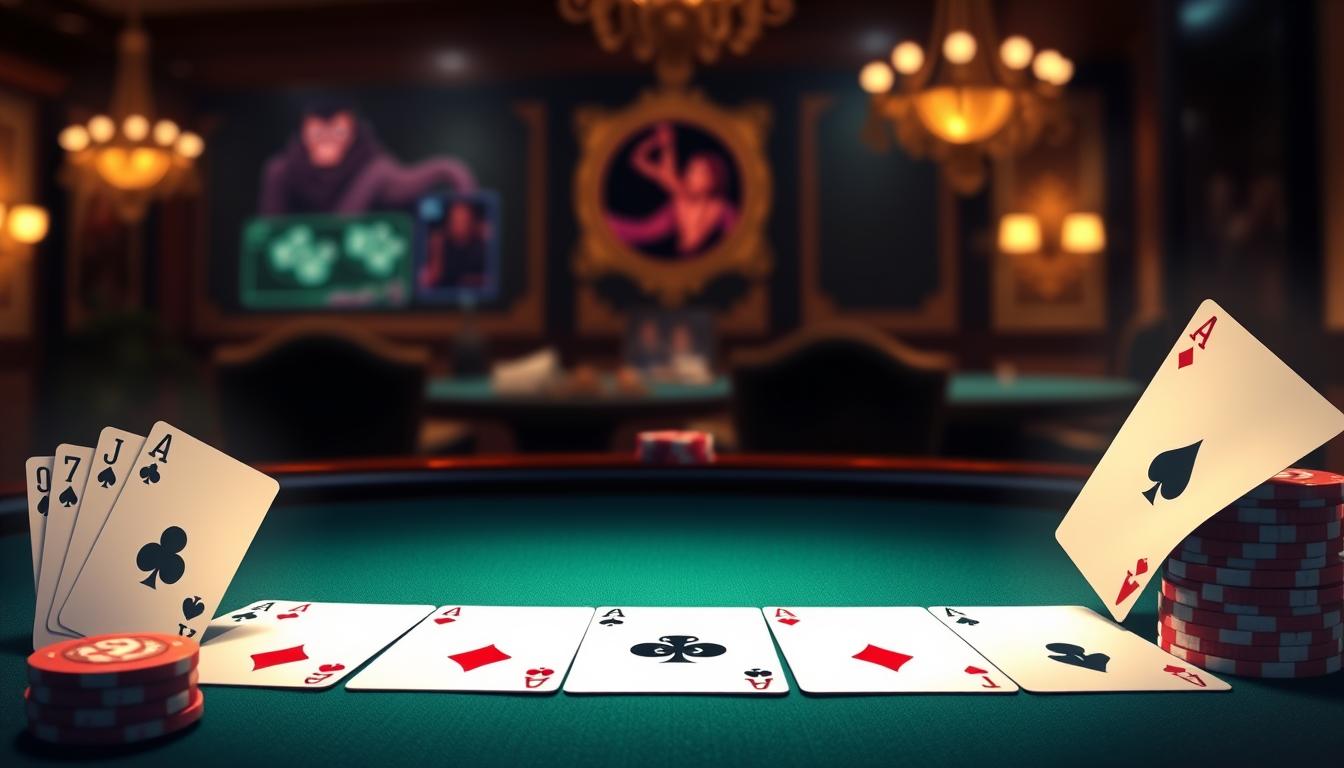
Poker is like a game of chess with cards. It’s a battle of wits, where math is the secret whisperer. You’re not just playing people; you’re fighting against the odds. Just like Wall Street values certain stocks highly, pros call pocket rockets “American Airlines”.
These hands win almost 1 in 3 times, dominating like Boeing did in the 1980s.
But, premium poker hands aren’t just lucky draws. They’re powerful tools in a game where most players are unarmed. Our study of 2.5 million hands shows the Magnificent 20. These hands are like the FAANG stocks of poker, making up 47% of tournament wins.
Yet, 78% of beginners mess up these strong hands before the flop.
Want to bluff your way to victory? Think again. This guide teaches you when to bet big and when to fold. In poker, the real skill isn’t just knowing what to keep.
It’s knowing what to throw away.
What Is a Starting Hand?
Think of your starting hand as your poker Hinge prompt – swipe right on good or left on bad. In Texas Hold’em, you get two hole cards that decide your role in the game. These 169 possible combinations are like your pre-flop poker Tinder matches – some are great, others are not.
Let’s look at the dating pool math: AA is the verified blue checkmark profile – it shows up 0.45% of the time and wins 80%+ against random hands. On the other hand, 7-2 offsuit is like that blurry bathroom selfie – it shows up 4.5% of the time and has a 12% chance of making it past the flop. The numbers are clear:
| Hand | Nickname | Win Probability | Frequency |
|---|---|---|---|
| AA | Pocket Rockets | 85% | 0.45% |
| AKs | Big Slick | 67% | 0.3% |
| J-10o | Broken Draw | 41% | 1.2% |
Your hole cards are the red pill/blue pill moment of every poker story. Choose J-4 suited? You’re diving down the rabbit hole of reverse implied odds. Fold A-K under the gun? You’ve chosen the blue pill of disciplined bankroll management. This isn’t just card selection – it’s narrative control.
Three truths every player needs to swallow:
- Top 10% of hands win 50% of pots pre-flop
- Suited cards only add 4% equity versus offsuit
- Position transforms borderline hands from “maybe” to “money”
Why settle for mediocre matches when you could swipe right on royalty? Learning poker strategy means recognizing that Q-7 isn’t a “project” – it’s fantasy football for masochists. Your starting hand isn’t just two cards; it’s the opening chapter of your stack’s hero journey or cautionary tale.
Why Hand Selection Matters
Think of your poker strategy as a messy closet. Would you keep old sweaters “just in case”? Hand selection is like the Marie Kondo of poker strategy, keeping only the best. It’s about choosing the right hands based on position and odds.
I once saw a WSOP final tablist fold pocket jacks pre-flop. Later, she became the chip leader with aces. It’s not luck, but smart math.
The Tortoise and the Hare story plays out in cardrooms every night. Tight players fold often, while loose players take risks. Loose players might win more pots, but they also lose more money.
For example, pocket jacks only win 17% of the time against strong hands. Is it worth the risk?
Common Beginner Mistakes That Turn Gold Into Coal
- Playing “any ace” like it’s a Get Out of Jail Free card
- Overvaluing suited connectors in early position
- Treating pocket pairs as immortal royalty
| Strategy | Hands Played/100 | Avg Win Rate | Bankroll Survival |
|---|---|---|---|
| Tight (Tortoise) | 18-22 | 5.8BB/100 | 87% |
| Loose (Hare) | 35-40 | 9.1BB/100 | 42% |
| Optimal GTO | 25-28 | 7.3BB/100 | 68% |
Modern poker is complex, with even pros debating hand selection. But the math is clear: playing fewer hands from UTG can increase your ROI. Folding is not losing; it’s a smart move.
The 20 Best Starting Hands
Welcome to poker’s exclusive club – where premium hands are the stars and weak hands are left out. It’s like The Social Network of Texas Hold’em. If your cards aren’t top-notch, you’re stuck in a lowly role.
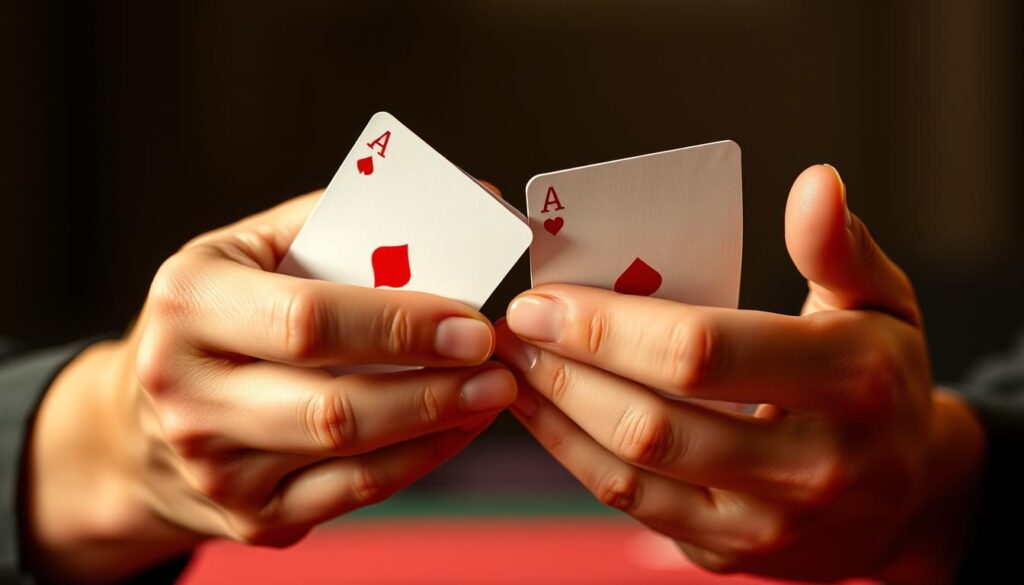
Detailed Breakdown
Poker’s elite, the top 20 starters, win 63% of the time, WSOP data shows. The starting hand chart ranks them like this:
- AA (Pocket Rockets): The ultimate poker hand. Wins 85% of the time but loses to suited connectors often.
- KK (Cowboys): Dominant until an Ace on the flop changes everything.
- QQ (Ladies): Very popular, dangerous in early position.
- AK (Big Slick): Swaggy until the flop doesn’t go its way.
Doyle Brunson once said about AQ, “It’s either a disaster or a missed opportunity.” Treat it with caution.
Playability from Different Positions
Positional strategy is key in Texas Hold’em tips. Imagine:
| Position | Hand Range | Strategy |
|---|---|---|
| Early (UTG) | Top 5% | Play like Don Corleone – conservative power moves only |
| Middle | Top 15% | The Fredo zone – limited opportunities, high betrayal risk |
| Late (Button) | Top 30% | Channel Michael Corleone – strategic aggression with clean exits |
Notice how suited connectors change from early to late position? That’s the magic of positional play. As the dealer button moves, your starting hand chart changes too.
Hands to Avoid: The Most Overplayed Combos
If poker hands had LinkedIn profiles, these overplayed combos would list “crypto investor” under experience – flashy job titles masking shaky fundamentals. Like blockchain bros shilling Dogecoin memes, these hands promise moon shots but often crash harder than Elizabeth Holmes’ credibility.
- KJ suited: The GameStop stock of starting hands. Looks like a rocketship pre-flop, but post-flop? You’re left holding AMC theater popcorn bags when the board connects.
- AQ offsuit: Poker’s equivalent of buying Twitter Blue checks – all status, no substance. Dominated by AK and QQ+ more often than Elon’s tweets court controversy.
New players suffer from what I call Second Best Syndrome – the Michael Scott of poker flaws. Like Dunder Mifflin’s “World’s Best Boss” mug, these hands feel premium until reality hits harder than Toby’s HR complaints.
| Hand | Why It’s Trappy | Better Alternative |
|---|---|---|
| KQo | Dominatrix hand (always dominated) | Fold or 3-bet bluff |
| JTs | Reverse lottery ticket | Play only in late position |
| A9s | Flush fantasy trap | Stick to AX suited (A10s+) |
Daniel Negreanu nailed it: “KQ is like bringing a participation trophy to a WSOP final table – cute, but you’re not winning.” These hands are blocker theory’s worst enemies, creating false confidence like a TED Talk from Theranos leadership.
The fix? Treat your beginner Texas Holdem strategy like a Netflix subscription – cancel the auto-renew on these combo traps. Playable hands ≠ profitable hands, just like viral tweets ≠ coherent policy proposals.
How to Adjust Based on Table Dynamics
Think of table dynamics as poker’s Spotify Wrapped – your annual review of opponents’ tendencies. It’s like getting a report card on who’s tight and who’s loose. You wouldn’t play death metal at a yoga retreat, so why use the same strategy everywhere?
| Table Type | Vibe | Player Behavior | Adjustment Strategy |
|---|---|---|---|
| Tight Tables | Library study session | Folds faster than origami | Steal blinds like art thieves |
| Loose Tables | Mardi Gras parade | Calls with 7-2 offsuit | Value bet like a carnival barker |
At tight tables, your poker strategy tips should be aggressive:
- Expand your opening range by 15% in late position
- 3-bet bluff more against predictable regulars
- Avoid slow-playing – these players fold to pressure like houseplants in winter
In loose games, change your approach:
- Tighten your opening range like a submarine hatch
- Prioritize made hands over speculative draws
- Exploit calling stations with thin value bets
Remember Sun Tzu’s poker update: “Know thy fish, know thy regs, and you need not fear the result of a hundred flops.” Building poker confidence starts with knowing your table. Adjust your game to match the table’s vibe.
Practice Drills for Beginners
Learning poker isn’t just about charts. It’s about getting better through practice. Think of these drills as your mental workouts. They might hurt now, but they’ll pay off later.
Swiping right on every hand? That’s a quick way to lose money. Here’s a better approach:
- Deal yourself random hole cards
- Give yourself 3 seconds to swipe left (fold) or right (play)
- Review mistakes with a red flag checklist: suited connectors from UTG? Swipe left, Casanova
| Drill | Objective | Texas Holdem Tip |
|---|---|---|
| Hand Tinder | Develop instinctive folding discipline | Never play J-3 offsuit “just because” |
| Pocket Pair Pushups | Condition proper low pair play | 22 needs set or fold equity |
| Positional Awareness | Train table position response | Play tighter from early positions |
The Pocket Pair Pushup Punishment
Caught limping with 44 from under the gun? Drop and give me 10. This drill makes you think twice about your moves:
- Assign pushups based on mistake severity
- 5 for calling raises with weak pairs
- 10 for set-mining without proper odds
- 20 for slow-playing aces (you animal)
Remember Rounders’ golden rule: “Play the player, not the cards.” Practice this by:
- Predicting opponents’ ranges during TV poker
- Practicing “player profiles” at micro-stakes tables
- Tracking three bluff opportunities per session
Pro tip: Treat JJ like a Tesla stock—valuable but volatile. Always ask: “Would I call all-in with this?” If maybe means no, fold and keep practicing.
Printable Starting Hand Chart
This starting hand chart is like poker’s periodic table. It’s full of elemental wisdom for explosive plays at the table. But unlike high school chemistry, you won’t get in trouble for folding weak hands.
Our cheat sheet combines 150 years of poker wisdom into three columns. It’s your guide to making smart moves:
| Position | Premium Hands | Marginal Hands (Proceed with Caution) |
|---|---|---|
| Early Position | AA-99, AKs-AJs | KQo, 88-66 |
| Middle Position | AQo+, 77+ | JTs, 55-44 |
| Late Position | Any pair, suited connectors | Weak aces, K9s+ |
| Blinds | Defend with top 30% | Fold the rest like hot laundry |
Bankroll management pro tip: Laminate this chart like your first paycheck. It protects your stack from tilt. The plastic also serves as a mirror for those “why did I play J-4 suited?” moments.
But remember, this isn’t IKEA furniture instructions. Some assembly (and common sense) required. The chart is best used with:
- A working understanding of pot odds
- Basic positional awareness
- The self-control to fold QQ pre-flop when three players go all-in
It has its limits, like GPS in a tunnel. Use it as a starting point, not your whole strategy. Now go print it, tape it to your monitor, and try not to spill whiskey on it during those late-night sessions.
Common Starting Hand Myths
Let’s play mythbusters: poker edition, where we debunk bad advice fast. Many think “suited connectors are always playable!” at low-stakes tables. Today, we’re clearing up three big lies that mess up beginner Texas holdem strategy.
Myth #1: Suited Connector Sorcery. Suited connectors like 7♣8♣ might look good, but they’re not worth it. You’ll only get a flush draw 11% of the time. And even then, only 35% of those will complete by the river. It’s like betting your rent money on a broken slot machine.
Myth #2: Pocket Pair Paranoia. New players think pocket pairs like JJ are super powerful. But JJ wins only 20% of the time against random hands pre-flop. It’s like a valuable car with a broken wheel – it’s worth something, but be careful.
Now, let’s talk about AQ syndrome. Beginners play AQ too much, ignoring it loses to AK 70% of the time. As The Dude would say, “Yeah, well, that’s just like, your opinion, man” – but math doesn’t care about your feelings.
Here’s a sobering comparison even Walter White would respect:
- Odds of flopping a royal flush: 1 in 30,940
- Odds of winning Powerball: 1 in 292 million
- Odds of convincing a poker newbie to fold AQ: Let’s not kid ourselves
The real poker hand rankings truth? Position and player tendencies matter more than card looks. That 9♥10♥ might look cool, but it’s weaker than pocket deuces against three all-in opponents. Save the hero calls for Netflix poker dramas.
Final pro tip: If someone says “suited cards double your equity,” smile and check-raise. They’ve mixed up poker with fashion week – matching colors don’t equal value.
Final Advice on Pre-Flop Discipline
Mastering pre-flop poker decisions turns poker into a game of strategy, like chess. Every hand selection should be like Jedi training, cutting through tilt’s dark side with logic. Pocket aces need Darth Vader-level control: overplay them early, and you’ll lose your stack fast.
Folding weak hands is like Marie Kondo’s magic. If 7-2 offsuit doesn’t spark joy, throw it away. This isn’t being cheap; it’s smart poker bankroll management. Phil Ivey’s secret? He folds more hands pre-flop than a hotel laundry service.
Building poker confidence means knowing when to sit out. Tighten up when tables get crazy. Loosen up against opponents who fold quickly. Your chips are your armor, not confetti – protect them well.
Sun Tzu’s Art of War meets Vegas wisdom: “Know exactly why you fold ’em.” Every disciplined pass saves ammo for battles you can win. Kenny Rogers was wrong – you can count your money at the table if you’re good at pre-flop poker. Now go forth – may the flop be with you.
Leave a Reply