

What do military strategy and poker have in common? Sun Tzu would’ve crushed at Texas Hold’em. Just as generals don’t charge blindly into battle, winning players don’t treat every hand like it’s their last call at a Vegas bar. Most beginners play 2.7x more hands than they should – a stat as brutal as finding pocket deuces at final table.
WSOP champions treat their opening range like a curated art collection, not a Netflix binge session. Yes, AA is cardboard napalm – but what about Q7 offsuit? That’s the poker equivalent of bringing a spoon to gunfight. Through analysis of 169 hand combinations from recent championship play, we’ll expose the three common leaks bleeding your chip stack dry.
Here’s the rub: Position is your invisible weapon. Playing J10 suited under the gun? Bold move, Cotton. But when you’re last to act? Suddenly you’re Oppenheimer holding nuclear codes. We’ll break down how table dynamics transform marginal hands into power plays – and why folding 80% of your cards isn’t weakness, but strategic warfare.
Forget memorizing charts. This is about developing hand IQ – that gut sense separating pros from “that guy” who slow-plays 2-7 offsuit. By the end, you’ll understand why tight-aggressive isn’t just a strategy… it’s a lifestyle.
Defining Your Pre-Flop Range
Choosing your starting hands is like culinary strategy. It’s about creating a menu where each dish adds value or surprises. If you fail, you end up with a bad meal.
The 169 Combinations Conundrum
Texas Hold’em has 169 unique starting hands. But only 23% are profitable in the long run. Chris “Fox” Wallace’s success shows that some hands are more valuable than others:
- Suited connectors (like 78s) gain 42% equity against premium pairs when flopping draws
- Offsuit broadways (KJo) bleed chips 3x faster than their suited cousins
- Pocket pairs below 88 have worse set-mining ROI than crypto memecoins
Why Your Grandma’s Bingo Card Has Better Odds
Playing 72o from early position has 6.5% win equity. That’s the same as guessing the next Supreme Court justice’s coffee order. Bingo has a 15% average win rate. If your hole cards are worse than Grandma’s bingo, you have leaks.
| Position | Tight Range (%) | Loose Range (%) | Win Rate (BB/100) |
|---|---|---|---|
| Early | 12-14 | 18-22 | +7.4 vs -3.1 |
| Middle | 16-18 | 24-28 | +5.2 vs -4.9 |
| Late | 22-25 | 35-40 | +9.8 vs -1.7 |
This poker hand chart shows the harsh truth: loose players lose money fast. Your beginner Texas Holdem strategy should be disciplined and sometimes chaotic, like Navy SEAL training.
Hands to Open from Early, Middle, Late Positions
Position in poker is more than just a seat. It’s your tactical edge, your secret weapon. Your hand choices change a lot, depending on when you act. Let’s explore how position affects your play, like a chess master analyzing moves.
Early Position: The Royal Guard’s Dilemma
Playing first means being very careful. You face unknown opponents. Stick to JJ+ and avoid weaker hands to avoid trouble.
| Hand Type | Open Raise | Fold |
|---|---|---|
| Pairs | JJ+ | TT- |
| Suited Aces | AKs | AQs- |
| Broadway | AKo | KQo- |
Middle Position: Chessmaster’s Gambit
In middle position, you can play more strategically. You can use speculative hands like suited connectors and small pairs. It’s a balance between math and psychology.
Late Position: The Button Bandit’s Playground
Late position is like having cheat codes. You can steal blinds and turn weak hands into winners. Here, 76s and K9o become strong options. Your range grows to include many more hands.
- All pairs down to 22
- Suited aces as weak as A2s
- One-gappers like J9s
Position is not just where you sit. It’s when you act. Mastering this can make you a table leader.
The Trouble with Marginal Hands
Marginal hands in poker are like dating apps for your chips – they promise excitement but often leave you paying for someone else’s good time. Let’s dissect these confidence artists of the card table.
The Siren Song of Suited Junk
That K4s in your hand? It’s not a stealthy ninja – it’s a clown car waiting to crash. Suited connectors below J-10 dominate common beginner mistakes lists for good reason:
- Flush chance: 0.8% chance to flop, 35% by river
- Reverse implied odds: You’ll pay to chase, then lose to higher flushes
- Dominance risk: 72% chance of being crushed by higher suited cards
I once lost $2,300 believing 7-2 suited was “playable” after watching Rounders. Pro tip: If your hand needs subtitles to explain its value, fold.
Why KJo is the Poker Equivalent of a Participation Trophy
King-Jack offsuit is the ultimate poker paradox – it looks regal but plays like court jester. Here’s why:
| Scenario | Win Rate | Dominance Risk |
|---|---|---|
| vs AK | 26% | 72% |
| vs AQ | 34% | 58% |
| vs KQ | 42% | 63% |
This hand turns you into an ATM for opponents holding premium cards. As Source 2’s analysis shows, KJo gets dominated more often than Nickelback at a music festival.
Developing a Simple Rule Set
Creating a poker strategy is like making traffic laws for chaos. You need clear rules that stand up to tilt and opponent tricks. Let’s create your personal poker constitution – strict but flexible to catch weak players.
The Three Commandments of Pre-Flop Play
Forget the Ten Commandments. These three will make you money:
- Thou shalt worship stack depth. Play big stacks like a monk seeking set-mining bliss. Short-stacked? Use premium pairs to crush opponents.
- Honor thy opponent’s leaks. Value bet connectors against calling stations. Steal blinds with suited gappers against nitty players.
- Keep holy the 5-second rule. Fold fast if you can’t justify playing a hand in 5 seconds.
Pocket Pairs: Set Mining vs Stack Crushing
Small pairs change with stack depth like Bruce Banner becoming Hulk:
| Scenario | Set Mining (Deep Stacks) | Stack Crushing (Short Stacks) |
|---|---|---|
| Optimal Play | Call/limp, pray for flop magic | All-in pre-flop, demand coin flip |
| Required Patience | Zen master level | Meth addict energy |
| Profit Potentia | Slow drip IV of value | Slot machine jackpot rush |
Remember: Pocket rockets (AA) always play like stack crushers. Baby pairs need the right conditions to shine. This shows the difference between casual players and those building poker confidence through strategy.
Position, Table, and Opponent Factors
Poker tables are like a reality TV show. You’ll find players who think they can win with any two cards. Your job is to use their weaknesses to your advantage. It’s not about memorizing rules. It’s about being a master of reading the table.
Reading Table Dynamics Like a CIA Profiler
Finding a loose poker table is like finding a vegan at a steakhouse. Look for these signs of weakness:
- Players limping more than a toddler learning to walk
- Three-bet frequencies lower than Elon Musk’s attention span
- The dreaded “I called because they were suited” confession post-hand
At tight tables, play tight like Scrooge McDuck. But at loose tables, your 76s can steal the show. Remember, poker bankroll management is about managing your aggression based on the table’s mood.
When to Break Your Own Rules
GTO is your guide, but even NASA has to make exceptions. Go rogue when:
- You’re facing a calling station who’d pay off a brick wall
- The table’s tighter than a hipster’s jeans pre-pandemic
- You’ve been caught bluffing twice – now your value bets look radioactive
I once played against a bot that followed perfect tight vs loose poker strategies. So I started open-limping Aces. By hour three, its circuits melted faster than a snowman in Miami. Moral? Sometimes you need to break the rules to win.
Example Scenarios: Fold or Play?
Let’s dive into real poker decisions. They happen fast, like a TikTok trend. Here’s how to handle two common situations that will test your beginner Texas holdem strategy.
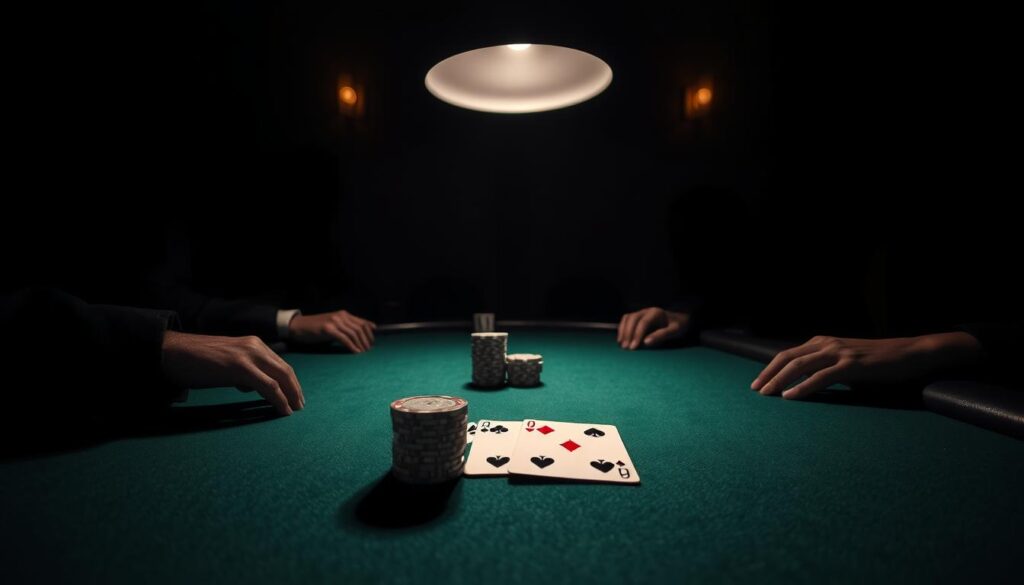
The $500 Question: Facing a Raise With 88
You’re holding pocket eights with $500. A tight player raises 3x UTG. Your gut wants to set, but your brain says trap. Let’s analyze it carefully.
| Factor | Green Light | Red Flag |
|---|---|---|
| Position | Late position with fold equity | Early position vs multiple players |
| Stack Depth | 100bb+ for implied odds | |
| Opponent Type | Loose-aggressive raiser | Nit who only raises AA/KK |
| Table Dynamics | Passive players behind | 3-bet happy players remaining |
Pro tip: Treat 88 like a reverse mullet against unknown players. Fold to 3-bets, call in position. I once folded KK pre-flop against a silent UTG raiser. It turned out he had aces. Sometimes, not playing is better than winning.
Limpers Galore: Playing A5s in Hijack
Three limpers ahead of you with A5-suited. This spot’s tricky. Here’s your guide:
- The Good: Suited ace = flush chance, blocker value
- The Bad: Reverse implied odds against bigger aces
- The Ugly: Multi-way pots reduce equity drastically
Here’s how to build poker confidence:
- Raise 4x if limpers are passive post-flop
- Flat call if stack depths >100bb and you have position
- Fold if facing multiple aggressive players behind
A5s plays like a Ferrari in traffic. It looks flashy but needs space. Last week, I raised A5s against four limpers. I flopped a flush draw and… my opponent’s face funded my therapy for months.
Mistakes to Avoid When Selecting
New players often start with excitement, but end up losing big. They make four major mistakes that can empty their bankrolls fast. For example, thinking K3s is a good hand is a big error.
The Four Horsemen of Poker Apocalypse
These mistakes have ruined many players’ bankrolls. Let’s look at the worst ones:
Overvaluing Suitedness: Flush Fantasy Syndrome
Playing suited hands is like buying lottery tickets. It’s exciting until you lose. That 7♣2♣ you played? It only makes a flush 0.8% of the time.
Even when you do get a flush, you might face stronger ones. Or you could lose to better starting hands. Here’s the truth:
| Hand Type | Flop Flush Chance | Post-Flop Win Rate |
|---|---|---|
| Suited Connectors (J♠10♠) | 0.98% | 34% |
| Weak Suited Aces (A♦3♦) | 0.84% | 28% |
| Suited Garbage (9♥2♥) | 0.65% | 12% |
My BS Detector rule: Fold hands called “rag” or “trash” pre-flop. Suitedness only adds 2-4% equity. That’s worse than guessing the next Marvel plot.
Other mistakes to avoid:
- Calling Station Syndrome: Playing 72o “to see a flop” (spoiler: you’ll see the rail)
- Pair Paranoia: Overplaying weak pairs like 55 against three-bets
- Position Amnesia: Opening QJo under the gun like it’s 2006
Pro tip: Treat marginal hands like expired milk—when in doubt, throw it out. Your wallet will thank you.
Practice: Building Your Own Personal Chart
Creating a poker hand chart is like pairing wine with cheese. It’s about making a system that fits you perfectly. Think of it as a battle plan and a mixtape all in one.
From Theory to Felt: Creating Your Edge
Your chart should mix basic rules with your own twists. Start with these three key points:
- Positional awareness: Early position is like a minefield, late position is like a buffet
- Stack depth dynamics: Play aggressively when short-stacked, strategically when deep-stacked
- Exploitation triggers: Increase bluffs against calling stations
Color-coding is important. Use red for 3-bet ranges to fight your own biases. If a hand doesn’t make you happy, get rid of it fast.
Tracking Software: Your Poker Black Box
Modern poker strategy needs data. Tools like PokerTracker or Holdem Manager are like your personal NSA. They show you patterns you might not see.
Use these insights to:
- Find and fix leaks
- Test new strategies without risking money
- Track your progress
Remember, a chart needs updates. Change it monthly or when you realize why folding pocket kings pre-flop is smart.
Resources for Practice and Learning
Learning poker can feel like trying to put together IKEA furniture without instructions. But, why not use the Allen wrench someone left behind? Let’s focus on tools that really help without costing a lot. No need for expensive “guru” courses.
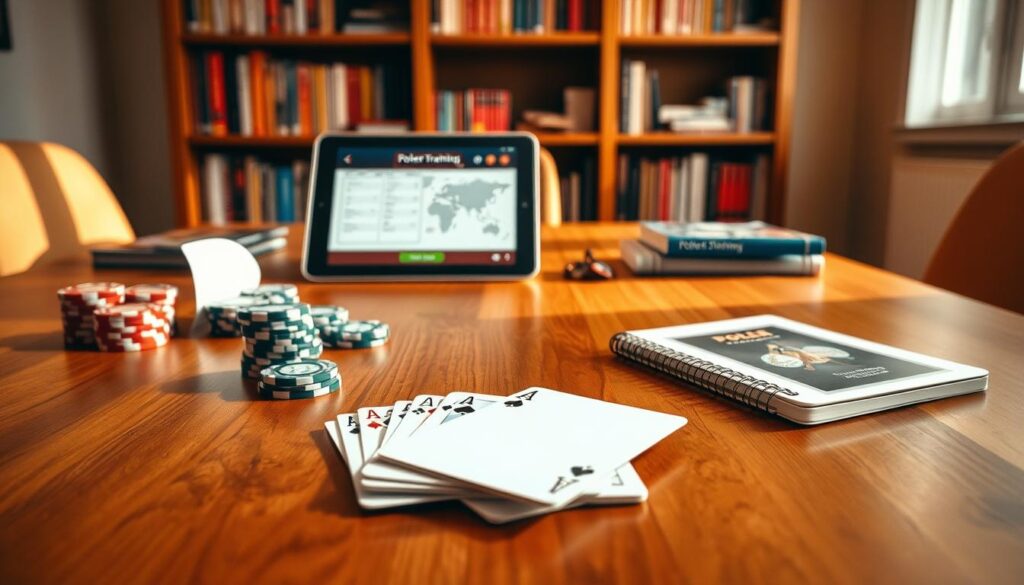
Free Tools That Don’t Suck
Don’t waste money on a “secret system” sold by someone famous for their YouTube thumbnails. These tools are like a caffeine boost for your poker game:
- Equity Calculators: The Swiss Army knife of poker math. It helps you make better decisions by analyzing your hand against others.
- Hand History Review Apps: Your personal poker diary. It tells you when you’re making mistakes. Most platforms have these tools.
- Preflop Charts (Source 2): The guide to starting hands. Follow these like they’re the Ten Commandments, but for Texas Hold’em.
From Zero to Hero: Recommended Study Path
Here’s how to get better faster than a TikTok dance trend:
- Weeks 1-2: Master Source 1’s practice tables. It’s like boot camp – discipline is key.
- Weeks 3-4: Analyze 25 hands daily with free tracking software. Look for patterns like you’re solving a true crime podcast.
- Month 2: Test your strategies in micro-stakes games. If you’re not a little embarrassed by your Month 1 plays, you’re not improving.
Pro tip: Bookmark these tools next to Reddit and cat videos. Balance is important.
Summary
Learning to choose starting hands well turns poker into a strategic game. Think of strong pairs like AA or KK as your strongest weapons. Use them wisely and with purpose.
When you have hands like AKs or AQs, play like a mastermind. Make moves that leave your opponents with no good choice.
Position is key. Players in early positions should play tight, sticking to strong hands. Those in late positions can take risks with weaker hands like KQs.
The secret to success is knowing when to play your top 20 starting hands. This skill sets winners apart from casual players. Learn more about these hands to improve your game.
Building a strong poker strategy means three things. First, fold weak hands early. Second, stay away from hands that look good but aren’t. Third, adjust your play based on the table.
Remember, even the strongest hands can lose if played badly. Treat hands like 88 with care. They’re useful but can be dangerous if not used right.
Here’s your to-do list. First, always consider your position. Second, know the order of strong hands (AA > KK > AKs). Third, practice changing your play to fit the table.
Poker is not chess, where you can just memorize moves. But mastering these basics can turn your pre-flop decisions into powerful moves. So, deal the cards and show them what you’re made of.
Leave a Reply