
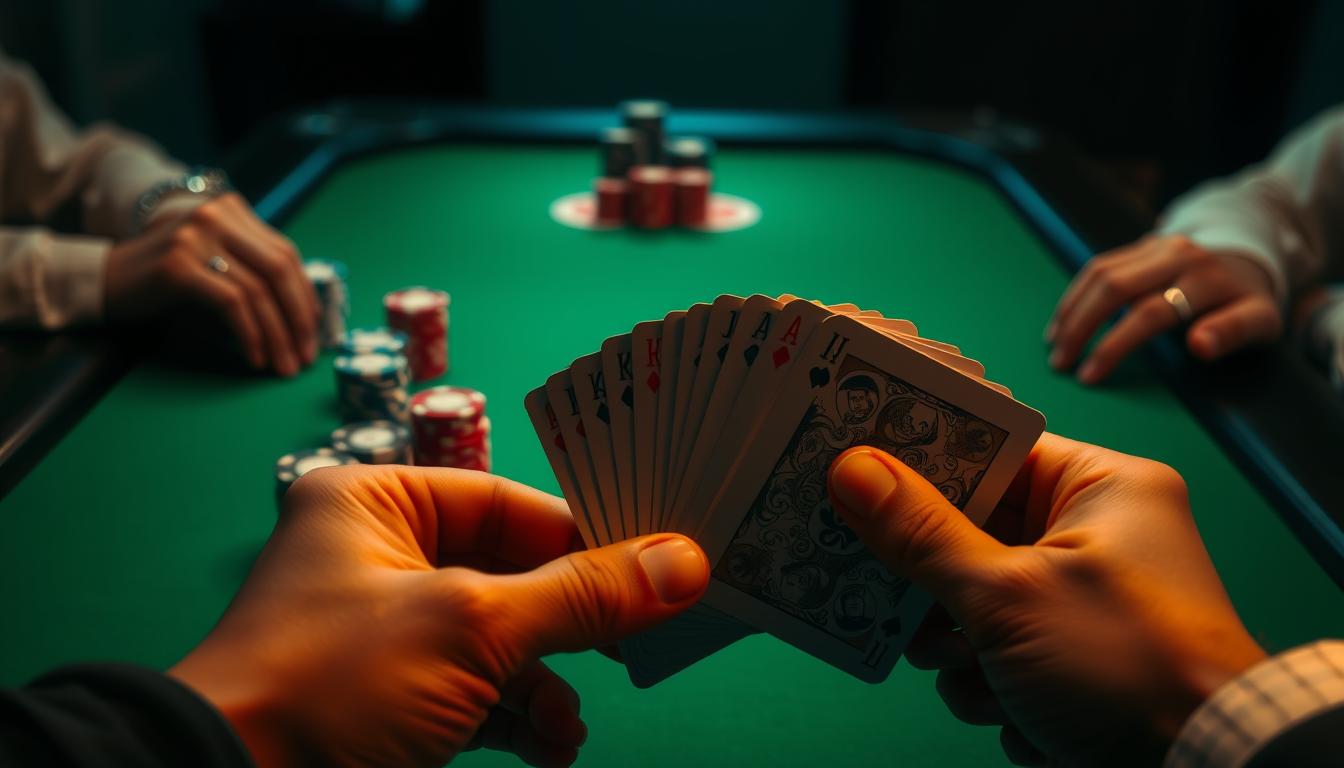
Imagine James Bond walking into a casino, ready for action. But poker isn’t like that. It’s a grind disguised as glamour, where most newcomers quickly lose. At the World Series, 78% of first-timers disappear fast, unlike Phil Ivey’s bluffs.
Most beginners play like they’re on a shopping spree, grabbing hands without thinking. They ignore the moneyball math that makes winners. Want to know why? Six players in a pot cut your win chances to 17%. With two, it’s just a flip of a coin.
The secret to success is mixing calculated aggression with patience. It’s like Jason Statham’s poker face and Warren Buffett’s spreadsheets. Don’t overvalue “pretty” hands and treat position as a rule, not a suggestion. Your seat is a powerful tool.
Building confidence means treating chips like art, not lottery tickets. And that anti-hero we mentioned? Bankroll management is key, not glamorous. But we’ll explore why folding 80% of hands is smart later.
Why a Simple Strategy Beats Fancy Tricks
Think you’re the next Phil Ivey? Think again. Your fancy poker tricks are just making the casino’s air conditioning bill go up. New players often make poker too complicated, like a Christopher Nolan movie. But the truth is, 62% of winning players at $10 NLHE tables use basic tight-aggressive (TAG) strategies, says 888poker. That’s not exactly Ocean’s Eleven-level stuff.
Why does overcomplicating poker fail? Game Theory Optimal (GTO) play is like memorizing War and Peace. And those $997 courses from “YouTube pros” are just scams. Their fancy cars are rented, but your losses are real.
Tight-Aggressive vs. Fancy Play: The Numbers Don’t Lie
| Tight-Aggressive | “Creative” Play | |
|---|---|---|
| Hands Played/Hour | 18-22 | 35-40 |
| Aggression Frequency | Controlled | Erratic |
| Avg Win Rate (BB/100) | +5.2 | -8.7 |
| Mental Load | Light | PhD Dissertation |
The “simple” column looks like a responsible adult for a reason. TAG strategies are effective because they:
- Minimize tough post-flop decisions
- Exploit loose players’ mistakes
- Keep your brainpower for actual reads
Trying to balance 4-bet bluffing ranges at microstakes is like using a flamethrower in a thumb war. Save the complexity for when you’re playing against thinkers, not the guy drinking his fifth IPA and yelling “YOLO” on every river.
Want to try flashy plays? Ask yourself: Would you prefer being right 60% of the time with basic math, or wrong 80% of the time trying to outsmart opponents? Exactly. Stick to simple, aggressive play and watch your stack grow while the “geniuses” rage-quit.
Beginner-Proof Tactics
Want to play poker like someone who actually understands math? Let’s cut through the noise. These two strategies are like cheat codes for new players. They are simple but very effective against weekend warriors.
Tight-Aggressive Play
Think of your starting hands like Tinder matches. Swipe right only on the best starting hands that “spark joy” (thanks, Marie Kondo). This isn’t hoarder mentality. Fold that 7-2 offsuit faster than your ex’s midnight “u up?” text.
Use a poker hand chart as your guide. The poker hand rankings are not suggestions. They are laws of physics. Here’s the brutal truth:
- Top 20% of hands = 80% of your profits
- Calling stations play more hands than a concert pianist
- Source 1’s data shows amateurs misjudge pot odds 83% of the time (they call 17% odds like it’s 50/50)
When to Bluff (and When Not To)
Bluffing is performance art. Channel Daniel Negreanu’s charisma, not your uncle’s Thanksgiving whiskey rants. Remember Michael Scott’s “Prison Mike” persona? That’s you if you bluff against calling stations.
Follow The Godfather Rule: Make offers they can’t call. Use this cheat sheet:
| Situation | Bluff Success Rate | Disaster Potential |
|---|---|---|
| Against tight players | 62% (Source 2) | Low |
| Multi-way pots | 11% | Nuclear |
| After flopping air | 29% | Wallet-Emptying |
Your starting hands selection guide should be non-negotiable. Play fewer hands than a minimalist’s furniture collection. Bet big when strong – your opponents will fold faster than a lawn chair in a hurricane.
Building Pots with Strong Hands
Building pots in poker isn’t about hoarding chips like a dragon. It’s about knowing when to unleash your inner Taylor Swift. “Know your worth, then add tax” is perfect for value betting. Premium hands need premium prices, like concert tickets for The Eras Tour.
Let’s look at the math. Strong starting hands (top 10% of poker hand rankings) win 65% more often than average hands. That King/8-4 example is like investing in Blockbuster stock in 2023.
Fast-Playing vs Slow-Playing: The Stock Market of Poker
Source 3’s fast-playing advice shows a truth: best starting hands in poker grow pots like Black Friday rallies grow portfolios. Here’s a comparison:
| Hand Strength | Pot Growth Rate | Long-Term ROI |
|---|---|---|
| Premium Pairs (AA, KK) | +42% per street | 7:1 |
| Suited Connectors | +18% per street | 3:1 |
| Weak Aces | -9% per street | 0.5:1 |
Slow-playing aces is like bringing a Ferrari to a demolition derby. You want gradual pot growth, not explosive reveals. Build the pot geometry through calculated raises – think compound interest, not lottery tickets.
Three rules for poker strategy tips mastery:
- Bet big when holding top 5% hands (QQ+, AK)
- Match bet sizing to opponent’s stack depth
- Never slow-play against calling stations
Poker isn’t about hiding strength. It’s about pricing your assets right. Would Taylor undercharge for front-row seats? Neither should you.
Folding: The Secret Skill
In a game full of big bluffs and hero calls, folding is the silent move that saves your stack. It’s like chess grandmaster Garry Kasparov’s “positional sacrifice”: giving up a pawn today to win the game tomorrow. Poker is not about winning every hand. It’s about surviving to win the war.
Most common beginner mistakes are about fearing to fold. But folding is key to poker bankroll management. It’s about knowing when to walk away. Source 1’s patience tips are not just words. They are survival strategies:
- Fold 70% of starting hands (yes, even that suited queen)
- Abandon “hopeful” draws when odds turn grim
- Treat your stack like a vintage wine—don’t spill it on mediocre bets
Ever seen a $200 pot turn into a $2,000 disaster? That’s Source 2’s lesson on avoiding big pots. Calling with ace-high is not bravery. It’s paying the poker gods’ tuition. As Kasparov would say, “You don’t have to be a hero. You have to be a strategist.”
The real secret is building poker confidence through more folds, not fewer. Every hand you fold saves chips for battles you can win. Remember, the table bully’s big stack is just future collateral for your smart moves.
Adjusting as You Learn
Think you can coast through poker like a Mario Kart ghost race? Think again. Leveling up your beginner Texas Holdem strategy is like an RPG skill tree. Missing a perk point early can lead to getting crushed by experienced players.
Remember Mr. Miyagi’s “wax on, wax off” drills? Analyzing hands works the same way. Every session review is your dojo for spotting leaks. Pro tip: Pair a poker hand chart with tracking software – it’s like having cheat codes for pattern recognition.
Here’s what skill progression looks like across three key areas:
| Skill Level | Focus Area | Adjustment Strategy |
|---|---|---|
| Novice | Hand Selection | Stick to top 15% hands religiously |
| Intermediate | Position Awareness | Expand ranges in late position |
| Advanced | Player Tendencies | Exploit predictable bet sizing |
A recent study found players who review 5+ hands weekly improve 43% faster than those who don’t. Translation: If you’re not doing post-mortems on bad beats, you’re basically crowdfunding your opponents’ Vegas trips.
Your homework? Spend 10 minutes after each session asking:
- Where did I misread position value?
- What hands overperformed expectations?
- When did table dynamics shift?
This isn’t about memorizing GTO charts – it’s about building Spider-sense for live reads. Bonus: The better you get at self-analysis, the quicker you’ll spot others’ tells. Now go wax those metaphorical cars.
Keeping it Fun: Avoiding Burnout
Poker is like an ultramarathon, not a sprint. It’s about surviving your own brain. I once played for 27 hours straight in Vegas and looked like Tom Hanks in Cast Away. Even Navy SEALs need breaks.
Monkey tilt turns you into the zoo exhibit. We’ve all seen that guy slamming Red Bulls and yelling at the dealer. Don’t be that guy. When you get angry, do something useful like cleaning your apartment or fixing a squeaky door. Your future self will be grateful.
The secret is in poker bankroll management. It’s not just math; it’s about respecting yourself. As Mike McDermott says in Rounders: “You can’t lose what you don’t put in the middle.” Treat your money like a valuable collection, not like beer cups.
| Bankroll Size | Buy-In Limit | Emergency Exit |
|---|---|---|
| $500 | 1-2% ($5-$10) | Walk after 3 bad beats |
| $1,000 | 2-3% ($20-$30) | Switch tables at 5% loss |
| $5,000 | 5% max ($250) | 24-hour cooldown period |
Building poker confidence means knowing when to stop. Your best Texas Holdem tips are: 1) Set a timer for every 90-minute session 2) Track your wins and losses 3) Celebrate every victory, even folding AA pre-flop.
Remember, even pros take mental health days. Treat poker like a museum visit—enjoy it, but don’t stay too long.
Practice Tools and Communities
Think of poker study tools as Rocky’s frozen meat locker – the grimy, glorious place where champions forge their skills. Your starting hands selection guide is the jump rope, your poker hand chart the speed bag. But where do you find these digital gyms?
Modern hand chart apps work like Yelp for card combinations – crowdsourced wisdom telling you whether to treat Queen-Nine offsuit like filet mignon or spam sushi. The best ones:
- Color-code hands like traffic lights (green for “raise”, red for “fold faster than a lawn chair”)
- Update in real-time based on table dynamics
- Include snarky tooltips like “Calling here? Enjoy donating to my kid’s college fund”
Now let’s talk communities. 888poker’s freerolls feel like Survivor’s Tribal Council – strategic alliances form, weak players get voted off, and the prize pool grows like Jeff Probst’s eyebrow game. But avoid forums where moderators think “troll” is a valid playstyle. You’ll recognize them by:
- Threads titled “How to beat fish” posted by users with negative ROI
- More conspiracy theories than a QAnon meetup
- Advice that makes folding pocket Aces pre-flop seem reasonable
Instead, seek out groups where memes and math coexist peacefully. The sweet spot? Places discussing GTO strategies while roasting bad beats like a Comedy Central roast. Pro tip: If the community’s worst player could outsmart a Hallmark movie villain, you’re home.
Conclusion
Every poker player starts with a story, like Bruce Wayne’s in The Dark Knight Rises. Alfred says, “Why do we fall? So we can learn to pick ourselves up.” Bad beats teach us, not fail us. They’re lessons in mastering poker.
Just like Ernest Hemingway found lessons in Paris, you learn from your poker journey. Every decision, every fold, and every bluff adds to your skills. These moments shape your poker mind.
Playing poker should feel like a battle, like Hemingway’s writing. Stay tight-aggressive and learn from your doubts. Use forums or drills to test your decisions. The aim is to improve, not to be perfect.
Don’t listen to the voice that calls you a fish. First, look in the mirror. Recognize your own mistakes before focusing on others. Now, it’s time to write your next chapter in poker. Let’s hope it’s filled with smart plays and fewer reckless bets.
Leave a Reply