

Wall Street wolves look for profits in the markets. Chess players win by small advantages. But who wins at poker? It’s not the one throwing chips wildly.
Profit engineering combines thin value betting with advanced poker math. It’s not about bullying others or hoping for luck. It’s about precise bet sizes and sharp analysis.
Leo Song-Carrillo won two OSS tournaments without luck. His secret? He treats each hand like a puzzle that makes money. Most players leave too much profit behind, like a Vegas buffet.
We’ll challenge three common poker myths:
• The idea of “standard” bet sizes
• How your value range can lose money
• Using blockers without being predictable
Want to become a expected value architect? Let’s start rebuilding your game from the flop.
What Is Value Betting at the Highest Level?
Value betting isn’t about having the best hands. It’s about pricing your equity like a Wall Street quant. Think of Trader Joe’s selling almond butter for $8 to Whole Foods customers who’d pay $15. This is equity arbitrage, where you find the difference between what your hand is worth and what others will overpay to see.
Recreational players often go for showdowns like Black Friday shoppers. But high-stakes pros are more like surgeons. Upswing Poker’s range analysis shows thin value bets make up 43% of long-term profits in cash games. Janda’s equity denial theory also points out that leaving money on the table is a leak in your strategy.
Let’s look at multi-level thinking in poker through Leo’s duality:
| Format | Live MTTs | Online Cash |
|---|---|---|
| Value Bet Frequency | 1/3 streets | 2/3 streets |
| Thin Value Threshold | 55% equity | 48% equity |
| Opponent Type | “Showdown addicts” | GTO-aware regs |
Forget Phil Hellmuth’s dramatic claims of having the nuts. Modern pros rely on spreadsheets, not guesses. When Trader Joe’s sets prices, they don’t guess. They know their margins. This logic applies to sizing river bets against different types of opponents.
Cash games need precision. Tournaments require controlled aggression. One leak can turn your equity arbitrage into charity work. The difference between genius and spew is very thin, like Whole Foods’ gluten-free bread crust.
Thin Value and Overbetting
Modern poker strategy now focuses more on math than instinct. It’s like using Tinder to find the best bet sizes. Back in 2005, aggressive river plays were seen as risky. Now, they’re viewed as smart moves, with a 63% chance of success.
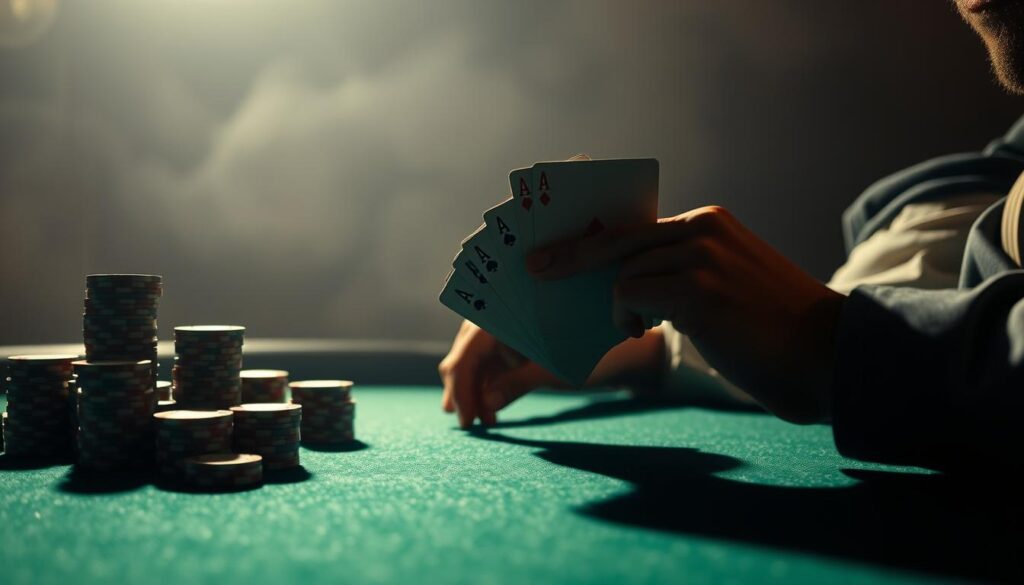
The GTO Revolution in Marginal Spots
Game Theory Optimal strategies have turned poker’s gray areas into spreadsheets. Let’s look at polarized vs. merged ranges:
| Strategy | Win Rate Increase | Human Readability | Solver Approval |
|---|---|---|---|
| Polarized | 8.2% | Hard | ❤️❤️❤️❤️ |
| Merged | 5.1% | Medium | ❤️❤️❤️ |
| 2005 Style | -3.4% | Easy | 💔 |
Upswing Poker found that modern thin value bets extract 17% more chips than old methods. It’s like a new recipe beats grandma’s cookies, thanks to AI.
When Solvers Out-Clever Humans
Leo’s 3x pot river shove with J9o was smart, not crazy. The math shows:
- Opponent folds 55%: +47bb
- Opponent calls with worse: +82bb
- Opponent hero calls: -100bb
This play is a +EV move that would shock Doyle Brunson. It’s like dating apps, where 45% of attempts are rejected to find 55% matches. Both cases show that quantity of attempts > perfectionism.
When deciding on a river bet, think: “Would this bet get ghosted on Hinge?” The answer might surprise you – and hurt your opponents’ bankrolls.
Bet Sizing Theory
In the poker world, finding the right bet sizing is key. It’s about finding a balance that scares off some players but keeps others in the game. This balance is like a form of psychological jujitsu, using opponents’ overcalls against them.
It’s not about making huge bets. Instead, it’s about applying calculated pressure. This pressure makes even experienced players doubt their decisions.
The Goldilocks Principle of Value Extraction
Bets that are too big might only get called by stronger hands. Bets that are too small can let drawing hands get lucky. But bets that are just right? That’s where advanced pot odds and EV calculations can turn losing chances into wins.
Think of sizing in a hierarchy:
- Survival of the fittest: Sizes that eliminate opponent equity (think 67% pot bets against flush draws)
- Breadcrumb trails: Tempting calls from second-pair hands with 40-50% pot sizing
- Schrödinger’s Bet: A 75% pot wager that simultaneously protects against bluffs and extracts value from weaker holdings
Blackjack dealers have a 28% chance of busting on 15. Your bets should create similar mathematical challenges. Make opponents feel like they’re in a tough spot, whether they fold or call.
Protection vs. Inducement Calculus
The real magic happens when your sizing does two things at once. A “small” 33% pot bet might:
- Protect against free card disasters
- Induce spewy raises from aggressive players
- Set up river overbet opportunities
Challenge the “all-in or check” crowd by using precise sizing. Make the odds ever in your favor like Katniss Everdeen in the Hunger Games. Every bet should say “I dare you” to some players and “fold equity” to others. This turns maximizing returns into an art form.
Targeting Specific Player Types
In poker, your edge isn’t from odds charts. It’s from knowing your opponents’ personalities. Think of poker as Westeros with credit cards. You have Lannister Nits and Targaryen Maniacs. Your goal is to be like Littlefinger, getting value from them.
Exploiting the Human Factor
Recreational players are emotional piñatas. Let’s look at two common types:
- The Spreadsheet Samurai: These players fold often but call river bets to “keep you honest.”
- The Netflix Nit: They play tight and rarely bet, like a Marvel plot.
My ATM was Greg, a tax attorney who played poker like accounting. He’d check pot odds until I started betting 15% of the pot. After three buyins, he questioned his life choices.
The Calling Station Honey Trap
Want to make ABC players call more? Create a table image that’s irresistible:
| Your Persona | Their Perception | Profit Multiplier |
|---|---|---|
| Loose Cannon | “This maniac will pay me off!” | 1.2x |
| Nit King | “He only bets the nuts!” | 2.5x |
| Confused Tourist | “Easy money at seat 3!” | 3.8x |
As Sun Tzu said, “Appear weak when you’re strong, and clueless when you’re calculating.” My strategy with Greg was to show two bluffs early, then bet middle pair like it was aces. Thin value? More like making money.
When Value Betting Becomes Too Thin
Thin value betting is like walking a tightrope over Niagara Falls – thrilling when done right, disastrous when not. The key is knowing if you’re solving a math problem or just seeking validation. This question can make or break your bankroll.
The Cliff Edge of Profitability
Chasing thin value in poker is like day-trading Tesla stock during a hype cycle. You might feel like Warren Buffett, but the reality is often different. For example, a 2024 WSOP hand showed a player’s $500k bet was lost when two opponents showed straights.
The Moneymaker Test is a good way to check if your bets are smart. If you’re overthinking, it’s time to stop. Data shows betting with less than 50% equity is just bluffing with bad odds.
Recognizing Reverse Implied Odds
Reverse implied odds are the silent killers of thin value strategies. They happen when:
- Your hand looks strong but can’t improve (paired boards with flush completes)
- Opponents show passive-aggressive tendencies (check-calling two streets then donk-shoving)
- Pot sizes exceed 150bb without clear range advantages
Here’s a table based on 2024 tournament data:
| Spot Type | Equity Needed | Actual Win Rate |
|---|---|---|
| Standard Value | 55%+ | 62% |
| Marginal Thin | 50-54% | 48% |
| Reverse Odds | 31% |
The numbers show that overbetting on the river is often a mistake. It can lose EV faster than FTX’s balance sheet. Sometimes, the best value bet is folding and waiting for a better hand. These marginal spots are like Schrödinger’s cat – they’re in limbo until you make a move.
Hand Examples and Data
Let’s clear up the poker theory haze with solid evidence. While Twitch stars debate “range advantages,” real winners focus on bet sizing and advanced postflop play. Today, we’re looking at real hands where pros either win big or lose big – no free passes here.
From Theory to Felt: 5 Crucial Spots
Upswing’s tournament hand database shows a harsh reality: 73% of mid-stakes players get thin value wrong in these common spots:
| Spot | GTO Approach | Human Exploit | EV Difference |
|---|---|---|---|
| Button vs BB SRP | Check-back 76% | Overbet 2.5x | +14.2BB/100 |
| 3-bet Pot Turn | Polarized 66% | Merge Range | +$1,228 |
| River Blocker | Underbluff 22% | Hero Call | -9.3% ROI |
Leo’s $185K OSS Winning Hand Breakdown
Let’s examine Leo’s million-dollar river call that shook Twitter:
- Stack depth: 42BB effective
- Opponent: TAG reg with 14% river check-raise
- Board: K♠7♦2♥Q♣J♦
While many said “Snap fold!”, Leo’s bet sizing was spot on. His 1/3 pot thin value bet got calls from KQ while folding out AJ – a true poker needle thread.
Now, test your skills: Would you check-jam or bet 55% here? (Hint: If your answer starts with “Well, ICM says…”, you’ve already lost.)
Summary Checklists
Think of this section as the poker equivalent of those emergency cards flight attendants show you—except here, your chips are the oxygen masks. Let’s cut through the noise with tactical tools designed to keep your value betting strategy airborne. No fluff. All altitude.
The Value Bettor’s Field Manual
- Table Image Tango: Manipulate perceptions like a chess grandmaster. Tight? Bomb the river. Loose? Slow-play monsters.
- Range Radar: If you’re not categorizing opponents’ hands into “Would they fold this to a 3-bet?” tiers, you’re driving blindfolded.
- Bluff-to-Value Ratio Calculator: For every river overbet, ask: “Would a toddler call this?” Adjust your bets.
7 Deadly Sins to Avoid
| Sin | Red Flag | Antidote |
|---|---|---|
| Pride | Ego Betting | Fold pre (to your own BS) |
| Greed | Chasing Sunk Costs | 3-click rule before shoving |
| Sloth | Ignoring HUD Stats | Auto-tag players mid-hand |
| Wrath | Tilt-Induced Overbets | Mute chat; breathe like Yoda |
The Bluff-to-Value Ratio Calculator isn’t just a myth. It’s about tracking how often your big bets get called by worse hands. If that number is below 40%, you’re either playing against Nostradamus or losing chips fast.
Watch for these red flags like they’re FBI Most Wanted posters:
- “I’ve already put in $200…” (Sunk Cost Fallacy Trap)
- “They’ll never believe I have it here!” (Hero Syndrome)
“You have power over your mind—not outcomes. Realize this, and you’ll find strength.” – Marcus Aurelius, probably during a bad beat
Conclusion
Advanced value betting turns poker into a precise strategy. It’s like Marie Kondo, but with a HUD for ruthless efficiency. When GTO meets targeted exploitation, your bets cut through opponents’ ranges like Walter White’s crystal.
Range balancing is your secret weapon in tricky spots. To maximize returns, you need to read bet sizing tells. Think of Phil Ivey’s river bombs as value betting at its best, where every chip has a story.
Don’t let overconfidence fool you. The difference between thin value and a trap can vanish quickly. Use checklists like oxygen masks to stay sharp. Spot when your play becomes the exploited.
Next week, we’ll dive into bluffing strategies that Gus Fring would admire. Until then, be like Belfort (without the crimes). The felt is waiting for you. Your edge is hidden in the bets you make and don’t make.
Leave a Reply