
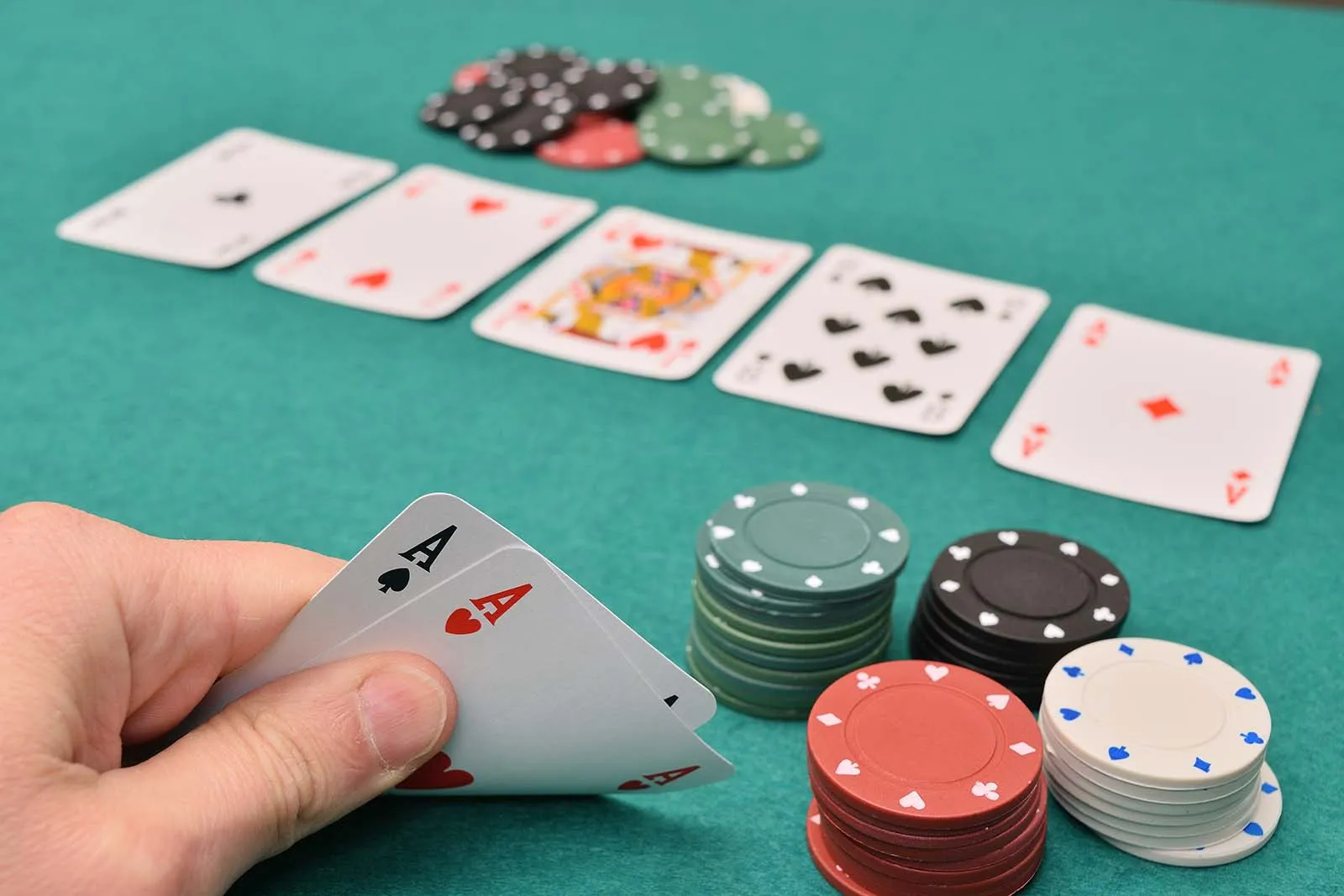
The landscape of poker is vast and multifaceted, built upon foundational mechanics that govern player interaction, probability, and psychological warfare. Whether you are booting up a digital simulation on a console or sitting at a felt table, understanding the structural framework of the game is non-negotiable. Grasping basic poker rules does not merely prevent technical errors; it provides the cognitive architecture required to execute advanced strategies, manipulate pot odds, and extract value from opponents.
Understanding The Core Mechanics Of Texas Hold’em
Texas Hold’em stands as the undisputed titan of modern poker formats, dominating both international tournament circuits and virtual casino environments. In this variant, the dealer distributes two private hole cards to each participant, initiating a sequence of betting rounds driven by incomplete information. The objective is to construct the most powerful five-card hand possible by combining these private holdings with a centralized board of five community cards. Success in Texas Hold’em relies heavily on positional awareness and an accurate assessment of starting hand strength.
The progression of a standard hand follows a strict chronological order, introducing new variables at each stage. The dynamic nature of the community cards forces players to constantly re-evaluate their statistical equity and potential vulnerabilities.
| Betting Round | Dealing Mechanics | Strategic Focus |
| Pre-Flop | Players receive two private hole cards | Positional awareness and starting hand selection |
| The Flop | Three community cards are dealt face up | Evaluating drawing potential and immediate equity |
| The Turn | A fourth community card is added to the board | Refining pot odds and executing delayed aggression |
| The River | The fifth and final community card is revealed | Extracting maximum value or executing polarized bluffs |
Players looking to transition from casual video game formats to professional tournament play should continuously familiarise themselves with the official WSOP rules to ensure strict compliance with global standards. Navigating the mechanics of blinds, bet sizing, and action sequencing requires an analytical mindset capable of processing mathematical probabilities in real-time.
Navigating The Complexities Of Omaha Poker
While Texas Hold’em rewards precise aggression with limited resources, Omaha introduces a profound level of mathematical complexity through increased starting hand combinations. Participants receive four private hole cards instead of two, radically altering pre-flop hand valuations and post-flop dynamics. However, the most critical distinction lies in the strict requirement for hand construction: players must use exactly two cards from their hand and exactly three from the community board.
This seemingly minor rule adjustment generates massive paradigm shifts in gameplay. Marginal holdings that hold value in Hold’em are virtually worthless in Omaha. The frequency of premium hands increases exponentially, demanding a much more conservative approach to drawing and showdown evaluation. Misinterpreting this specific rule often results in catastrophic miscalculations at the table. Recognizing these structural differences early on is the best way to prevent the deep frustration that routinely drives players to require mental recovery strategies after absorbing a sudden, devastating loss.
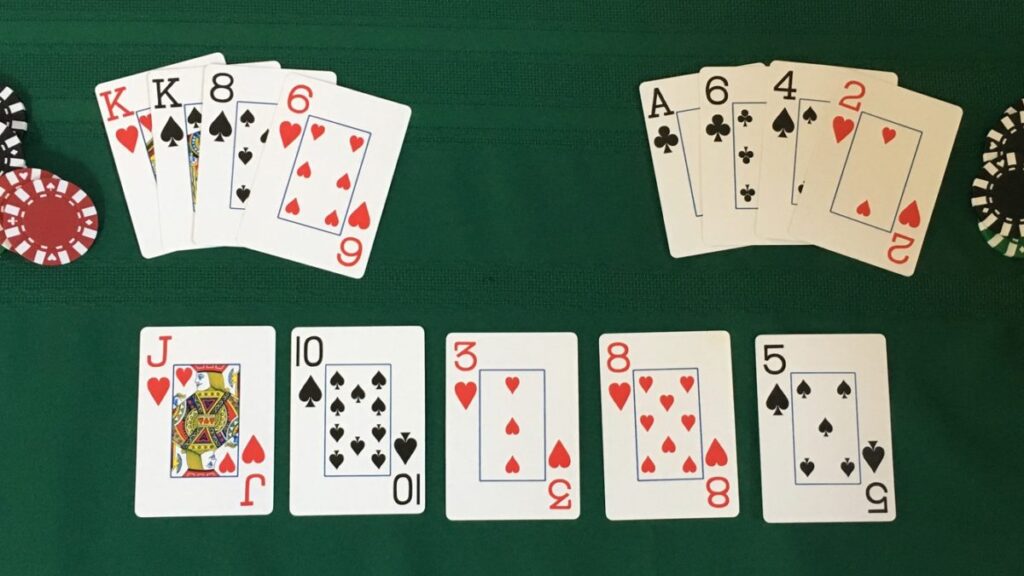
Standard Poker Hand Rankings Explained
Regardless of the specific variant being played, the hierarchy of hand strength remains the universal language of poker. This absolute ranking system dictates the winner of any showdown and directly informs every betting decision made throughout a hand. At the absolute bottom of the spectrum sits the High Card, a weak holding where no paired cards exist. Progressing upward in strength, players rely on One Pair and Two Pair, which serve as the foundation for the majority of standard winning showdowns.
Constructing three cards of the exact same rank yields Three of a Kind, a deceptive hand that frequently generates substantial hidden value. Connecting five sequential cards creates a Straight, while compiling five non-sequential cards of identical suits forms a Flush. Combining a pair with three of a kind constructs a Full House, offering immense statistical durability on paired boards. At the absolute apex of the ranking system reside the near-invincible Four of a Kind, the incredibly rare Straight Flush, and the mathematically supreme Royal Flush. Understanding this hierarchy intuitively allows players to calculate relative hand strength without hesitation.
Strategic Adaptation Across Variations
Mastery of basic poker rules involves more than rote memorization; it requires the analytical capacity to adapt those rules across divergent formats. A rigid approach that treats Omaha mechanics identical to Texas Hold’em will inevitably lead to systemic failure. Players must continuously calibrate their aggression frequencies, pot odds calculations, and opponent profiling based on the mathematical realities dictated by the specific rule set in play. By rooting their entire strategy in a profound, factual understanding of the game’s core architecture, players can reliably outmaneuver opponents who rely solely on intuition and luck.
Leave a Reply