

Imagine a smoky backroom where Bobby Fischer trades pawn sacrifices with Miles Davis’ trumpet riffs. This is the heart of poker – calculated precision versus chaotic innovation. For new players, knowing this is key to survival.
Chris Moneymaker’s 2003 WSOP win is a great example. He didn’t just memorize charts or chase every bluff. He mastered strategic discipline, folding often until the right moment to strike. This turned $86 into $2.5 million.
But his win also started a trend of wild, creative plays. So, why is this important for poker for beginners? It’s about knowing when to play tight or loose. And how to avoid being the table’s easy target.
Here’s the rub: Poker isn’t about picking a side. It’s about using both. This guide will teach you to use both tight and loose play. Ready to stop losing chips and start leading the table like a conductor?
Defining Tight and Loose Play
Poker styles range from tight play (like Clint Eastwood with pocket aces) to loose play (like Jack Sparrow with seven-deuce). Tight players fold a lot, while loose players play more hands. Your poker hand chart is either a guide or a joke, depending on your style.
Think of it like Sun Tzu’s tactics: Tight play is like going to war only with the best hands (top 10% of poker hand rankings). Loose play is like attacking every pot, like Russia in a geography quiz. Your starting hands selection guide is your strategy, whether strict or wild.
When Pocket Rockets Meet River Rats
- Tight Example: Phil Ivey folds 9♠8♠ pre-flop at 3am, saving chips like Scrooge McDuck. His play is tighter than airport security after 9/11.
- Loose Example: Daniel Negreanu 3-bets J♦4♣ from the small blind, bluffing like Picasso. His range is wider than Texas highways.
| Style | VPIP* | Personality | Sun Tzu Quote |
|---|---|---|---|
| Tight | 8-15% | “Calculating surgeon” | “Victorious warriors win first then go to war” |
| Loose | 25-40% | “Chaos magician” | “All warfare is based on deception” |
*Voluntarily Put $ In Pot
When tight and loose play meet, it’s magic. Imagine a poker hand chart torn between MIT math and WWE. Do you play tight (GTO) or loose (exploits)? Your stack depends on this choice more than Bitcoin on Elon’s tweets.
Psychological Elements and Player Tendencies
Poker tables are like psychological battlefields. Here, confirmation bias and sunk cost fallacy mix to create tilt. It’s like trying to park a cruise ship. Tight players fold quickly, while loose ones bet big. Why do beginners keep doing this? Let’s explore it like Freud analyzing a bad beat.
Most beginners think defensive poker is smart. They fold strong hands early and call big bets late. This isn’t smart – it’s psychological whiplash in disguise. TAG players get frustrated too, just like Black Friday survivors watching crypto winners.
Three big mistakes new players make:
- Bet sizing tells: Small bets when scared, big raises when strong (your chips aren’t emojis – stop showing emotions)
- Hero complex: “I must catch every bluff” (Spoiler: You’re not Batman)
- Selective memory: Remembering suckouts more than good folds (The brain lies like a politician)
Poker aggression turns toxic when fueled by ego. That $200 bluff you “had” to make? That’s your ego talking. Tight players fold a lot due to loss aversion – the same reason people hold bad stocks. Jung would say this is your Shadow Self showing through chips.
The fix? See every session as therapy. When tilt hits, ask: “Am I doubling down for strategy, or to prove my last fold wasn’t weak?” Your bankroll will appreciate it.
When to Play Tight as a Beginner
New poker players should pick their starting hands carefully. Think of it like a bouncer at an exclusive club – only the best get in. You want to play with the strongest hands, like Thor’s hammer (AA) and Cap’s shield (KK), not weak ones like 7-2 offsuit.
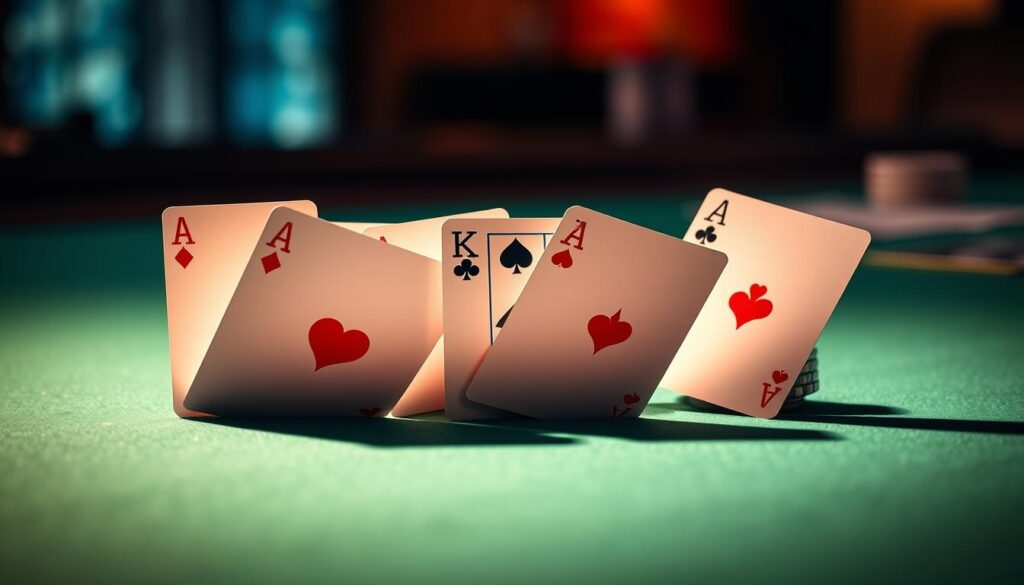
- Premium hands only: Stick to the top 10% of starting hands like a political pundit clings to hot takes
- Fold faster than Marvel kills off villains: That suited 9-3? More useless than a screen door on the Death Star
- Position matters: Play tighter from early positions than a hipster’s skinny jeans
Let’s break down the best starting hands in poker using Hollywood logic:
| Hand | Superhero Equivalent | Win Rate |
|---|---|---|
| AA | Thor’s Hammer (Mjölnir) | 85% pre-flop |
| KK | Cap’s Shield | 82% |
| Black Panther’s Vibranium Suit | 80% |
Most beginners play too many hands and overvalue suited cards. Remember, suited ≠ superior. That K♠️3♠️ might look pretty, but it’s useless post-flop.
Use a tight-aggressive (TAG) strategy, like Tony Stark would. Fold 80% of hands pre-flop and bet big with your best hands. This beginner poker strategy builds discipline fast, like Nick Fury recruiting Avengers.
Benefits (and Drawbacks) of Looseness
Playing poker loosely is like day trading Dogecoin. It’s exciting one minute, then it can be very tough the next. For new players, playing aggressively can be thrilling. But it also needs a lot of emotional strength.
Playing loosely is like Pascal’s Wager. You’re betting that the possible wins are worth the risk of losing. Tom Dwan became famous by making smart, risky moves. But, there are also times when playing too loosely can lead to big losses.
Why looseness works (when it does):
- It can make opponents make big mistakes (see: Source 1’s LAG profitability stats)
- It helps you get more value from risky hands like suited connectors
- It builds your image at the table, which you can use later
Why it backfires (often spectacularly):
- Variance can be very big, like Bitcoin’s price in 2021
- It needs precise calculations of pot odds, which beginners often lack
- It attracts sharks who see a chance to win big (Source 3’s maniac profiles confirm this)
| Tight Play | Loose Play | |
|---|---|---|
| Win Rate Stability | Steady 9-5 job | VC startup equity |
| Emotional ROI | Zen garden | Skydiving without altimeter |
| Skill Ceiling | Chess middlegame | Quantum physics exam |
The best beginner Texas Holdem strategy? Use looseness like hot sauce. A little bit is good, but too much is bad. Start by playing loosely in late position with strong hands. Then, tighten up when the stakes get higher. Remember, even crypto fans diversify their investments.
Adapting Style to Table & Opponents
Ever tried ordering a Big Mac at a vegan bistro? That’s what rigid poker strategies feel like when you’re facing wildly different tables. The real magic happens when you shift gears faster than Elon Musk rebranding Twitter. Let’s break down how to learn poker strategy that bends like Neo dodging bullets in The Matrix.
Think of your opponents as characters in a Scorsese film. Are you sitting across from a tight-lipped De Niro type nursing his stack like a $20 Scotch, or a loose-cannon Pacino firing chips like confetti at a parade? Profiling players isn’t just useful – it’s survival. Here’s your diner scene moment from Heat: adjust your tells before they adjust to yours.
Modern poker strategy tips demand McDonald’s-level flexibility. Sometimes you need the balanced nutrition of GTO (that’s Game Theory Optimal for the rookies), but other times? Go full McGambit with a 20-piece Bluff Nuggets meal. The key is knowing when the table needs:
- Value meals (tight-aggressive exploitation)
- Late-night drive-thru spews (loose positional plays)
- Custom combos (mixed strategy adjustments)
Position isn’t just about where you sit – it’s about when you strike. Early position? Play like a librarian protecting the last copy of Sun Tzu’s Art of War. Late position? Transform into a Vegas blackjack dealer controlling the action. Pro tip from our tight game adjustment guide: your chair location dictates your aggression license.
Here’s your five-second adaptation checklist:
- Scan for stack sizes – whales swim differently than minnows
- Clock betting patterns – is that raise a statement or a question?
- Track showdown hands – are they showing Netflix originals or reruns?
Remember: the best players shape-shift more than a TikTok filter. One hand you’re folding A-K like it’s laundry night, the next you’re shoving 7-2 offsuit like it’s the last chopper out of ‘Nam. The table’s personality changes faster than a Reddit thread – your job is to be the meme that always fits.
Stories of Famous Tight and Loose Players
Poker history is filled with legends like Doyle Brunson and Annie Duke. They didn’t just play cards; they created poker strategy tips. These tips helped build poker confidence through unique approaches.

Doyle Brunson was known for his loose-aggressive style. His 1976 World Series win with a 10-2 offsuit was not luck. It was a well-planned move.
He’d create action at the table, using his image to his advantage. But, he also had a strategic side. His “Super/System” book is a must-read for understanding risk and reward.
Annie Duke, on the other hand, was tight and precise. Her 2004 Tournament of Champions win showed her skill in math. She bluffed her way to a $2 million pot, proving strategy beats aggression.
| Player | Style | Signature Move | Confidence Builder |
|---|---|---|---|
| Doyle Brunson | Loose-Aggressive | 10-2 All-In Bluff | Image Manipulation |
| Annie Duke | Tight-Exploitative | Range-Based Bluffing | Equity Calculations |
| Phil Ivey | Hybrid Adaptive | Multi-Street Traps | Pattern Recognition |
Phil Ivey is a modern example of a hybrid player. He’s tight pre-flop but looser on the river. His 2009 win showed how to adjust your strategy to fit the situation.
What do these stories teach beginners? Confidence isn’t about having the best hand. It’s about being the best hand through strategy. Brunson’s style and Duke’s math show that success comes from playing to your strengths.
Drills to Recognize Styles at the Table
Learning to spot poker styles is like being a DJ. You mix live tells with statistical ones until the music hits the right beat. Turn your watching skills into a Spotify Wrapped for your opponents’ playing styles. It’s like classifying music genres and finding surprise tracks.
Drill 1: The Hand Chart Detective
Use your poker hand chart for “Guess My Range” during WSOP matches. Stop the video after the flop. Then, sort players into:
- Aggressive Charizards (3-betting 15%+ of hands)
- Tight Blastoises (folding 70% pre-flop)
- Loose Jigglypuffs (calling stations singing all the way to showdown)
This Pokémon system is surprisingly effective. Water-type players go with the flow, fire types burn chips, and grass types wait for a miracle.
| Player Type | Starting Hands (%) | Bluff Frequency | Tells |
|---|---|---|---|
| Tight (Rock) | 8-12% | Low (15%) | Stiff posture, slow bets |
| Loose (Paper) | 25-35% | High (40%) | Chatty, rapid chip shuffling |
| Aggressive (Scissors) | 15-20% | Extreme (60%) | Staring contests, oversized bets |
Drill 2: The Sherlock Shuffle
When playing online, think every avatar is Moriarty. Use this starting hands selection guide to figure out opponents’ plans:
- Watch how often they raise limpers (Hint: >30% = loose cannon)
- Keep an eye on their fold-to-cbet percentage (
- Look for bet sizing tells (pot-sized raises = strength, min-clicks = weakness)
A player limping UTG with 7-2 offsuit is either drunk or extremely drunk. Adjust your play based on this.
When to Switch It Up
Changing your poker strategy mid-game is like a DJ switching songs. It needs perfect timing and knowing what the crowd wants. The best players don’t stick to one style. They change like a TikTok trend, adapting their play to stay ahead.
Your game gets stale when:
1. Your bluffs get called more often than your mom during dinner
2. Opponents start mimicking your moves like bored parrots
3. Your “surprise” all-in feels about as shocking as a Hallmark movie plot
| Scenario | Tight Response | Loose Response |
|---|---|---|
| Aggressive table bully | Wait for premium hands | 3-bet light with suited connectors |
| Passive calling stations | Value bet relentlessly | Bluff sparingly |
| Short-stacked opponents | Apply ICM pressure | Steal antes aggressively |
Source 3’s adjustment techniques work best when you:
• Rotate strategies every 45 minutes (like sunscreen reapplication)
• Mirror opponents’ VPIP stats (within reason – don’t turn into Gollum)
• Use defensive poker tactics when chip leaders start flexing
Texas holdem tips for smooth transitions:
1. Shift gears during dealer changes – it’s the poker equivalent of a smoke break
2. Mix in 10% more bluffs when tightening up
3. Study opponents’ bet-sizing tells like you’re decoding the Da Vinci Code
Remember: Even Bond villains know when to exit stage left. Your strategy should disappear and reappear with the elegance of a well-timed check-raise. This leaves opponents wondering if they’re playing chess or hungry hippos.
Final Recommendations For New Players
Think of poker bankroll management as your financial seatbelt—it’s essential. Warren Buffett didn’t become rich by risking everything on stocks. You should handle buy-ins wisely, not like Monopoly money.
For cash games, start with 50x the big blind. For tournaments, it’s 100x the entry fee. This is not just advice—it’s protecting your wallet.
Avoid playing too aggressively with weak hands. Your A-9 offsuit isn’t as strong as it seems. Track your sessions like a NASA engineer. Use tools like PokerTracker to analyze your play.
Set aside time to study poker, just like you would for a workout. 30 minutes of analysis is better than hours of watching poker shows.
Emotional control is key. Pro players like Phil Ivey don’t get emotional. When you feel tilt, take a break. Remember, the cards don’t care about your stories.
Your last tool is a solid bankroll management plan. Have a spreadsheet and a checklist to follow. And always be ready to change your strategy. Now, go play poker.
Leave a Reply