Poker isn’t just a game; it’s a top human leisure activity. It’s a mix of strategy and skill, enjoyed from Monte Carlo to kitchen tables. It’s loved by Hollywood, billionaires, and yet, half the planet misplays pocket aces.
Why does poker last longer than trends? It’s like chess with money at stake and a bit of theater. It’s all about strategy and understanding.
Winning at poker means knowing two key things. First, poker hand rankings are like a Shakespearean hierarchy. The royal flush is top, and the high card is at the bottom. Second, poker table position is like power in a play. Players in late positions have more control.
Think of poker as a game of strategy and skill. The World Series of Poker has thousands of players. It’s a game where you can outthink the house. It’s a chance to see how well you make decisions and improve them.
Forget about luck. Poker is about reading chances and using your position wisely. We’ll learn about betting rounds, blinds, and the thrill of a well-timed fold. Are you ready to play? Let’s start.
Introduction: What Makes Poker Timeless
Why does a 19th-century riverboat game remain popular today? Poker is more than just a game; it’s a test of survival. From the smoky Mississippi saloons to Chris Moneymaker’s “I’m just a guy with glasses” WSOP win, it has stood the test of time. The World Series of Poker has grown from 8 players in 1970 to 10,112 in 2023, showing its enduring appeal.
Poker has reinvented itself over the years:
| Era | Survival Tactic | Cultural Impact |
|---|---|---|
| Prohibition | Underground speakeasy staple | Mythologized in gangster films |
| 2000s Boom | Online platforms + hole card cams | Turned accountants into TV stars |
| 2020s | Cryptocurrency buy-ins | Twitch streamers teaching Gen Z |
Hollywood has made poker cool, from Bond’s Casino Royale stare-downs to Matt Damon’s Rounders monologues. But cinema’s greatest trick is making 7-2 offsuit bluffs seem noble.
The game’s magic is in its democratic tension. Anyone can learn poker basics quickly, but mastering it takes a lifetime. It’s a game of risk management, where you can lose big while technically winning.
Poker is a truth serum for humanity. It reveals our true selves, making us question our confidence. We play not to win money, but to test our ability to navigate chaos with a straight face.
The Core Rules of Poker
Imagine a poker table as a chaotic cousin of Wall Street. Every seat has its own strategy, chips are like words, and the dealer button is like a scepter. Let’s explore this world where who sits where is more important than your LinkedIn profile. Bluffs are more powerful than political lies.
Game Setup: Your Seat Determines Your Fate
Poker positions are not just chairs; they are power struggles. The dealer button moves clockwise, changing who has power and who is vulnerable:
- Under the Gun: The first to act, like the first speaker at a meeting
- Cutoff: The person who might get the dealer button next
- Button: The last to act, with the most power
The size of the table is key. Big tables are like big meetings, and small tables are like small meetings. Cards are dealt clockwise, because life isn’t always fair.
Betting Rounds: Currency as Communication
Betting in poker is like sending messages. A $5 chip can mean “I’m strong” or “Please don’t look at me.” Here’s how the betting works:
| Structure | Rules | Best For |
|---|---|---|
| Limit | Fixed bet amounts | Budgeting like a CPA |
| No-Limit | All-in existential crises | Drama queens |
Before the flop, it’s like swiping on Tinder. Raise early to weed out weak players. After the flop, it’s like playing chess, using pot odds to guide you.
Showdown: Where Bluffs Go to Die
This is poker’s moment of truth. It’s like fact-checking a politician’s speech. Hand rankings are strict:
- Royal Flush: The best, like Beyoncé at the Met Gala
- Full House: A respected professor
- High Card: That guy who won a radio contest
Kickers are like Oxford commas. They can make a big difference. Cards speak last, but lies are exposed first. Remember, in showdowns and life, honesty is always the best policy.
Poker Etiquette and Table Behavior
Ever watched a poker pro handle chips like they’re solving a Rubik’s Cube? There’s method to the madness. Poker etiquette operates like the traffic lights of the felt jungle – invisible until someone runs a red light and chaos ensues.

Let’s decode three critical rules that separate the sharks from the guppies:
- Slow-rolling: The poker equivalent of shouting “psych!” after a bad joke. It’s not clever – it’s cringe. Reveal winning hands promptly, unless you enjoy being the table pariah.
- String betting: This isn’t interpretive dance. State your raise amount clearly, or risk your “I call… wait, raise!” becoming the gambling version of Schrödinger’s bet.
- Chip semaphore: Neat stacks aren’t OCD – they’re strategic clarity. Towering chip monuments? That’s just shouting “I’m compensating!” in casino sign language.
| Offense | Why It Matters | Correct Approach |
|---|---|---|
| Slow-rolling | Creates artificial tension; wastes time | Flip cards within 5 seconds of final call |
| String Betting | Confuses action; enables angle-shooting | Verbally declare “raise” before moving chips |
| Chip Chaos | Obscures stack size; slows game | Maintain clean stacks of 20 chips maximum |
| Tanking Excessively | Disrupts game flow; annoys players | Limit decisions to 45 seconds except critical turns |
| Nachos Mid-Hand | Greasy cards = communal nightmare | Snack only between hands; use napkin forcefield |
The tanking dilemma? Imagine a TEDx talk where the speaker forgets their slides. That awkward pause when someone agonizes over folding 2-7 offsuit? Exactly. Time management isn’t just polite – it’s strategic hygiene.
Food fouls deserve special mention. Crunching chips during a bluff might seem cinematic, but in reality, you’re just auditioning for “World’s Messiest Tell.” Follow the 3-Bite Rule: If your snack requires more than three chews, save it for the break.
Mastering these nuances accelerates your learning poker curve better than any strategy chart. Remember: etiquette isn’t about stuffy rules – it’s the grease that keeps the poker machine humming. Now if you’ll excuse me, I need to go reorganize someone’s nacho plate…
Key Terminology (Blinds, Ante, Pot, Raise, Fold)
Understanding poker’s language is more than just knowing words. It’s about grasping finance and strategy. Let’s break down five key terms that turn beginners into skilled players.
Blinds are like a cover charge in poker. They’re bets that players must make, moving around the table. The small blind is a gentle push, while the big blind is a big commitment. Together, they get the game started quickly.
The ante is your ticket to the game. Every player puts in chips before the game starts. It’s how everyone gets involved in the action. Without an ante, there’s no game.
The pot is like a shared bank account. It grows as players bet. But, as it gets bigger, so do the risks. Want to win big? Know when to bet big and when to stop.
Raise is like making a bold statement. It’s not just increasing your bet; it’s a challenge. But, be careful not to raise too much. It can backfire.
Folding might seem like giving up, but it’s smart. It’s about knowing when to stop and save your money. The goal is to look like you’re keeping your best cards hidden.
Remember, poker terms are more than words. They’re the secret language of the game. Learn them well, and you’ll be ready to play with confidence.
Rule Differences in Popular Variants
If poker variants were superhero franchises, Texas Hold’em would be like Marvel’s Cinematic Universe. It’s slick, accessible, and very popular. Omaha, on the other hand, is like Zack Snyder’s DC multiverse. It’s darker and more complex. Let’s explore these texas holdem rules vs omaha poker rules differences with the excitement of a comic book crossover.
Texas Hold’em is like Iron Man’s repulsor beams. It’s straightforward and very effective. You get:
- Two hole cards (your secret identity)
- Five community cards (the shared battlefield)
- Four betting rounds to assemble your superhero squad
Omaha is like Doctor Manhattan rewriting reality. Players receive:
- Four hole cards (quadruple the plot twists)
- Mandatory use of exactly two private + three community cards
- Nine possible hand combinations per player – more variables than the MCU’s timeline
Omaha makes every pot a Schrödinger’s cat scenario. Eight players could hold the nuts at the same time. It’s why omaha poker rules require spatial reasoning and pattern recognition.
Let’s look at the numbers:
| Metric | Texas Hold’em | Omaha |
|---|---|---|
| Starting Hands | 1,326 combos | 270,725 combos |
| Nut Hand Frequency | Once per lunar eclipse | Every other hand |
| Average Gray Hairs/Game | 3 | 17 |
Then, there’s Short Deck poker. It removes cards 2-5, making the game different. It’s like Netflix rebooting your favorite show. It’s familiar yet disorientingly different.
Mastering these variants isn’t about heroes vs villains. It’s about understanding that Texas Hold’em rewards patience and Omaha demands geometric aggression. To survive, you need to pack more brain RAM than your smartphone. Remember, in Omaha, the nuts at flop turn into pumpkin seeds by the river.
Beginner Mistakes to Avoid
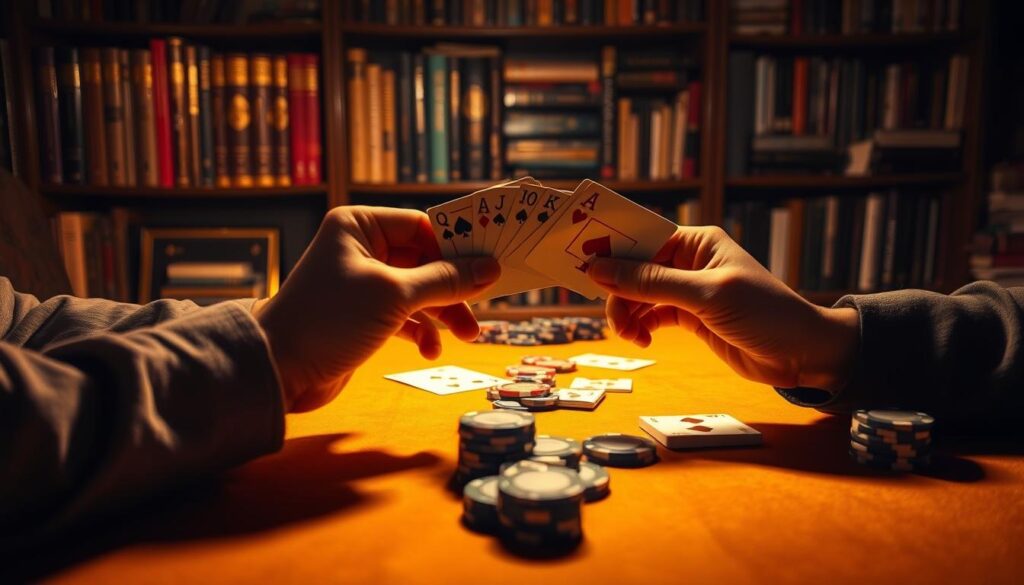
Learning poker rules for beginners is like mastering parallel parking. Everyone promises to help, but you’ll make mistakes. Here are four card table catastrophes that even your grandma would spot.
Mistake #1: Treating Ace-Queen like the Holy Grail is a big mistake. It’s not a Broadway musical ticket. Overplaying “pretty hands” can burn your bankroll fast. Remember, if you wouldn’t slow-dance with 7-2 offsuit, don’t play suited connectors too much.
- Position paralysis: Sitting in early position is like being in a dentist’s chair? Fold more than origami paper. Late position gives you power. Early position is for caution. It’s math, not astrology.
- Bankroll Roulette: Betting your rent money on a single hand is not smart. It’s like starting a GoFundMe campaign. Proper bankroll management keeps you away from ATM machines.
| Mistake | Reality Check | Pro Fix |
|---|---|---|
| Folding pocket aces pre-flop | Not laundry day | Bet aggressively |
| Ignoring physical tells | Your eye twitch isn’t “resting face” | Practice poker face in mirrors |
| Chasing straights like Tom Cruise | This isn’t Mission: Impossible | Calculate pot odds |
The worst offender? Tells more obvious than a TikTok apology video. Scratching your nose when bluffing? Leaning forward like a meerkat spotting prey? You might as well play with your cards taped to your forehead. Master the art of being calm – your face isn’t a reaction GIF library.
Remember: Every poker legend once confused flushes with full houses. The key is making new mistakes tomorrow, not repeating today’s blunders. Now go forth – and may your poker face be better than your ex’s dating profile pics.
Tips for Smooth First Games
Your first poker game doesn’t have to be scary. Think of it as a mix of Sun Tzu’s wisdom and Ocean’s Eleven style. The key is to keep your thoughts to yourself.
New players can be like raccoons at a shiny object convention. Instead, use the Velvet Hammer Approach:
| Position | Action | Rationale |
|---|---|---|
| Early | Play 10% of hands | Survive the information desert |
| Middle | Expand to 15% | Controlled aggression pays |
| Late | 20% with raises | Capitalize on positional advantage |
This poker position strategy makes you a profit-making glacier. You’re slow, methodical, and powerful. Folding 80% of hands is smart, not weak.
Observation Bootcamp
Your opponents will reveal information easily. Look for:
- Betting speed tells (instant calls often mean weakness)
- Stack organization quirks (neat stacks = tight player)
- Drink consumption patterns (empty glass = tilt incoming)
Pro tip: If someone’s wearing sunglasses indoors, they’re either trying too hard or hiding a tell bigger than Times Square billboard.
Tilt-Proof Your Brain
When bad beats happen (and they will), stay calm. Set a loss limit like three fancy coffees. Ask yourself: “Would I prefer to be right, or to be rich?” Emotional control is key to success in poker.
Visual Guide: Step-by-Step Play
Let’s break through the poker mystery like a Black Friday sale. Whether you’re in comfy pants or a suit, this guide makes poker odds basics easy to follow. It’s your secret way to play Texas Hold’em without feeling lost.
Begin with: “Do I have playable cards or a hand that’ll make my dog judge me?” Our flowchart, made by data experts, guides you from the start to the end. Key points include:
- Pre-flop positioning: Are you the table’s Napoleon or Switzerland?
- Flop analysis: Spotting hidden straights like a hipster finds irony
- Turn adjustments: When to channel your inner poker-faced chess master
- River reckoning: Calculating bluffs with the precision of a meme stock short squeeze
The magic lies in our pot odds breakdown. Even your “I majored in interpretive dance” cousin will understand. Imagine calling a $10 bet could win a $50 pot. That’s 5:1 odds, better than any crypto investment.
Remember: probability isn’t destiny, but ignoring it is like bringing a philosophy degree to a knife fight. Use these visuals to balance aggression with cold, hard math. Nothing says “I’ve got this” like outsmarting the table with basic arithmetic.
Where to Practice
Finding the right online poker room is like picking a dive bar in Vegas. Some places just want your money, while others want your soul. You need real places to practice, not just digital casinos that make your money disappear.
WSOP.com is like a Prohibition-era speakeasy. It’s classy and discreet, attracting sharks in metaphorical pinstripe suits. On the other hand, PokerStars is like a megaclub with EDM music. It’s a place where beginners get lost in the bright lights of high-stakes tables. Which one is better for learning poker? Let’s look at the details:
| Platform | Vibe | Best For | Bonus Quirks |
|---|---|---|---|
| WSOP.com | Low-key sophistication | Strategy refinement | “Loyalty points” that matter more than your ex’s apologies |
| PokerStars | High-energy chaos | Volume practice | Reload bonuses thicker than a mobster’s accent |
| Global Poker | Friendly backyard game | Risk-free experimentation | Sweepstakes model—legal loopholes never tasted sweeter |
Looking for sign-up bonuses? They’re like Tinder matches—exciting at first but not worth it in the long run. Pro tip: WSOP’s “beginner boost” gives you room to fail without losing too much. PokerStars’ “Spin & Go” tournaments are fun but not very educational.
Managing your bankroll is key. Think of your money like a trust fund kid’s allowance. Start with small stakes and only spend 5% of your bankroll each session. Global Poker’s play-money sweepstakes let you learn poker without risking your couch.
Not sure where to begin? Ask yourself: Do you want to study the game or survive the spectacle? Your answer will decide if you’re sipping whiskey in a speakeasy or getting lost in neon at a club.
Conclusion: Developing Your Poker Foundation
Learning basic poker rules is like starting with chess openings. It sets the stage for strategy to unfold. You’ve got the check-raise mechanics and Texas Hold’em etiquette down. Now, it’s time to turn these tools into a sharp worldview.
Every hand should be a lesson. Why did that river bet fail? What gave away your opponent’s bluff? Poker is like life – full of chaos, yet controlled enough for analysis.
I’ve learned a lot about people from my poker losses. Three all-in disasters taught me more than a decade of therapy. Churchill should have said, “Bluff like your legacy depends on it.”
Your poker philosophy grows from both wins and losses. Platforms like PokerStars or WSOP.com are your labs. Test theories, dissect trends, and watch your instincts grow.
The cards don’t care about your education or Netflix list. They demand respect for probabilities and knowing when to fold kings. Keep revisiting basic poker rules like they’re the Constitution – foundational, adaptable, and sometimes needing a new look.
Leave a Reply